André Rieu’s Net Worth
André Rieu is not just a famous violinist. He also embodies the entrepreneur who managed to transform classical music into a genuine success machine. At the helm of the Johann Strauss Orchestra, he built a rather unique business model, blending art, spectacle and commercial strategy.
His success, quite frankly, rests on razor-sharp management, an ultra-strong personal brand, and above all a rare ability to make classical music highly accessible to the general public.
His journey clearly shows how passion can be transformed into economic power. Starting from Maastricht, he climbed the ladder all the way to worldwide tours, creating in the process an empire that combines concerts, album sales, TV broadcasts and even real estate investments.
He approaches every decision — from the choice of pieces to the staging — with a clear strategic vision.
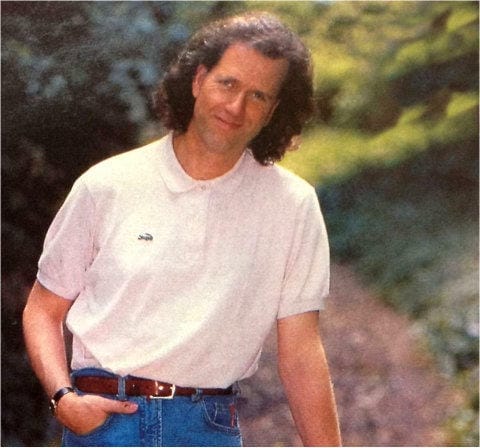 Young photo of André Rieu
His model is often compared to that of a major cultural enterprise.
He proves that art and profitability can coexist without betraying musical authenticity.
André Rieu’s Journey: From Passion to International Fame
Born in Maastricht, André Rieu built a career that bridges the rigour of classical music with the appeal of popular entertainment.
He managed to blend conservatoire discipline with an accessible vision of music, becoming an internationally recognised conductor.
Youth and Musical Training
André Rieu was born on 1 October 1949 in Maastricht, in the Netherlands, into a family where music occupied a central place.
His father, a conductor, introduced him to this world from a very early age.
At five, he began playing the violin, an instrument that would never leave him.
He studied at the Royal Conservatory of Liège, then at the Conservatory of Maastricht.
There, he distinguished himself through his precision and sense of rhythm.
His years of training gave him a solid technical foundation and a genuine sensitivity to classical music.
Later, he continued his studies in Brussels at the Royal Conservatory, under the guidance of violinist André Gertler.
There he discovered chamber music and opera — two disciplines that enriched his approach to the orchestral repertoire.
First Ensembles and Early Professional Career
After his studies, Rieu joined several regional orchestras, such as the Limburg Symphony Orchestra.
He gained practical experience there and discovered the dynamics of ensemble playing.
But he quickly felt the need to create an ensemble in his own image.
In 1978, he founded the Maastricht Salon Orchestra, a small group of musicians specialising in waltzes and popular tunes.
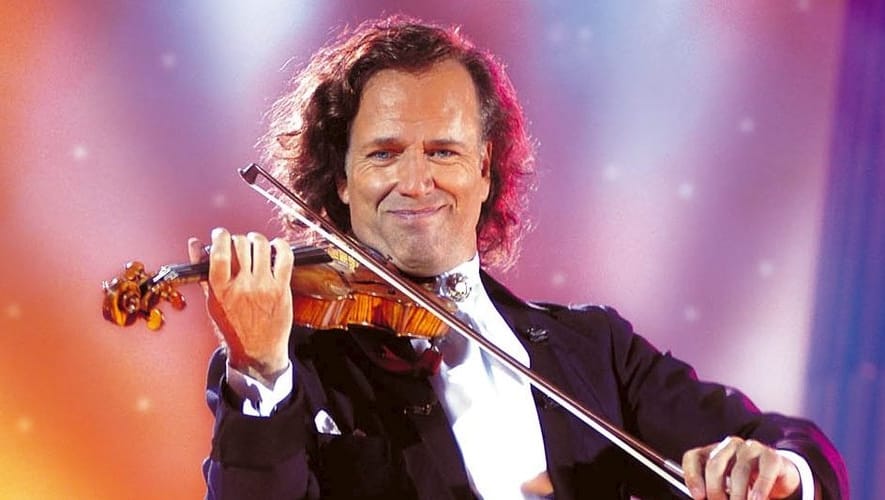 André Rieu’s violin
This project already foreshadowed the creation, in 1987, of the Johann Strauss Orchestra.
This orchestra would become the cornerstone of his career.
With this group, he wanted to make classical music more accessible.
He blended virtuosity and the pleasure of performance, attracting a far wider audience than the usual concert hall regulars.
Family and Artistic Influences
His family environment played an enormous role for André Rieu.
As the son of a conductor, he grew up surrounded by symphonies and chamber music.
This early immersion sharpened his ear and his artistic standards.
His father passed on to him the discipline of a conductor, but also respect for collective work.
This upbringing influenced the way he conducts and organises his ensembles.
Rieu also drew heavily on the Viennese composers such as Johann Strauss II, admiring their ability to combine elegance and lightness.
He also opened himself up to popular music and opera, which he did not hesitate to incorporate into his programmes.
This diversity of influences gives his style a genuine originality, sitting perfectly between classical and entertainment.
The Creation and Rise of the Johann Strauss Orchestra
When André Rieu founded his orchestra in Maastricht, he changed the way the public perceived popular classical music.
With an accessible approach and lively staging, he brought together Viennese tradition, the spirit of entertainment and international commercial success.
Birth of the Orchestra and Artistic Vision
In 1987, André Rieu launched the Johann Strauss Orchestra in Maastricht, having previously conducted the Limburgs Symfonie Orkest and the Maastricht Salon Orchestra.
His goal was simple: to bring waltzes and classical music closer to the modern audience.
In the beginning, the orchestra had barely a dozen musicians.
Rieu drew his inspiration from the golden age of Johann Strauss II, but added a contemporary touch.
He wanted to offer concerts where music and conviviality were intertwined, far removed from the formalism of classical concert halls.
For him, classical music should be able to entertain without compromising on quality.
He placed his bets on joy, direct contact with the audience and a festive atmosphere.
He sought to recreate the spirit of 19th-century Viennese ballrooms.
Evolution of the Orchestra and Recruitment of Musicians
Over the years, the orchestra grew.
From a dozen at the outset, it sometimes counts between 80 and 150 artists depending on the tour.
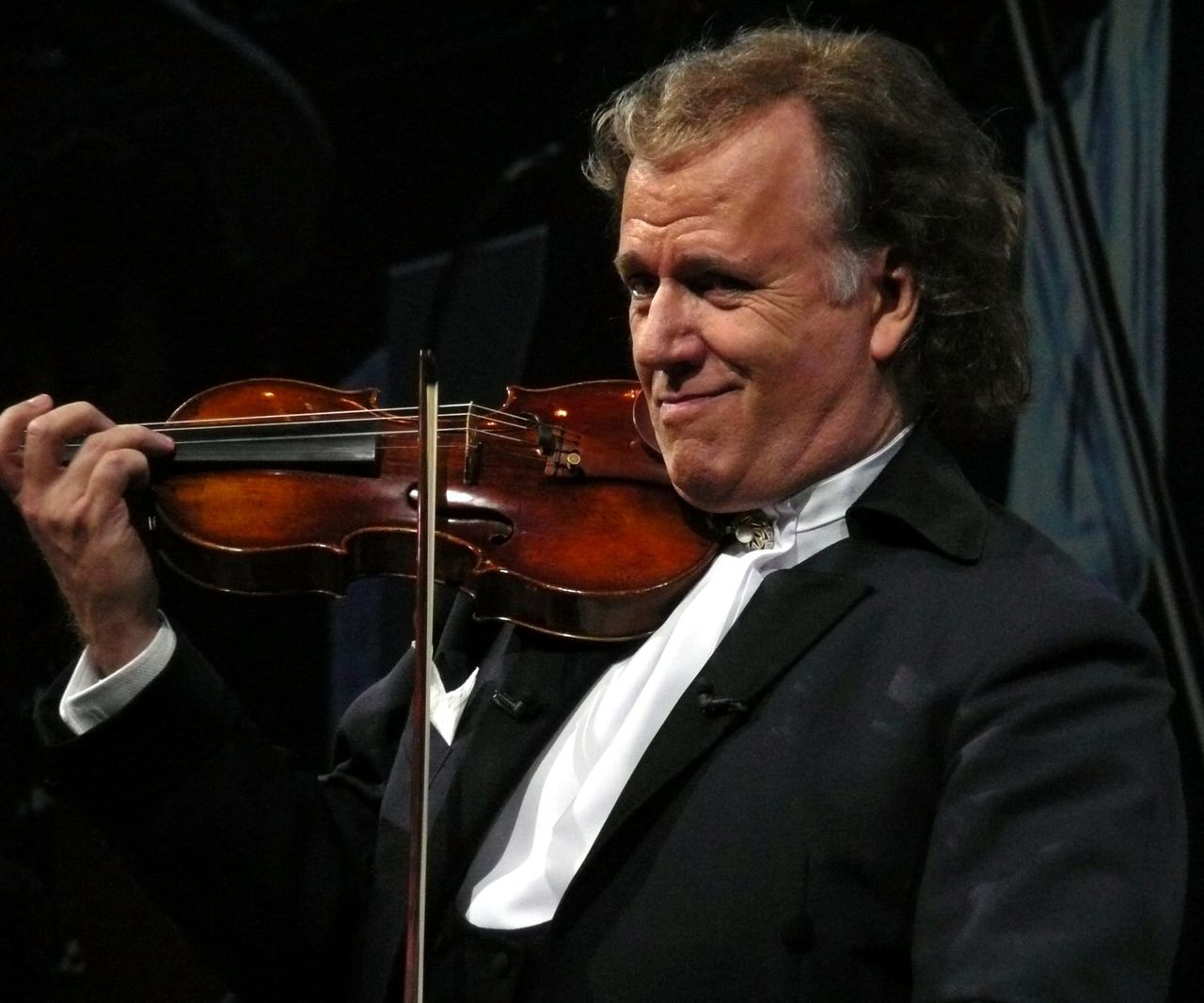 André Rieu’s net worth
Rieu recruits musicians from all backgrounds, often trained at European conservatories.
This diversity enriches the ensemble’s sound and allows it to adapt to different styles.
Some, like Jean Sassen, have been there from the beginning, ensuring genuine artistic continuity.
He does not select solely on musical ability: he also wants artists capable of interacting with the audience.
Rieu prioritises expressiveness and an open stage presence, essential to the group’s identity.
Repertoire and Unique Style
The repertoire of the Johann Strauss Orchestra is very broad: Viennese waltzes, marches, polkas, operatic arias, film music, popular songs…
This variety attracts a far wider audience than just classical music enthusiasts.
The concerts stand out through theatrical staging and a light-hearted tone.
The musicians engage in humorous exchanges, which brings the audience even closer.
Rieu seeks a warm sound in which the strings and the solo violin dominate.
The style, quite frankly, sits right between classical and entertainment — a kind of popular classical.
This approach allows them to fill stadiums and earn a good number of gold and platinum discs around the world.
Role as Conductor and Violinist
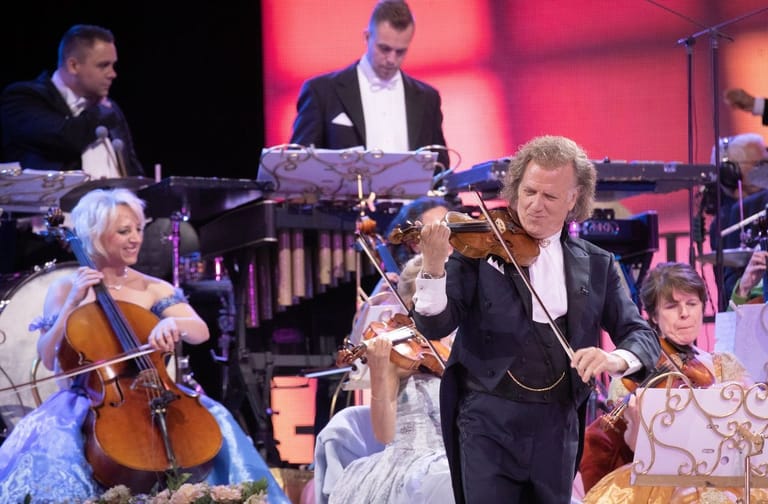
André Rieu plays a dual role: conductor and solo violinist.
He often conducts while playing, which gives the concerts a truly distinctive visual and sonic energy.
His violin, a 1732 Stradivarius, embodies both musical excellence and the prestige of his image.
This central position allows him to maintain control over the rhythm, emotion and cohesion of the group.
Rieu communicates with his musicians through a glance or a gesture, without ever breaking the musical flow.
His leadership is a blend of rigour and spontaneity.
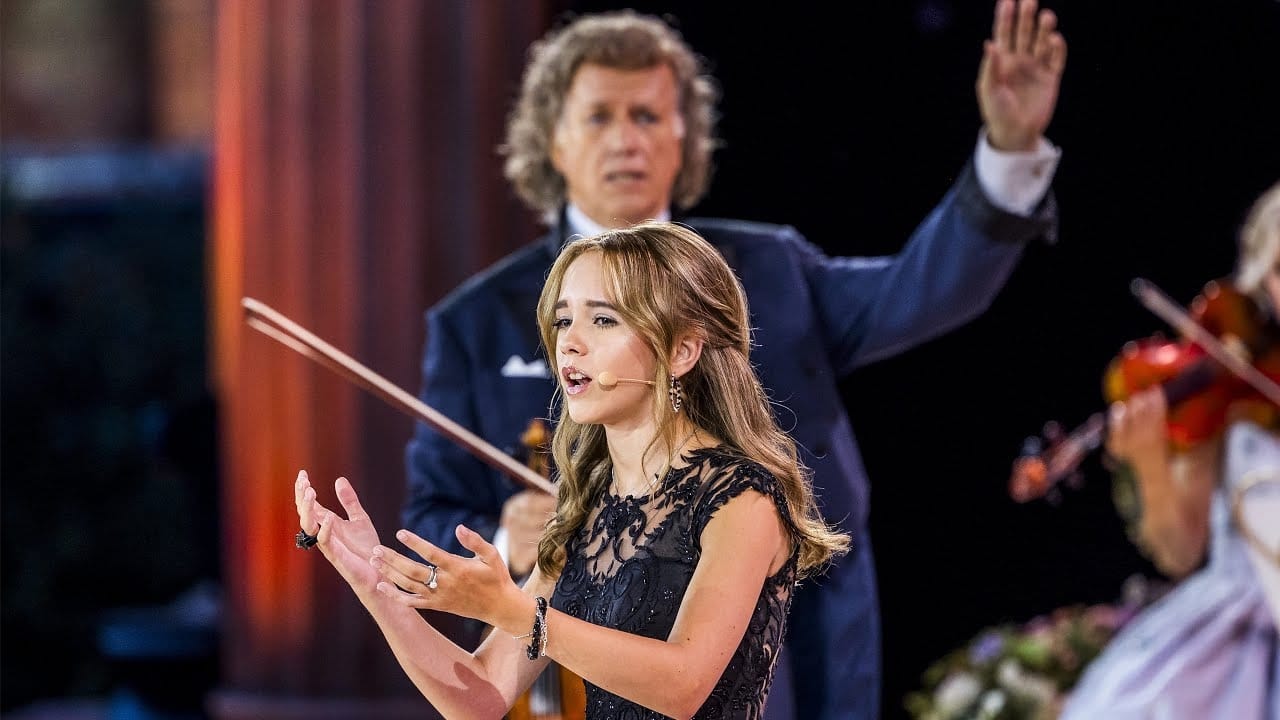
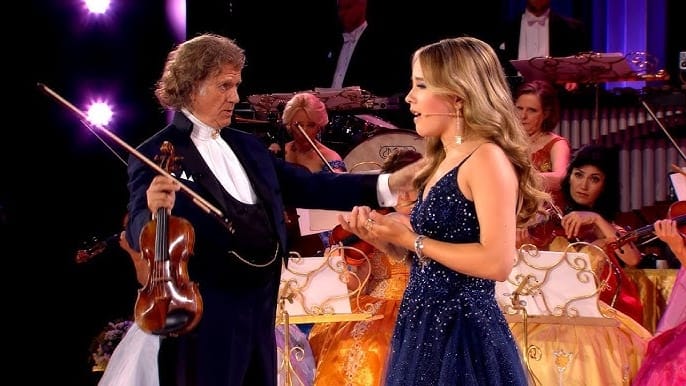 André Rieu’s protégée – Emma Kok
He guides the orchestra, but gives each musician genuine freedom of expression.
This collaborative atmosphere contributes to the longevity of the Johann Strauss Orchestra.
An Innovative Business Model in Classical Music
André Rieu has managed to transform classical music into a profitable and accessible cultural product.
His model rests on total control of production, diversification of income sources, and financial independence that is quite rare in this field.
Strategy of Democratisation and Accessibility
He chose to make classical music popular by presenting it in a format closer to variety concerts.
His shows attract a broad audience, often unfamiliar with opera houses.
He adapts the repertoire, staging and communication to offer a convivial experience.
The concerts of the Johann Strauss Orchestra blend virtuosity with a festive atmosphere, attracting far more people.
Rieu also offers varied ticket prices and multiplies international tours.
This strategy allows him to reach emerging markets and attract families, tourists and casual music lovers.
By bringing classical music closer to entertainment, he opened up an almost untapped market segment.
Revenue Diversification and Merchandise
His company, Rieu Productions, controls the entire chain: recording, distribution, marketing and sales.
He owns his own recording studio in Maastricht, which reduces costs and ensures consistent quality.
Rieu earns money in several ways:
- Ticket sales from concerts and worldwide tours
- Record and DVD sales
- Television broadcasts and digital platforms
- Merchandise (books, accessories, souvenirs)
This diversification avoids dependence on any single activity.
By combining live performance and cultural commerce, he maintains continuous profitability, even outside tour periods.
Rights Management and Financial Independence
Unlike many classical artists, André Rieu owns the rights to his recordings and shows.
This autonomy allows him to control the exploitation of his image and works.
Thanks to Rieu Productions, he directly manages his contracts, licences and partnerships.
This structure gives him genuine freedom in his artistic and commercial choices.
 André Rieu’s wife
The company operates as an integrated firm: everything is managed in-house, from production to distribution.
This financial independence translates into significant dividends and an economic stability that is rare in classical music.
Worldwide Success: Tours, Concerts and Grand Spectacles
André Rieu relies on a well-oiled international organisation, a genuine sense of staging, and an in-depth knowledge of his audience.
This model allows him to transform each concert into a profitable event accessible to a very wide audience.
Organisation of International Tours
Every year, André Rieu takes his Johann Strauss Orchestra across several continents. Around 60 musicians and technicians travel with him to maintain genuine artistic consistency.
He selects Europe, North America, Australia and Asia as his main destinations. He plans each tour with dozens of dates, sometimes more than a year in advance.
Local teams handle ticketing, promotion and logistics, always adhering to Rieu’s standards.
For transport, he often uses private jets and road convoys for all the equipment. This method gives him great flexibility and limits delays.
Rieu prefers to perform in large venues and arenas such as the Ziggo Dome in Amsterdam or the Arkéa Arena in Bordeaux. These venues can accommodate several thousand spectators.
Even though the initial investment is high, rapid ticket sales and ancillary revenues (DVDs, streaming, merchandise) more than compensate.
Logistics and Stage Innovations
At every concert, Rieu presents a meticulously crafted stage production. The sets, often inspired by Viennese palaces or gardens, travel in several trucks.
Technicians assemble the stage in a matter of hours using modular structures. They adapt the lighting, giant screens and sound system to each venue to guarantee a consistent experience.
Rieu likes to use technological innovations: video projections, synchronised light shows, high-definition captures for television.
In this way, he transforms classical music into a total spectacle, where musical precision unites with a convivial and accessible staging.
Audiences and Target Markets
André Rieu’s audience is genuinely broad and spans generations. He attracts classical music enthusiasts, but also those looking for cultural entertainment without any fuss.
His main markets are Western Europe, North America and Australia, where demand remains sustained. Ticket prices vary by country, but he wants to keep his concerts affordable for families.
He relies on television, social media and local partnerships for promotion. Rieu sometimes adapts his repertoire or his speech to local culture, which creates a genuine closeness with the audience.
Discography and Audiovisual Productions
André Rieu has built an impressive discography, blending popular classical music with accessible arrangements. His albums and recorded concerts have transformed the Viennese waltz into a worldwide phenomenon, driven by an effective audiovisual strategy and massive distribution across numerous formats.
Flagship Albums and Awards
Since the 1990s, Rieu has released more than 80 studio and live albums. Some records have marked his career through their international success and media visibility.
 André Rieu’s family
Among his greatest successes are Strauss & Co (1994), Romantic Paradise (2003), Forever Vienna (2009) and And the Waltz Goes On (2011). The latter, dedicated to Anthony Hopkins’s waltz, attracted press coverage.
His Christmas albums, such as Christmas Around the World (2006) and Home for Christmas (2012), are bestsellers every season. Magic of the Movies (2012) and Music of the Night (2013) also demonstrate his fondness for film music and orchestral arrangements.
Rieu has received numerous awards, including the Goldene Stimmgabel and the Classic BRIT Awards, confirming his prime position in popular classical music.
Success of DVDs and Broadcasts
André Rieu’s concerts are filmed and broadcast worldwide, both on DVD and on television. These formats represent a large share of his income.
Titles such as Live in Dublin (2003), Live at the Royal Albert Hall (2002) or Live in Maastricht have achieved great commercial success, especially in Europe and Australia.
Rieu Productions, his own company, produces these shows. It handles the capture, distribution and promotion of his concerts. This organisation allows him to reduce costs and maintain genuine artistic consistency across albums, tours and videos.
His DVDs regularly feature among the bestsellers in classical music, strengthening his profile with an international audience.
Impact on the Popularity of Classical Music
Rieu relies on the democratisation of the classical repertoire. His records and videos transform the works of Strauss, Beethoven or Ravel into experiences accessible to everyone.
He blends virtuosity with spectacular staging to attract people who would never set foot in a traditional concert hall. The sales of millions of records and DVDs speak for themselves.
 Emma Kok – Voilà
Productions such as Magic of the Waltz (2016) or Amore (2017) help keep the waltz and symphonic music alive in popular culture.
Rieu has truly succeeded in making classical music exportable, by combining musical excellence with a solid commercial strategy.
Assets, Investments and Business Management
André Rieu built his fortune on real estate assets, well-structured companies and sound family management. He bets on diversification, financial prudence and remains deeply attached to Maastricht, his hometown.
The Maastricht Castle: Symbol of Success
The Huis De Torentjes castle in Maastricht is one of Rieu’s most iconic properties. This 15th-century building has around 27 rooms. He purchased it in 1994 following the success of Strauss & Co., fulfilling a childhood dream.
The upkeep of the castle has required major investments, estimated at several tens of millions of euros. Work has included the structure, the roof and the foundations, built from marl, a fragile local stone.
This place serves both as his main residence and as a symbol of success. Every year, Rieu organises his major open-air concerts there, reinforcing his image as an artist rooted in his origins.
Real Estate Management and Investments
In addition to the castle, Rieu owns numerous properties in Maastricht. These properties represent a significant part of his assets. He buys, renovates, then sells certain homes for a handsome profit. For example, he purchased a house for approximately €195,000 and resold it for nearly a million after renovation.
This real estate activity provides regular income and strengthens the stability of his empire. Rieu manages his affairs through several companies set up from the 2000s onwards, employing more than a hundred people. These companies oversee the production, logistics and rights management of his works.
He controls musical creation, distribution and promotion, allowing him to cut out middlemen. This independence is quite rare in the music industry.
The Role of Marjorie Rieu and the Family Circle
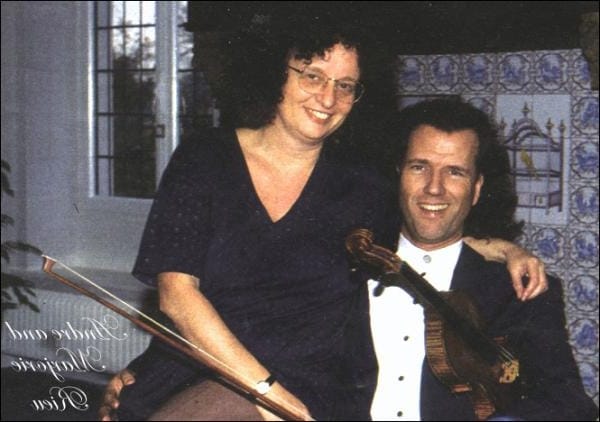
Marjorie Rieu, his wife, plays a key role in family management. A graduate in literature, she coordinates the artistic side and participates in strategic decisions. She often co-writes the concepts for shows and ensures consistency in the violinist’s public image.
They share responsibilities: André handles the music, Marjorie manages organisation and communication. Their son Pierre, who also works in production, helps ensure the model’s continuity.
This family structure creates a balance between creativity and economic rigour. It helps Rieu maintain a long-term vision and protect his assets while remaining independent from major production houses.
Challenges, Controversies and Economic Resilience
André Rieu built a musical empire in his own way, but has not been spared from difficulties. His artistic and entrepreneurial ambitions exposed him to financial risks, criticism from the classical world and periods of uncertainty.
At the height of his career, he went through several financial crises. In 2008, he found himself with a debt of approximately €34 million due to overly ambitious stage projects, including the reconstruction of Schönbrunn Palace for his concerts.
These shows, as impressive as they were, put a serious strain on the solidity of his company. The bank even temporarily took possession of several of his assets, including his music rights.
To bounce back, Rieu chose a more cautious strategy. He diversified his income through real estate in Maastricht and international sales of his albums and DVDs. This approach allowed him to reduce his dependence on tours and strengthen the financial security of his orchestra.
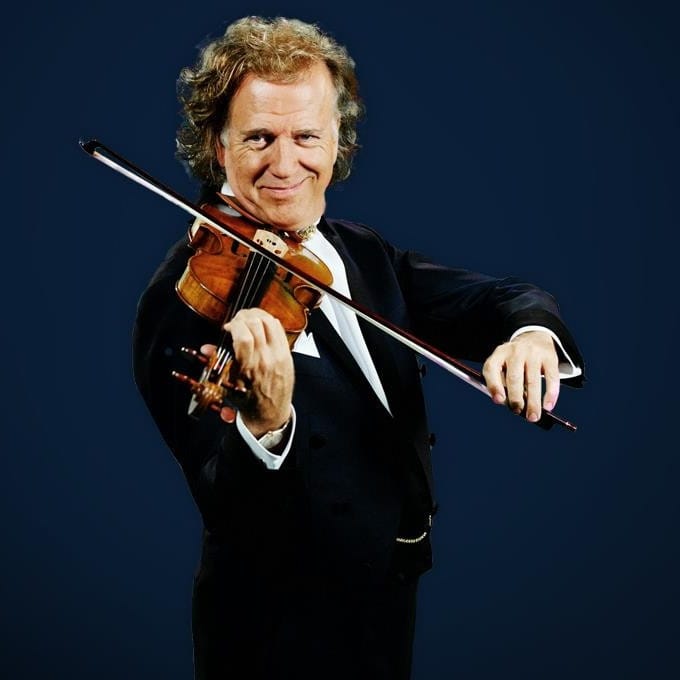 Photo of André Rieu
Responding to Criticism from the Classical World
André Rieu’s success in popular classical music has often attracted criticism. Some musicians and critics feel that his commercial approach oversimplifies classical works.
They accuse him of prioritising entertainment over artistic rigour. Rieu, for his part, insists on his goal: to make classical music accessible to all.
He prefers to talk about “sharing” rather than “dumbing down”. Frankly, this distinction matters a great deal to him.
His loyal audience, comprising millions of spectators worldwide, shows that his approach works. By combining virtuosity and staging, he has devised a business model that blends emotion, spectacle and profitability.
Adaptation and Rebound
Crises, particularly the coronavirus pandemic, seriously tested the economic resilience of his company. Deprived of concerts for months, he had to suspend certain activities and reduce production costs.
Rather than giving up, he invested in the digitalisation of his shows and their online distribution. This adaptation maintained the connection with the audience while generating alternative revenues.
Today, his assets are estimated at approximately €25 million. He continues to organise worldwide tours and demonstrates that it is possible to balance artistic passion with economic prudence to achieve longevity in popular classical music.
André Rieu’s Legacy: Influence on Music and the New Generation
André Rieu, whom many call the King of the Waltz, has left his mark on classical music with his accessible and festive approach. His influence extends far beyond concerts.
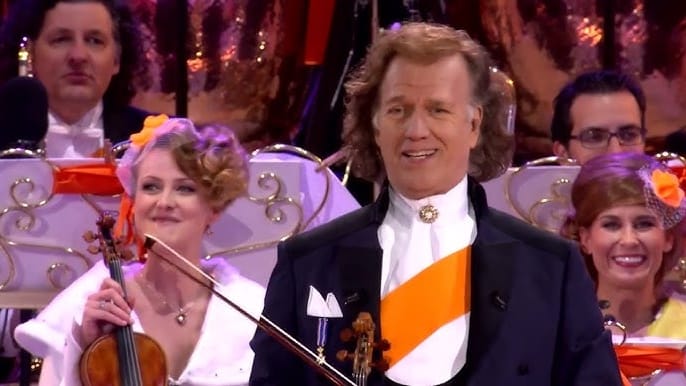 André Rieu Waltz Concert
He has changed the way the public perceives orchestral music. Many young musicians draw inspiration from his career.
Impact on the Popularity of the Waltz and Classical Music
The Dutch violinist has brought the waltz back to the centre of popular culture. By blending spectacle and virtuosity, he transformed a genre perceived as elitist into a convivial experience.
His concerts with the Johann Strauss Orchestra attract millions of spectators worldwide every year. International tours and television broadcasts of his shows open classical music to new audiences, sometimes far removed from traditional concert halls.
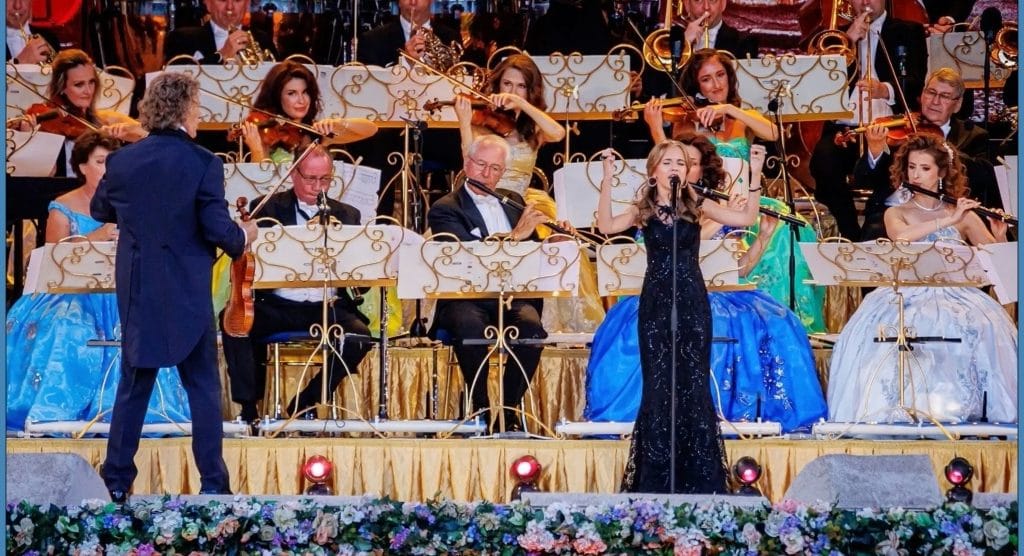 Voilà – André Rieu and Emma Kok
Rieu also modernises stage presentation. Elegant costumes, luminous sets and audience interaction create a festive atmosphere.
This commercial and artistic approach has broadened the classical music market. He proves that an orchestra can be both profitable and popular.
| Key element | Rieu’s contribution |
|---|---|
| Accessibility | Mass-market concerts and varied pricing |
| Stage innovation | Spectacular staging |
| Global reach | Tours across multiple continents |
Transmission and Inspiration for Young Musicians
André Rieu plays an important role in musical transmission. Through his example, he shows that a classical musician can build a stable career without sacrificing creativity.
Young violinists and conductors see in him a model of artistic independence. He manages his own orchestra, label and production.
He illustrates how mastering the economic aspect can support musical freedom. He encourages training and diversity.
His orchestra brings together musicians from many countries, offering a fine illustration of international cooperation in classical music. This openness inspires new generations to see music as a universal language, not reserved for an elite.
Future Prospects and Sustainability of the Model
André Rieu’s economic and artistic model rests on a blend of live performance, independent production and a direct relationship with the audience. This well-established formula is evolving with new technologies and digital platforms.
Young artists can draw inspiration from it to create hybrid projects, blending tradition and innovation. By presenting classical music in an accessible form, Rieu has shown that it is possible to ensure the longevity of the genre while remaining profitable.
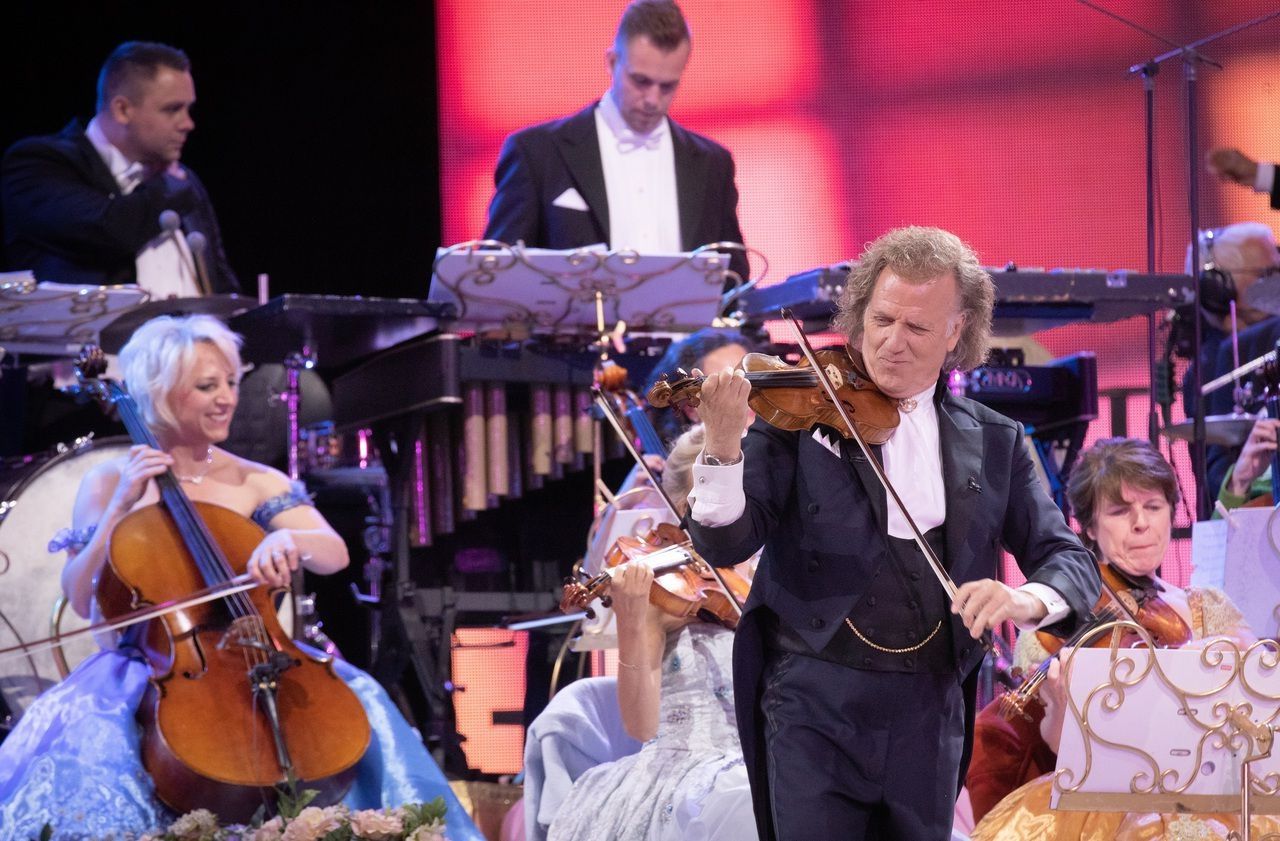 André Rieu’s Orchestra
He adapts his tours and recordings to contemporary expectations. The loyalty of his audience and the success of his orchestra confirm the solidity of a model where music, management and passion converge.
Conclusion
In 2025, André Rieu’s net worth, valued at €55 million, perfectly encapsulates the success of an artist who has learned to think like a business leader. Starting from Maastricht, his trajectory led him to build an empire founded on his Johann Strauss Orchestra, sold-out worldwide tours, multi-platinum albums and an independent structure — Rieu Productions — that controls every stage of his musical business.
André Rieu’s fortune rests on several pillars: concert revenues, record and DVD sales, broadcast rights, but also a solid real estate portfolio around Maastricht, including notably his iconic castle. By controlling his rights, internalising production and diversifying his income sources, he created a business model that is rare in classical music, capable of generating millions of euros in turnover while maintaining a strong artistic identity.
Today, André Rieu’s net worth in 2025 is not just a number. It embodies a textbook case: that of a musician who succeeded in democratising the waltz, building an international loyal following and transforming his name into a global brand. Between art, strategy and assets, André Rieu proves that classical music, profitability and financial independence can coexist, while remaining true to his original passion.
Frequently Asked Questions
André Rieu’s business model rests on a solid combination of worldwide tours, record sales, and rigorous management of his brand image. His success comes from a professional approach to classical music, where art and business coexist.
What are the key elements of André Rieu’s financial success?
André Rieu built his success on the popularisation of classical music, especially the waltz.
He conducts the Johann Strauss Orchestra, which attracts a wide audience through spectacular concerts.
He manages his career like a business, which allows him to maintain consistent profitability.
How does André Rieu monetise his concerts and shows?
His international tours remain his main source of income.
Concerts, often held in large venues or outdoors, generate millions of euros through ticket sales.
He also benefits from television broadcasts and DVD sales of his shows.
What marketing strategy does André Rieu use to attract a wide audience?
He cultivates an accessible and warm image, far from the formal tone often associated with classical music.
His advertising campaigns emphasise the emotion and conviviality of his concerts.
He maintains a strong presence on social media and video platforms, which reinforces his worldwide visibility.
What role does show production play in André Rieu’s business model?
His team fully manages the production of his shows, which reduces external costs.
Each concert becomes a complete visual and sonic experience, blending music, sets and staging.
This method reinforces audience loyalty and supports long-term ticket sales.
How do merchandise sales contribute to André Rieu’s income?
Merchandise such as CDs, DVDs, programmes and concert souvenirs form a significant part of his profits.
They extend the spectator’s experience beyond the concert.
These sales, available on-site and online, effectively complement his tour revenues.
In what ways does André Rieu diversify his income sources?
In addition to his tours and albums, he invests in real estate. For example, he owns a castle in Maastricht, which he sometimes uses for media events.
He also works with television channels and streaming platforms to share his shows. This allows him to reach a wider audience, even when he is not travelling.
Editorial methodology
The estimates published by Lama Fortune rely on public sources, media references, and sector comparisons. They are provided for informational purposes only and do not constitute financial advice.