Odoo management interface with various modules, a realization of Fabien Pinckaers' vision for simplified, integrated business management.
|

Fabien Pinckaers: Odoo's meteoric rise to 4 billion euros

Fabien Pinckaers

In 2002, Fabien Pinckaers launched the company Odooinitially called 'Tiny', to realize his vision of creating open-source business software and now to assets of €2,200,000,000. Open-source means that the software is made available free of charge. The decisive breakthrough came after a decade, when the company adopted a business model of offering a basic open-source supplemented by paid premium applications. This was no easy task, given the open-source community's attachment to its business model. Nevertheless, Odoo has successfully made the transition from a start-up in search of survival to a profitable, investment-independent company. Today, while continuing to invest in open-source functionalities, around 20% of Odoo products are paid for.
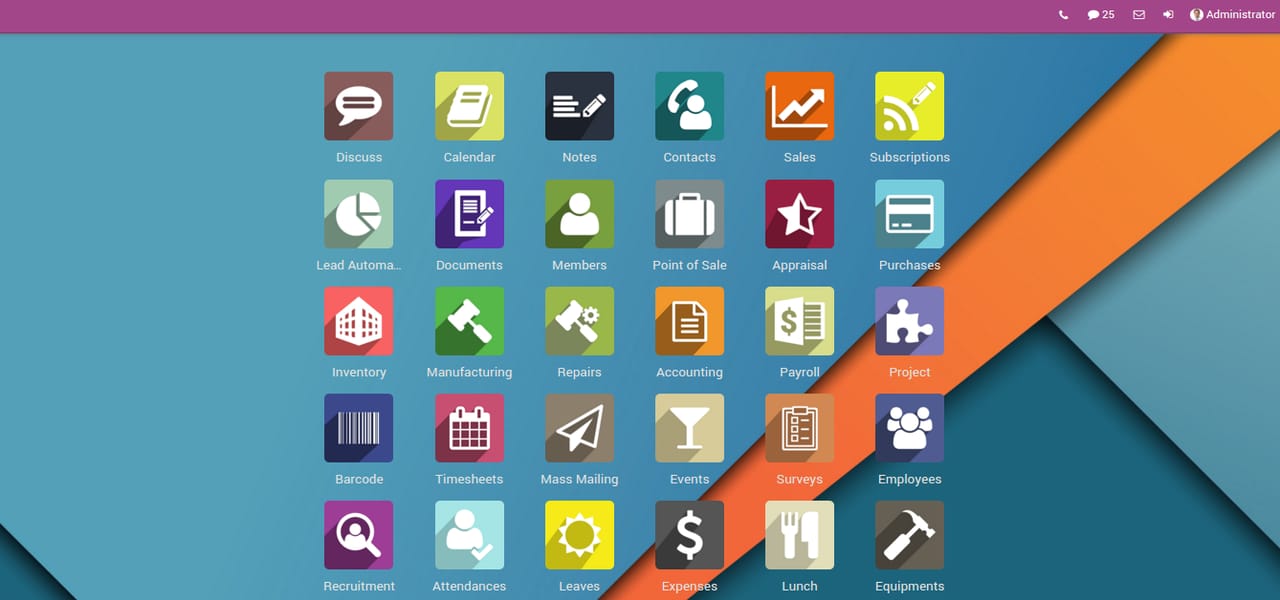
Pinckaers describes his product as an integrated software package designed to for SMEs, a niche not previously served. Unlike complex, expensive ERP solutions that take years to implement, Odoo offers a simple, affordable alternative. This is in contrast to the giant hands such as SAP and Microsoft, who have tried to get involved in this sector without major success.

To grow, Odoo favors internal promotion rather than external hiring of managers, which is contrary to the usual practices of start-ups. Pinckaers stresses the importance of cultivating leaders rather than hiring managers. Odoo seeks to promote the best employees. Their main challenge is to recruit enough developers to support their rapid growth. For example, for the current year, Odoo plans to recruit at least 160 programmerswhile the nearest university trains only 80 per year.

As far as managers are concerned, Pinckaers points out that at Odoo, promotion to a managerial role is the result of exceptional skill, and these leaders serve the team as trainers and advisors, rather than mere supervisors.

In 2023, Odoo became even stronger financially when US investment firm General Atlantic acquired a 2.2% stake from Noshaq, a public investor. Liège. Pinckaers has not sold its shares, now a majority interest in 55% 2.2 billion euros. At that time, the company's value was estimated at to 4 billion euros. Odoo's performance has followed an upward trajectory, with nearly 11 million customers in 2023, coming from just over 4.5 million in 2019.

Revenues have also shown marked growth, rising from 148 million euros in 2021 to 272 million in 2022, representing an increase of almost 85%. Odoo's customers include companies as varied as Eggo, Marcolini, Jost and Lucien, as well as well-known players such as Carrefour, the European Commission, Danone and Sodexo. Odoo solutions are also used by Proximus, KPMG and the independent mutual fund Helan.

Summary based on data as of June 26, 2023.

Similar Posts

  • Louis Ide: From Medicine to Politics, a Fortune of 8 Million Euros in the Service of Belgium

    Louis Ide, Belgian doctor and politician, embodies the alliance between medical expertise and political commitment. An influential member of the N-VA, he made a name for himself as a senator while pursuing a career in tropical medicine and clinical biology. With a fortune estimated at over 8 million euros, Louis Ide continues to play a key role in legislative debates and actively contributes to public health and Belgian society. Find out how this man of many talents balances his political, medical and family responsibilities.

  • Rudi De Winter and Françoise Chombar: The Belgian Entrepreneurial Couple with a Fortune of Over 1 Billion Euros

    Rudi De Winter and Françoise Chombar, figureheads of Melexis and X-Fab, have built an empire in microelectronics, with a combined fortune of over 1 billion euros. Thanks to their expertise and leadership, Melexis is one of the world leaders in automotive sensors. Although they have recently reorganized their shareholdings, the couple continue to play a key role in the industry, illustrating the growing influence of Belgian entrepreneurs on the world stage.

  • Vincent De Gryse: The 34 Million Euro Border Empire, from KV Kortrijk to Stop & Shop

    Vincent De Gryse, unexpected heir to KV Kortrijk, has turned a sporting legacy into a business opportunity. He became majority owner of the club after the death of his brother, eventually selling it for 3 million euros to Malaysian businessman Vincent Tan in 2015. At the same time, De Gryse built up a commercial empire with his Stop & Shop stores, strategically located near the Franco-Belgian border. Specializing in the sale of tobacco and alcohol, these stores target an international clientele attracted by low prices. This dual strategy has enabled De Gryse to accumulate a fortune estimated at over 34 million euros, illustrating his flair for cross-border business opportunities.

  • Thomas Baert: Flooring revolutionary with a 73 million euro fortune

    Belgian-born Thomas Baert made his mark on the Asian flooring industry by founding Chinafloors and Rugmax in Beijing. With around 1,300 employees, his company Creative Flooring Solutions (CFL) enjoys a global presence, with production sites in Vietnam, the USA, China and Taiwan. Thanks to its commitment to innovation and sustainable development, Baert has built up a fortune of over 73 million euros. Discover how its innovative brands, such as Firmfit, Novocore and Tenacity, have revolutionized the flooring market.

  • Jackie Loomans: Industry Pioneer and Legendary Dakarist, An 83M€ Legacy

    Jackie Loomans, visionary Belgian entrepreneur and passionate rally competitor, has left an indelible mark on the world of both business and motorsport. Founder of the Loomans Group, he revolutionized plastic packaging production by focusing on innovation and quality, propelling his company to international success and a remarkable sale to IPL Plastics for 75 million euros.