Sale of Alpro for €325 million: how the Vandemoortele family cashed in on their plant-based jackpot
Amounts mentioned are estimates based on public sources and can vary depending on methodology (income, assets, debt) and update date.
For over a century, the Vandemoortele family has shaped European food with a simple idea: offering quality products, accessible to all, and designed to suit everyone. Born in Izegem, Belgium, the company grew from a simple local oil mill. Today, it is an international group known for its margarines, oils, bakery products, and plant-based innovations.
Frankly, Vandemoortele and its Alpro brand have durably transformed the way Europe eats and thinks about nutrition.
The story of Alpro, launched by the group in 1980, illustrates this drive to innovate. The family bet early on plant proteins, sensing that society would become more attentive to health and the environment.
 Vandemoortele logo
This choice, somewhat risky at the time, allowed Alpro to become a reference for milk alternatives, while strengthening Vandemoortele’s position in the European market.
With its commitment to quality, sustainability, and dietary diversity, the Belgian group continues to influence what appears on the tables of families and professionals. Diving into the history of this family business is also understanding how it managed to blend tradition and innovation, while feeding Europe and shaping its culinary future.
The origins of the Vandemoortele family and the birth of Alpro
The Vandemoortele family, from Izegem in Belgium, built a company that truly marked the European food industry. Their story blends artisanal know-how, industrial innovation, and a sustainable vision centered on soy and plant-based nutrition.
The family history and early activities in Izegem
The Vandemoortele family has its roots in the Flemish region of Izegem, an area known for its craftsmanship and food industry. From the late 19th century, they specialized in the production of oils and margarines.
The company quickly grew, driven by increasing demand for processed food products. In the 1960s, the Vandemoortele group became a major player in frying oils and fats for bakers.
Iconic products at the time:
- Refined and unrefined oils
- Margarines and cooking fats
- Dough and pastry materials
These activities laid solid foundations in industrial know-how, with a genuine commitment to quality, innovation, and closeness to artisan bakers.
 Wealthy Vandemoortele family
The creation of Alpro and innovation around soy
In 1974, Vandemoortele launched a rather innovative project: producing soy milk under the Alpro brand. At the time, soy was virtually unknown in Europe, so betting on a more plant-based diet was bold.
The company invested in research to understand how to transform European soy into beverages and food products. This scientific and pragmatic approach allowed Alpro to offer a genuine nutritional alternative to dairy products.
Key innovations:
| Year | Innovation | Impact |
|---|---|---|
| 1974 | Launch of Alpro soy milk | Introduction of soy to the Belgian market |
| 1980s | Extension of the range (desserts, plant-based yogurts) | Rapid growth across Europe |
| 2000s | Sustainable development and responsible agriculture | International recognition |
Gradually, Alpro became a pioneer brand in plant-based food.
The role of Philippe Vandemoortele in the company vision
Philippe Vandemoortele, from the third generation, played a key role in modernizing the group. He pushed a strategy that blends tradition and innovation while maintaining strong Belgian roots.
Under his leadership, the Vandemoortele group strengthened its presence in Europe and adopted a sustainable approach. He emphasized the quality of raw materials and environmental responsibility.
 Head of the Vandemoortele family
Philippe also encouraged the separation between brand and production activities. This allowed Alpro to develop independently, while maintaining a strong link with the parent company.
His management style truly helped the group remain a model family business, capable of adapting to new food needs.
Vandemoortele family fortune in 2025
In 2025, the Vandemoortele family remains at the helm of a food group generating around €1.98 billion in annual revenue, with an operating result of around €250 million.
Applying classic multiples for the food industry (roughly 8 to 10 times operating result or EBITDA), one can reasonably estimate that the group’s value lies somewhere between €2.5 and €3.5 billion.
Since the company is entirely owned by the family through the holding company Vandemoortele NV, the family’s economic wealth linked to the group likely hovers around €2 to €3 billion, even though no official figure is published. This is a theoretical estimate, based on public accounts and valuation practices in the food industry, but it clearly shows that the Vandemoortele family plays in the league of Belgium’s major industrial fortunes.
Value of the Vandemoortele group: a champion with nearly €2 billion in revenue
After the sale of Alpro, Vandemoortele refocused on two major pillars:
- Frozen bakery and pastry (boosted by the acquisition of Panavi and then Délifrance),
- Margarines, oils, and professional fats for catering and industry.
As a result: in 2023–2024, the group reported nearly €2 billion in revenue and an operating profit exceeding €250 million.
With the integration of Délifrance (3,200 employees, 14 additional sites) and activities present in over 20 countries, Vandemoortele positions itself as a European heavyweight in frozen bakery.
 Vandemoortele family factory
In purely financial terms, a group of this size, profitable and unlisted, justifies a valuation of several billion euros. It is this industrial machine, highly cash-generating, that forms the core of the Vandemoortele family’s fortune.
4.3. The Alpro “deal”: a sale at around €325 million
One of the key moments in building the Vandemoortele fortune was the sale of Alpro. In 2009, the family sold its plant-based subsidiary to the American company Dean Foods for $455 million, or approximately €325 million at the exchange rate at the time.
This transaction came after the costly acquisition of Panavi, which had increased the group’s debt. The sale of Alpro served to:
- Reduce Vandemoortele’s debt by several hundred million euros,
- Rebuild solid equity,
- And generate a significant capital gain for the family shareholder.
From a wealth perspective, one can consider that these €325M were partially absorbed by debt repayment… but they also made it possible to save the group, preserve family independence, and launch a phase of profitable growth. In short, Alpro was a fortune catalyst, even if the brand left the Vandemoortele scope.
 Alpro logo
4.4. Diversified assets and long-term strategy
To secure their fortune, the Vandemoorteles don’t rely solely on cash generated by industrial activities. The group:
- Invests in targeted acquisitions (Panavi, then Délifrance),
- Strengthens its structure with financial instruments such as a €100M mezzanine financing in 2025,
- And maintains stable family ownership, without going public.
At each stage, the logic is clear:
- Increase revenue (nearly €2Bn today),
- Improve margins through critical mass,
- And increase the overall value of the group, and thus the family’s wealth.
As a result, the Vandemoortele fortune rests on a diversified industrial portfolio, less spectacular than a startup portfolio, but extremely solid and consistently cash-generating year after year.
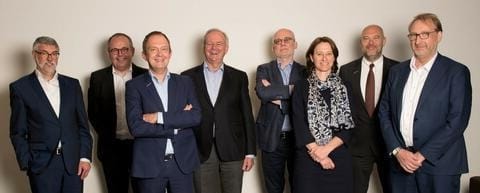 Vandemoortele family fortune
The rise of Alpro: Innovating to feed Europe
Alpro established itself as a pioneer in plant-based food in Europe. It achieved this through a strategy of continuous innovation, controlled production, and rapid adaptation to changing consumer desires. Its development rests on the valorization of soy, product diversification, and impressive growth following several major acquisitions.
European expansion and the adoption of soy-based products
Born in Ghent in the 1980s, Alpro initially produced foods based on non-genetically modified soy. The company bet on quality, sustainability, and nutrition to win over a public increasingly concerned about health and the environment.
It quickly conquered neighboring markets: France, the United Kingdom, Germany… Success also comes from a local approach: adapting flavors, educational communication, and partnerships with distributors.
In the 2000s, demand for plant-based beverages exploded. Alpro invested in new factories and technologies to keep pace. In parallel, it strengthened its presence in catering and supermarkets.
Main growth drivers:
- Integrated European production
- Sustainable soy sourcing
- Product innovation (beverages, desserts, plant-based yogurts)
The integration of Provamel and the development of the range
When Provamel joined the adventure, it marked a turning point. Provamel targeted the organic market, while Alpro addressed the general public. Together, they covered the entire plant-based segment, from specialty organic to more mainstream products.
This complementarity made it possible to expand the range: soy beverages, desserts, cooking creams, then oat-, almond-, and coconut-based alternatives. Each new product responded to a specific demand: taste, texture, or reduced environmental impact.
 Is the Vandemoortele family billionaires?
Both brands also strengthened their transparency: clear mention of ingredient origins, communication on environmental impacts. This positioning reinforced trust among European consumers.
The impact of acquisitions and revenue growth
When Danone acquired Alpro in 2017, it gave a significant boost. This acquisition opened access to an immense distribution network and more resources for investment.
Since then, Alpro has modernized several production sites, especially in Belgium and the United Kingdom, with investments exceeding €30 million. Thanks to these efforts, the company increased volumes and improved energy efficiency.
Alpro’s revenue grew steadily, driven by the rise of the European plant-based market. Over five years, the plant-based beverage segment grew by around 30%, and Alpro now holds nearly one-fifth of the market.
| Indicator | Estimated result | Period |
|---|---|---|
| Reduction in CO₂ emissions | -34% | 2010–2021 |
| Decrease in water consumption | -29% | 2010–2021 |
| Plant-based market growth | +30% | 5 years |
| Alpro market share | ~18% | Europe |
This dynamic clearly shows that Alpro occupies a central place in Europe’s food transition.
Flagship products and food diversification
Vandemoortele has become a key player in the production of margarines, bakery products, and plant-based alternatives. Alpro, born from the same group, expanded this offering with its soy-based products and plant-based desserts, strengthening the group’s presence in the European sustainable food market.
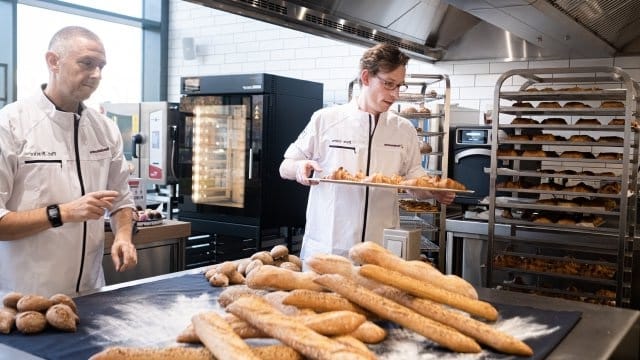 Vandemoortele family bread business
Margarines and plant-based alternatives
For over a century, Vandemoortele has been developing margarines designed for the needs of consumers and professionals.
The company focuses on ingredient quality, ease of use, and nutritional value.
The ranges cover several uses:
- Spreads with low saturated fat content
- Cooking margarines for catering
- Custom solutions for artisan and industrial pastry
These products meet the growing demand for alternatives to animal fats.
Vandemoortele also invests in more sustainable recipes, with certified vegetable oils and processes that reduce the carbon footprint.
Dairy products and soy-based desserts
Alpro, created by Vandemoortele in the 1970s, pioneered soy-based beverages and desserts.
It then diversified towards other plant-based sources such as oat, almond, and coconut.
Its products include:
| Category | Example product | Main characteristic |
|---|---|---|
| Plant-based beverages | Soy milk, almond drink | Source of plant proteins |
| Desserts and yogurts | Soy creams, yogurt alternatives | Lactose-free, calcium-rich |
| Cooking creams | Soy cuisine, oat cuisine | Suitable for cooking |
Alpro applies the famous 3P principle: People, Planet, Profit.
It seeks to balance well-being, sustainability, and economic performance, and frankly, that has helped popularize plant-based food in Europe.
 Heirs to the Vandemoortele family fortune
Innovation in bakery products
Vandemoortele built its expertise in bakery, pastry, and confectionery with brands such as Panavi.
The group offers more than 3,000 references, from the traditional baguette to the American donut.
The products stand out for:
- Ease of use for professionals
- Consistent quality through standardized processes
- Adaptation to local tastes in each European market
The company combines artisanal know-how and modern technology to guarantee genuine flavor and top-quality texture.
This strategy of continuous innovation reinforces its position among the leading bakery product suppliers in Europe.
Nutrition and health benefits
Vandemoortele and Alpro focus on a balanced diet.
They promote plant protein sources, limit cholesterol, and offer a lighter alternative to animal products.
These choices clearly meet today’s nutritional needs.
Rich in protein and cholesterol-free
Alpro products, often made from soy, almond, or oat, provide quality proteins with zero cholesterol.
These plant proteins help maintain muscle mass and prolong the feeling of satiety.
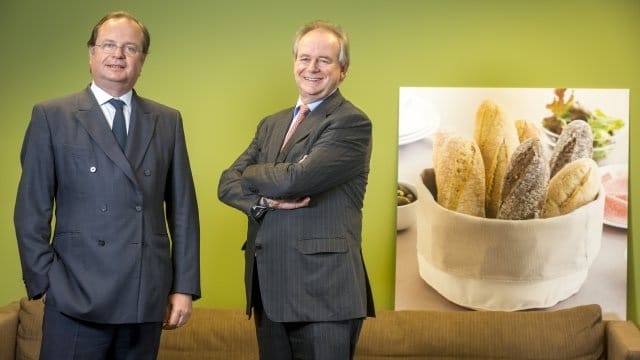 Vandemoortele family fortune
Alpro adds micronutrients such as calcium, vitamin D, and B12 to compensate for what might be lacking in a diet without animal products.
This makes these foods practical for those who want to consume less meat or dairy.
| Key element | Presence in Alpro | Nutritional role |
|---|---|---|
| Plant proteins | Yes | Muscle support |
| Cholesterol | No | Reduced cardiovascular risk |
| Calcium & Vitamins | Yes | Bone and immune health |
This combination covers essential needs while limiting saturated fats, which are often too prevalent in animal products.
Comparison with meat and traditional dairy products
Plant-based alternatives contain little saturated fat and no cholesterol, unlike red meat or full-fat dairy products.
Incorporating these products into a varied diet can benefit cardiovascular health.
Alpro’s plant-based yogurts show a moderate caloric content.
A plain plant-based yogurt contains around 50 to 60 kcal per 100g, while a full-fat dairy yogurt often exceeds 100 kcal.
Plant proteins are sometimes less complete than those from meat.
But by combining different sources (soy, oat, nuts), their biological value improves.
Health impact and consumption trends
European studies show that reducing dietary cholesterol and saturated fats decreases the risk of cardiovascular disease.
Vandemoortele and Alpro rely on nutrient-rich plant ingredients to align with this approach.
More and more consumers choose these alternatives for reasons of health, ethics, or sustainability.
Plant-based products promote a more environmentally friendly diet, while remaining accessible.
It is clear that diets are evolving toward lighter and more natural options.
This trend pushes companies to innovate and offer nutritious and tasty products, adapted to current expectations.
Sustainable development and social responsibility
Vandemoortele and Alpro place sustainability at the heart of their strategy.
They seek to reconcile economic growth, environmental protection, and respect for people.
Their actions focus on responsible raw material management, emissions reduction, and creating a fair work environment.
Responsible soy management and traceability
Alpro uses soy as the main ingredient in its plant-based products.
The company exclusively uses non-GMO soy intended for human consumption.
It favors European suppliers, especially in France and Belgium, to limit transport distances and ensure traceability.
Each batch of soy is tracked from harvest to processing.
This system ensures transparency and compliance with environmental standards.
Alpro works with farmers committed to sustainable agriculture, which limits water and pesticide use.
This approach reduces the ecological impact of production and supports a more ethical supply chain.
The company regularly publishes reports on soy origin and sustainability progress.
Environmental commitments and carbon footprint reduction
Vandemoortele and Alpro invest in technologies to reduce their carbon footprint.
They optimize energy consumption in their factories and develop recyclable or biodegradable packaging.
Both companies track precise indicators to measure their CO₂ emissions and water consumption.
| Area | Main objective | Example of action |
|---|---|---|
| Energy | Reduce consumption | Installation of high-efficiency equipment |
| Transport | Reduce emissions | Optimization of logistics routes |
| Waste | Move toward zero waste | Valorization of food by-products |
Their approach aligns with a responsible production logic.
They show that a food company can maintain quality while limiting its environmental impact.
Social initiatives and employee well-being
Vandemoortele places great importance on social responsibility.
The company strives to offer safe, inclusive, and motivating working conditions.
It supports continuous training and encourages diversity in its teams.
Employees benefit from personal development and workplace health programs.
Local initiatives, such as volunteering or community partnerships, strengthen the bond between the company and society.
This corporate culture is based on values of respect, collaboration, and equity.
By creating a climate of trust, Vandemoortele and Alpro contribute to a sustainable business model, centered on people as much as on performance.
Growth, acquisitions, and strategic challenges
The Vandemoortele group experienced rapid expansion, driven by major acquisitions and sometimes bold financial decisions.
These choices, sometimes risky, forged its identity as a family business oriented toward international growth and sustainable profitability.
The sale of Alpro to Dean Foods and the consequences
In 2009, Vandemoortele sold Alpro, its subsidiary specializing in soy-based products, to the American company Dean Foods for around €325 million.
This decision aimed to reduce the debt accumulated after the costly acquisition of Panavi in 2007.
The sale allowed the group to restore its financial situation.
It was able to focus its resources on its core activities: frozen bakery, margarines, and culinary fats.
This decision also marked the loss of an iconic brand, a pioneer in plant-based food in Europe.
Alpro represented a significant share of the group’s long-term growth potential.
Despite this, Vandemoortele used the funds to stabilize its balance sheet and relaunch industrial investments.
The group thus avoided a prolonged crisis and preserved its family independence.
Major acquisitions of the Vandemoortele group
Vandemoortele pursued a targeted expansion policy to strengthen its position in the European market.
Among its notable operations, the acquisition of Panavi in 2007 and, more recently, Délifrance in 2025.
| Year | Company | Sector | Main impact |
|---|---|---|---|
| 2007 | Panavi (France) | Frozen bakery | Doubling of bakery division revenue |
| 2025 | Délifrance (France) | Frozen bakery products | Creation of the largest European player in the sector |
The acquisition of Délifrance, from the Vivescia group, added 3,200 employees and 14 production sites to Vandemoortele’s portfolio.
These acquisitions supported revenue growth, which reached nearly €2 billion in 2025.
The group had to manage the complex integration of new subsidiaries and the pressure on margins.
It’s never simple, but that’s the price to pay to remain a leader.
Repositioning after the crisis and diversification
After the 2008 financial crisis and the sale of Alpro, Vandemoortele revised its strategy.
It bet on more balanced growth and geographical diversification.
The company established itself in more than 20 countries and employs more than 4,500 employees.
It invests in energy efficiency, logistics, and product innovation.
The group also strengthened its equity through a €100 million fundraise in 2025 from four investment funds.
This contribution supported new expansion projects and targeted acquisitions.
Vandemoortele consolidated its image as a stable European food group, capable of combining profitability and adaptation to an ever-evolving market.
Impact and legacy of the Vandemoortele family in Europe
The Vandemoortele group has profoundly marked the European food industry.
Its role was illustrated in the transformation of oils, margarines, and bakery products.
Its legacy is distinguished by a family business model that evolves over multiple generations while remaining independent.
The influence on European food
Vandemoortele started in Izegem, Belgium, as an oil mill at the end of the 19th century. Very quickly, the company moved into margarines, mayonnaises, and frying oils, establishing itself as an indispensable player in European food distribution.
In the 1970s, it launched frozen bakery products. This decision simplified the lives of bakers and made fresh breads and pastries accessible throughout Europe.
The creation of Alpro in 1974 truly changed the game. This subsidiary brought soy milk to the European market, well before plant-based food became a trend. Even after the sale of Alpro in 2009, many still associate the brand with the group’s spirit of innovation.
Today, Vandemoortele supplies thousands of bakeries, restaurants, and distributors across Europe. The group’s products travel to more than 100 countries, demonstrating a genuine commitment to quality, convenience, and sustainability.
The family business model and its longevity
The Vandemoortele family is still at the helm, maintaining family control over an international company. This model allows for a long-term vision, avoiding stock market pressure, and prioritizing solid investments.
The group relies on three pillars:
- Financial and decision-making independence
- Intergenerational transfer of know-how
- Adaptation to developments in the European market
This model encourages thoughtful and sustainable growth. By gradually adding new activities, such as frozen bakery or plant-based products, Vandemoortele has managed to maintain its identity while remaining competitive.
Today, it is one of the largest unlisted family food groups in Europe. It blends the Belgian heritage with a genuine European vision.
Conclusion on the Vandemoortele family
In summary, the Vandemoortele family perfectly illustrates how an oil mill from Izegem can, in a century, transform into a family empire valued at several billion euros.
Between the rise of Alpro, its resale for around €325 million, the growth of frozen bakery, and a revenue now approaching €2 billion, the group has built a massive fortune, managed with characteristically Belgian discretion.
For a site specializing in wealth, the angle is ideal: an unlisted industrial dynasty, an implicit valuation of €2.5 to €3.5 billion, and a family that prefers silent growth over media stunts.
Frequently Asked Questions (FAQ)
Vandemoortele and Alpro have left their mark on the European food industry through their complementary approach. On one side, plant-based innovation; on the other, the tradition of oils and fats: together, they responded to growing demand for products that are both healthy and convenient.
What is the history of the collaboration between Vandemoortele and Alpro?
Alpro was founded in 1980 in Ghent, Belgium, as a subsidiary of the Vandemoortele group. Philippe Vandemoortele launched the brand to develop soy-based products. In 2009, Vandemoortele sold Alpro, which continued to grow under new ownership.
How did Vandemoortele and Alpro influence the European food industry?
Vandemoortele modernized the production of margarines and bakery products. Alpro, for its part, introduced plant-based milk alternatives. Together, they broadened food choices in Europe and encouraged the transition toward more sustainable products, adapted to new lifestyles.
What are the most popular products from the partnership between Vandemoortele and Alpro?
Vandemoortele became known for its margarines, cooking fats, and frozen bakery products. Alpro made a big impact with its soy milks, plant-based yogurts, and almond- or oat-based beverages. These products have greatly contributed to the growth of plant-based ranges in Europe.
What strategies did Vandemoortele and Alpro adopt to succeed in the European market?
Vandemoortele bet on diversification and innovation in bakery and food fats. Alpro invested in research to improve the taste and nutritional quality of its plant-based products. Both brands knew how to adapt their offerings to regional preferences and consumer needs.
How do Vandemoortele and Alpro manage their commitment to sustainability and the environment?
Both companies take sustainability seriously. Vandemoortele seeks to optimize energy efficiency and choose responsible ingredients. Alpro applies the “3P” principle — People, Planet, Profit — to balance social, environmental, and economic impacts.
What were the main challenges faced by Vandemoortele and Alpro in their European expansion?
Vandemoortele faced increasingly fierce competition. It also had to keep pace with rapid changes in eating habits.
For its part, Alpro tried to convince consumers that plant-based products are worthwhile from a nutritional standpoint. Both companies sought to grow internationally, while keeping their Belgian identity firmly anchored.
Editorial methodology
The estimates published by Lama Fortune rely on public sources, media references, and sector comparisons. They are provided for informational purposes only and do not constitute financial advice.