Arms, contracts and public money: FN Herstal, Wallonia’s industrial treasure
Amounts mentioned are estimates based on public sources and can vary depending on methodology (income, assets, debt) and update date.
Today, FN Herstal is talked about well beyond Wallonia. Founded in 1889 in Herstal, the company benefits from continuous growth, driven especially by European demand for armaments.
Behind these impressive results, one question keeps coming up: it is not private shareholders who benefit from the gunmaker’s profits, but rather the Walloon Region, which remains the sole owner of the group.
This situation makes FN Herstal quite unique in the defense sector. The profits from its international sales, particularly in the Defense & Security segment, end up in regional public coffers.
This model of public ownership fuels both local pride and debates about the role of the state in such a sensitive sector.
 FN Browning logo
When you look closely at the structure of the FN Browning group, its recent investments, and its strategic importance for Wallonia, you better understand how this century-old company blends economic performance and political stakes.
Analyzing its governance, its innovations, and the challenges ahead reveals who truly benefits from this industrial success.
FN Herstal’s ownership structure
FN Herstal is part of a fully public industrial group. Based in Herstal, near Liège, the company operates under the direct supervision of the Walloon Region.
The Region holds all capital through the Société wallonne de participations et de gestion (SOGEPA). This organization carries significant weight in strategic decisions and the distribution of profits.
Role of the Walloon Region
The Walloon Region remains the sole shareholder of FN Herstal. It directs the company through the FN Browning Group, formerly known as Groupe Herstal.
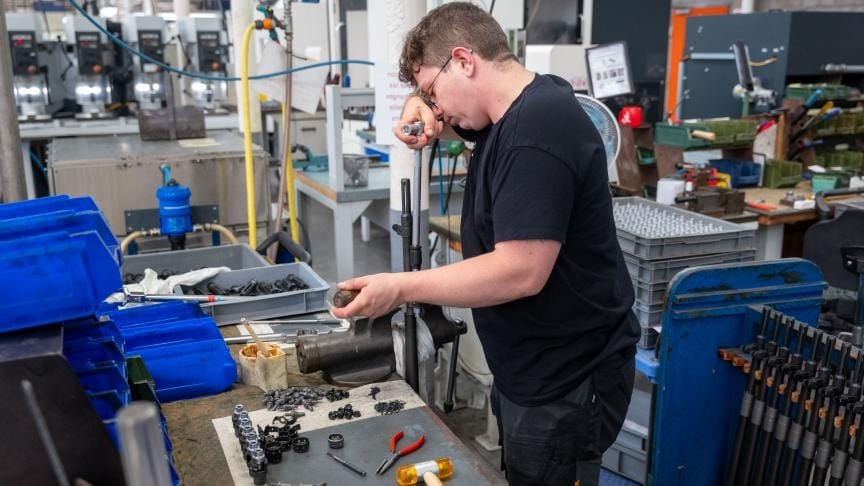 Weapons produced by FN Herstal
Thanks to this public status, the Region guarantees financial stability and protects jobs in this sensitive sector. The profits generated, such as the €75 million net income in 2023, therefore return to the community.
These revenues support the regional budget and sometimes fund other economic or technological projects in Wallonia.
In practice, the Region acts primarily as a strategic owner. It defines the broad directions, particularly on innovation and exports, while leaving day-to-day management to the group’s leadership.
This model seeks a balance between economic performance and public responsibility.
Shareholder involvement
FN Herstal has no private shareholders. SOGEPA, the financial arm of the Walloon Region, holds 100% of the shares.
This structure simplifies governance and avoids any pressure from stock markets. Major decisions depend on the regional government, which must approve budgets and investments.
The board of directors consists mainly of public representatives and industrial executives. This mix ensures both direct political oversight and technical expertise.
 SOGEPA logo
Profits do not go to private dividends: they are reinvested in production, research, and training.
| Type of shareholder | Percentage held | Representing entity |
|---|---|---|
| Public (Walloon Region) | 100% | SOGEPA / FN Browning Group |
| Private | 0% | None |
History of acquisitions and investments
Since its founding in 1889, FN Herstal has undergone many changes. In the 1990s, after a difficult period, the Walloon Region took back full control to save the company and preserve jobs.
This public takeover marked a real turning point in its governance. Since then, the group has invested in the modernization of its factories in Belgium and abroad, notably in the United States (Liberty).
Thanks to these investments, FN Herstal was able to increase its production capacity and support revenue growth, which exceeded €900 million in 2023.
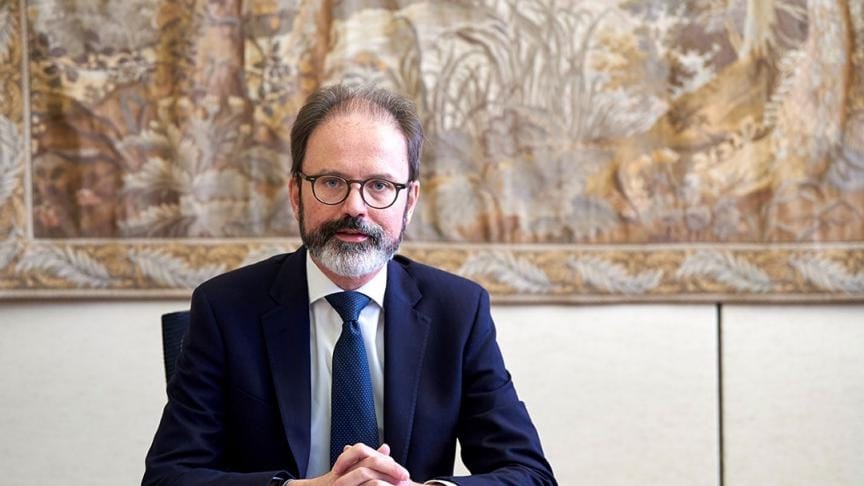 FN Herstal head
By integrating the Browning and Winchester brands, FN Herstal diversified its activities between defense and sporting shooting. This strategy, driven by the Walloon Region, consolidated the group’s position as a major industrial player, while maintaining public control.
Distribution of profits: direct and indirect beneficiaries
The profits generated by FN Herstal are distributed among several economic actors. A portion returns to public shareholders, while another creates indirect effects on employment, subcontractors, and the regional economy.
This distribution shows the strategic role of the company within the Walloon industrial fabric.
Dividends and economic impact
FN Herstal is entirely owned by the Walloon Region through the Herstal SA group. The dividends paid therefore directly benefit regional public finances.
These revenues support economic policies, research, and local employment. In 2023, FN Herstal exceeded one billion euros in revenue, with solid profitability.
A portion of the profits goes back into infrastructure modernization and research, particularly around small arms and defense systems.
The dividends distributed strengthen the Walloon Region’s investment capacity. This public model makes it possible to transform industrial profits into collective resources, which helps stabilize the regional budget.
| Beneficiary | Type of benefit | Example |
|---|---|---|
| Walloon Region | Public dividends | Funding of regional projects |
| FN Herstal | Internal reinvestment | Innovation, modernization |
| Local authorities | Taxes and levies | Support for public services |
Impact on local employment
FN Herstal employs several thousand people, mainly in the province of Liège. The wages, social contributions, and taxes generated carry significant weight in the local economy.
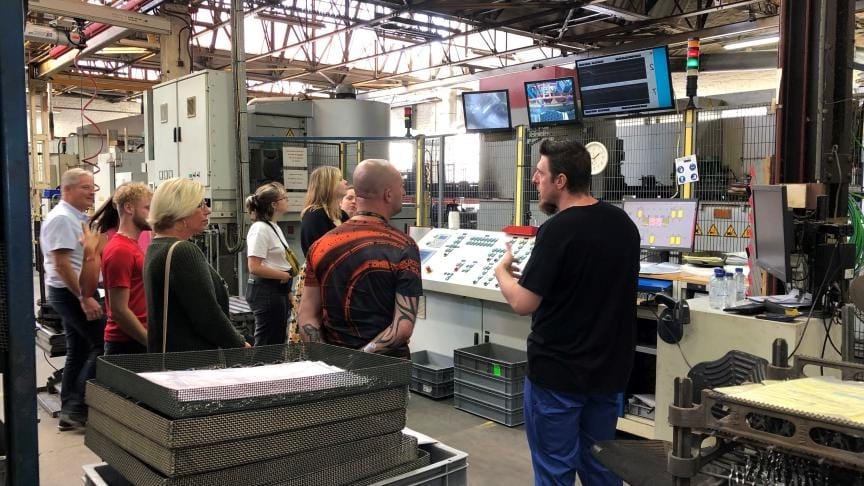 FN Herstal workers
The company maintains a stable employment policy, sustained by international demand for armaments. These skilled jobs stimulate technical training in the region and encourage the transmission of industrial know-how.
The reinvested profits also fund continuing education programs and applied research projects. In return, this reinforces the competitiveness of the Walloon manufacturing sector and supports the sustainability of industrial employment.
Subcontractors and industrial partners
Around FN Herstal, there is a dense network of metallurgical, mechanical, and electronic subcontractors. These local companies directly benefit from orders related to the production of weapons and equipment.
Contracts with these partners support several hundred indirect jobs in the region. FN Herstal’s profits therefore spread throughout the entire supply chain, stimulating the growth of specialized SMEs.
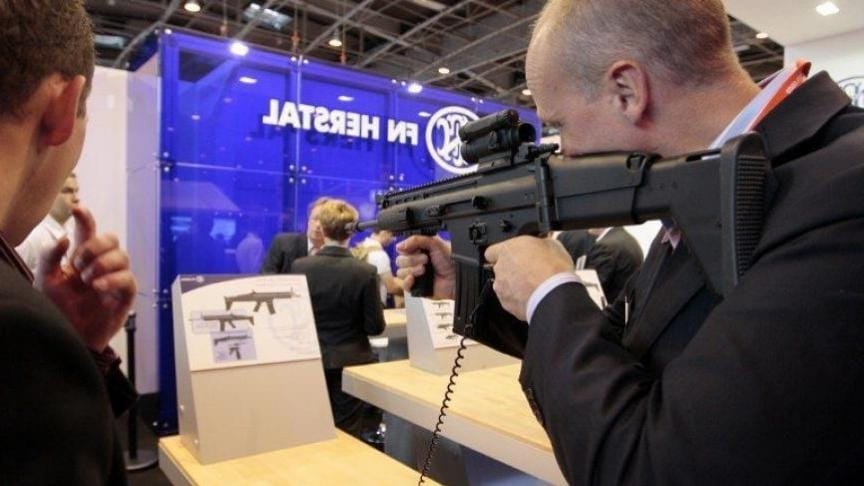 FN Herstal ammunition
This industrial fabric encourages collaborative innovation. Partnerships with research institutes, such as those of the Skywin Wallonie cluster, strengthen regional technological capacity.
These collaborations make FN Herstal an economic engine that connects production, innovation, and local employment.
The strategic role of the Walloon Region
The Walloon Region holds 100% of the capital of the FN Browning Group, the parent company of FN Herstal. It acts as shareholder, investor, and guarantor of the stability of a key player in the Belgian defense industry.
Its financial involvement aims to preserve employment, support innovation, and strengthen regional industrial sovereignty.
Recent public investments
In 2025, the Walloon Region decided to inject an additional €100 million into the FN Browning Group. This contribution adds to a series of investments made in recent years to modernize production sites in Herstal and Zutendaal.
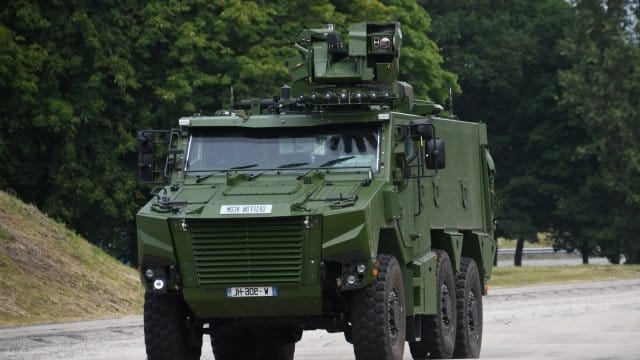 FN Herstal armored vehicle
This decision came after a 2025 marked by a record revenue of €934 million, a large portion of which came from the Defense & Security sector.
The public investment does not change the ownership structure: the capital remains entirely public, with no opening to other shareholders.
Regional authorities explain this choice by the need to strengthen the group’s competitiveness and export capacity in an unstable geopolitical context.
Walloon Minister of Economy Pierre-Yves Jeholet also notes that the defense sector represents approximately 9,000 direct jobs and nearly €5 billion in economic activity in Wallonia.
Historic rescue and political stakes
The relationship between FN Herstal and the Walloon Region dates back to the late 1980s, when the region took over the company to prevent its bankruptcy.
Since then, FN has become a symbol of Walloon industrial policy, balancing regional pride and ethical debates about arms production.
With each injection of public funds, the discussion restarts on the political and social responsibility of the state as shareholder. Some elected officials defend these aids to preserve strategic expertise, while others see it as a costly dependence on a sensitive sector.
The management of FN Herstal illustrates the complexity of a model where public power acts as an industrial entrepreneur while remaining accountable to citizens.
This role demands a delicate balance between economic profitability, national security, and democratic oversight.
FN Browning and international expansion
FN Browning is strengthening its presence in several key markets. The group benefits from growing sales in Europe, a solid foothold in the United States, and an active strategy of industrial partnerships.
This expansion rests on increased demand for defense and the group’s ability to adapt its production to varied geopolitical contexts.
Development in Europe
The subsidiary FN Herstal, based in Belgium, is showing rapid growth thanks to European rearmament. Between 2022 and 2024, its revenue climbs by around 18% per year to reach €361 million. This increase comes mainly from orders for small arms and ammunition for EU and NATO armed forces.
The Walloon Region, as sole shareholder, fully supports this expansion. In 2025, it injects an additional €100 million into FN Browning to fund new projects, such as an ammunition cartridge factory in Herstal. This new facility is expected to create more than 100 direct jobs and strengthen local production.
The major European markets remain France, Germany, and the Nordic countries. There, military modernization is driving up demand. FN Browning targets primarily long-term contracts and relies on the reliability of its products to maintain its position.
Presence in the United States
FN Browning has a long history in the United States, where it manufactures and sells weapons under the Browning and Winchester brands. The American market weighs heavily in the revenue of the Hunting & Sport Shooting division, which exceeds €400 million in 2025.
American factories produce locally to meet civilian and military needs. FN Browning maintains strong ties with specialized distributors and law enforcement agencies. This presence helps the group reduce its dependence on Europe and maintain stable activity, even when public demand changes.
The company also invests in R&D to improve the accuracy and durability of its sporting weapons. This approach reinforces its image as a reliable and innovative manufacturer, which is no small matter in this market.
Acquisitions and partnerships
FN Browning bets on international growth through technology partnerships and targeted acquisitions. The Noptel brand, integrated into the group, clearly illustrates this strategy. Noptel, specializing in sighting and optical measurement systems, supports the modernization of the Defense & Security division, which exceeds €500 million in 2025.
The group collaborates with other European companies to develop electronic components and smart shooting systems. These cooperations aim to strengthen the competitiveness of the Walloon sector against American and Asian giants.
FN Browning prefers to invest in complementary technologies rather than making large acquisitions. This approach limits financial risks and encourages internal innovation as well as product diversification.
Production and innovation: weapons and ammunition
FN Herstal focuses on the design and manufacture of small arms and ammunition for armed forces, security services, and certain civilian markets. The company blends historical expertise and modern technologies to meet European demand for defense equipment.
Range of weapons manufactured
The Herstal factory manufactures an extensive range of small arms. These include pistols, assault rifles, light and heavy machine guns, and precision weapons. Many armies, including those of Belgium, France, and other NATO countries, use these products.
Among the famous models, the FN SCAR, the Minimi, and the Five-seveN stand out. These weapons are distinguished by their reliability, ergonomics, and ease of maintenance. FN Herstal also customizes its models according to user needs, whether for caliber, weight, or sighting systems.
 FN Herstal logo
The company balances production between military orders and sales to security forces. This diversification reduces risks linked to a single customer and helps stabilize industrial activity in the Liège region.
Ammunition production
In addition to weapons, FN Herstal actively produces small-calibre ammunition. It supplies cartridges for its own weapons, but also for other European manufacturers and partners.
A recent partnership with France aims to relaunch ammunition production on French territory with the technical support of FN Herstal. This project seeks to strengthen European defense autonomy.
The ammunition manufactured in Herstal meets strict safety and performance standards. It covers several calibers, from 5.56mm to 12.7mm, and each batch is tested to ensure consistent accuracy. FN Herstal also invests in manufacturing processes that are more economical in terms of energy and materials.
R&D investments
FN Herstal devotes a significant share of its revenues to research and development (R&D). Engineers work on innovations to improve the accuracy, durability, and operational safety of weapons.
The company is also working on the digitization of weapons systems, such as smart sights and shot-tracking devices. These technologies boost operational performance and facilitate maintenance.
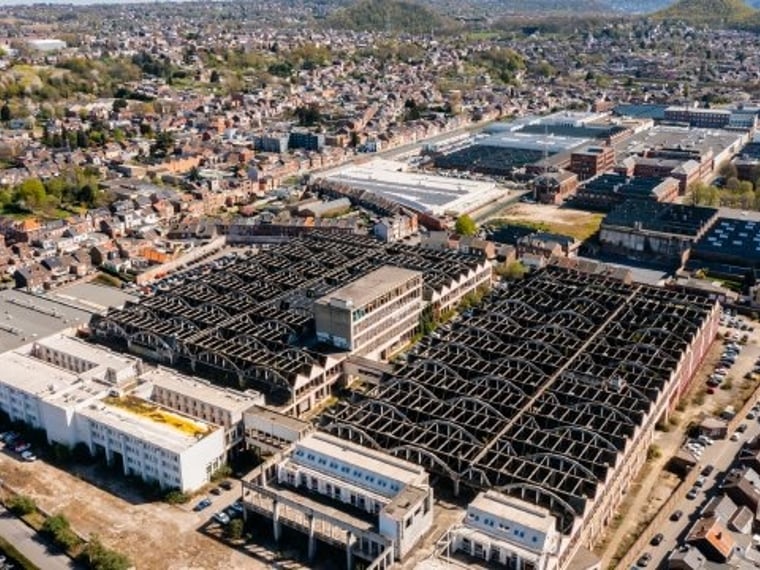
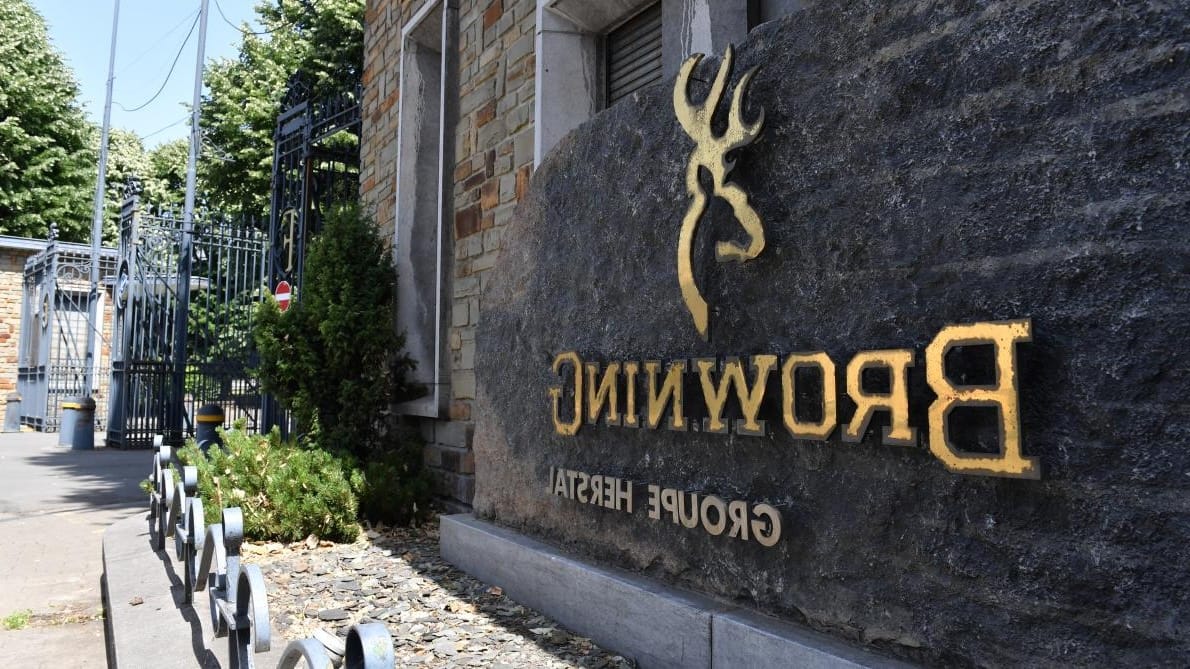 FN Herstal headquarters
FN Herstal collaborates with Belgian universities and research centers to develop new materials and components. This approach strengthens the competitiveness of production in Herstal and maintains a high level of expertise in the European arms industry.
Governance and key figures
The group’s management relies on a clear and centralized structure. An experienced leadership team, closely linked to the Walloon Region, makes strategic decisions. Internal labor relations remain a constant challenge in this sector subject to strong economic and political pressures.
Julien Compère and management
Julien Compère, Chief Executive of the FN Herstal group (now FN Browning), plays a central role in the growth strategy. A former director of the CHU de Liège, he brings an approach focused on rigorous management and industrial consolidation.
Under his leadership, revenue exceeds €934 million in 2025, with steady progression over several years. He also oversees the acquisition of Sofisport, a manufacturer of hunting and sport shooting cartridges, which strengthens the group’s position in the European market.
Compère maintains close ties with regional and federal authorities. His collaboration with political officials, particularly at the Ministry of Defense, facilitates the group’s participation in European rearmament programs.
| Position | Name | Main role |
|---|---|---|
| Chief Executive | Julien Compère | Strategic leadership and expansion |
| Board Chairman | Walloon Region representative | Oversight and public control |
Relations with trade unions
Relations between management and trade unions proceed through regular dialogue, sometimes tense. Staff representatives defend employment and safety at production sites, especially in Herstal.
Management emphasizes employment stability and continued investment in training. The unions, for their part, insist on the importance of maintaining a strong local presence in the face of sector globalization.
Joint committees handle social and wage issues. These exchanges help limit conflicts, even if negotiations can drag on. Public shareholding reinforces the group’s transparency and social responsibility.
Challenges and outlook for FN Herstal
FN Herstal must navigate a rapidly changing international environment and growing expectations around social responsibility. The company seeks to respond to rising military demand while meeting increasingly strict ethical, environmental, and economic requirements.
Geopolitical context and new orders
The current European context is boosting arms orders. Since 2022, nearly 80% of FN Herstal’s production goes to Europe and NATO countries. Regional tensions and military modernization are pushing several states to strengthen their capabilities, which benefits the company.
In 2025, the group posts revenue of around €934 million, up 3% year on year. This growth rests on the expansion of the Defense and Security division, fueled by public contracts and industrial partnerships.
Management, led by Julien Compère, wants to consolidate FN Herstal’s position as a key player in European rearmament. The main challenges concern managing production timelines, dependence on institutional markets, and diversification toward high-value-added civilian products.
Sustainable development and corporate social responsibility
FN Herstal faces stronger expectations around industrial ethics and environmental sustainability. The company invests in cleaner processes and in reducing its carbon footprint, especially through better management of metallic waste and the energy used in its factories.
The regional authorities, as shareholders, push for transparent governance and strict monitoring of sensitive exports. FN Herstal commits to respecting international standards on arms trade and to strengthening the traceability of its products.
On the social front, the company focuses on technical training, workplace safety, and the stability of local employment. These actions aim to maintain the image of a responsible company while remaining competitive in a sector that is closely watched politically and by the media.
Conclusion: Arms, contracts and public money: FN Herstal, Wallonia’s industrial treasure
FN Herstal’s success cannot be reduced to full production lines or European contracts won through competitive tenders. Behind the numbers lies a financial model that is quite unique in the arms industry: here, the company’s “fortune” does not flow up to a core of private shareholders, but to a single shareholder… the Walloon Region.
Every euro of profit, every contract signed in the Defense & Security sector indirectly strengthens the regional public wealth. Solid results, €100 million recapitalizations, and investments in new ammunition factories are not merely industrial choices: they are also wealth management decisions that commit the money of all Walloons. FN Herstal functions as a strategic cash machine, whose flows feed both the regional budget, local employment, and an entire ecosystem of subcontractors.
But this “public fortune” model is not without questions. The more profits grow, the more intense the ethical and political debates become: how far can a public authority go in owning a gunmaker? How can profitability, industrial sovereignty, and social responsibility be reconciled in such a sensitive sector?
FN Herstal remains, for now, a symbol of this Walloon bet: transforming a historic player in steel and arms into a regional financial and industrial pillar. A company that generates hundreds of millions in revenue, comfortable profits, and whose wealth, instead of evaporating on stock markets, is supposed to return to the community. The real question, from now on, will be less about how much the gunmaker earns… than how this public wealth is used, controlled, and explained to citizens.
Frequently Asked Questions (FAQ)
FN Herstal, now FN Browning, is entirely owned by the Walloon Region. The significant profits, linked to rising defense sales, raise many questions about their distribution, public use, and the transparency of financial management.
Who are the main shareholders of FN Herstal?
The Walloon Region owns 100% of the capital of the FN Browning Group, the parent company of FN Herstal. No private investor or other public entity shares this ownership. This structure guarantees direct oversight by regional authorities.
How are FN Herstal’s profits distributed among the various stakeholders?
The profits are mainly reinvested in the company or returned to the Walloon Region. Employees benefit from internal participation programs and performance-related bonuses. Suppliers and subcontractors also benefit from increased business volume.
What share of FN Herstal’s profits goes to the Walloon government?
The Walloon government holds all shares, so it receives all dividends. These revenues can support the regional budget or sometimes be used to fund other economic projects.
Recently, the Region decided to inject an additional €100 million to strengthen the group’s industrial capacities. This is a choice that clearly shows the importance it places on FN Herstal.
Do FN Herstal’s profits contribute to local economic development?
FN Herstal employs several thousand people in the Liège region. That is significant for the local economy.
The company also works with many subcontractors, supports technical training, and invests in industrial research. Its investments create quite a few jobs, both direct and indirect.
What are FN Herstal’s profit reinvestment policies?
FN Herstal reinvests a large portion of its profits to modernize its production lines in Herstal and Zutendaal. The group also puts money into research and the development of next-generation weapons.
These reinvestments seek to keep the group competitive and ensure its long-term growth. One might wonder whether this strategy will pay off, but it is clearly their bet.
How is financial transparency ensured at FN Herstal?
Each year, the group publishes its financial results. The Walloon Region also presents them publicly.
Internal and external audits verify the reliability of the accounts. Thanks to this transparency, one can track the use of public funds invested in the company.
Editorial methodology
The estimates published by Lama Fortune rely on public sources, media references, and sector comparisons. They are provided for informational purposes only and do not constitute financial advice.