Vincent Bolloré Net Worth
Vincent Bolloré Fortune
Vincent Bolloré, a Breton businessman born in 1952, is one of the greatest fortunes in France in 2025. His current fortune is estimated at approximately 9.9 billion euros in 2025, placing him among the 10 wealthiest people in the country. Starting from a struggling family business in the early 1980s, he built a diversified empire spanning from the paper industry to African ports, through media and entertainment. Here is a look back at the spectacular rise of Vincent Bolloré’s fortune, in a tone that is both informative and entertaining.
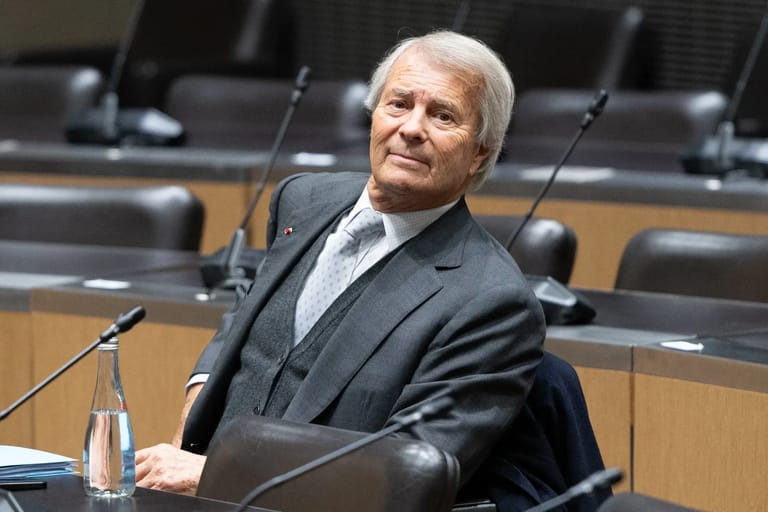
 Vincent Bolloré
1981: Taking Over the Family Paper Mills and First Millions
In 1981, Vincent Bolloré and his brother took over the OCB family paper mills, a cigarette paper company founded by their ancestors in 1822. At the time, the company was on the verge of bankruptcy – he bought it back symbolically for a symbolic franc! Despite this precarious initial situation, the young Bolloré rolled up his sleeves. He modernized the paper-making operations, specialized in thin paper (for cigarettes and bibles) and rationalized costs. Thanks to these efforts, the company returned to profitability within a few years.
Vincent Bolloré’s fortune began modestly at that point: measured in a few million euros at the time, the result of the family factory’s turnaround and the first accumulated profits. It was the starting point, modest but promising, of an extraordinary entrepreneurial saga.
Logistics Expansion in Africa: The Port Empire (1990s-2000s)
After turning around the paper mills, Vincent Bolloré diversified his activities into transport and logistics, with a particular focus on Africa. From the end of the 1980s and throughout the 1990s-2000s, he invested in shipping companies and obtained the management of strategic ports in Africa.
The Bolloré group became a key player in African transport, managing port terminals from the Gulf of Guinea to the Indian Ocean. He also became involved in African railways – for example by taking over the operation of the railway network in Cameroon – in order to control the entire logistics chain, from ports to the hinterland. This bold geographic expansion, sometimes called the “conquest of Africa”, proved very profitable: African logistics activities became the cornerstone of the group’s revenue for decades.

In the early 2000s, this strategy bore fruit in terms of personal wealth. The value of the Bolloré empire soared thanks to lucrative port concessions and logistics monopolies obtained. Vincent Bolloré then achieved billionaire status. For example, in 2007 his fortune was estimated at around 4.3 billion euros, reflecting the meteoric rise of his group in Africa. The Breton magnate reaped the dividends of his logistics investments, propelling his wealth to a whole new level.
True to his strategic (and pragmatic) instincts, Vincent Bolloré also knew how to cash in his gains at the right time. Evidence of this came in 2022, when the group announced the sale of Bolloré Africa Logistics – all of its transport and logistics activities in Africa – to the Italian-Swiss shipping company MSC for the colossal sum of 5.7 billion euros. This logistics jackpot marked the end of an era (Bolloré parted with his African “port empire”) and brought him a considerable influx of cash.
Part of this sum directly benefited the Bolloré family and swelled the patriarch’s personal fortune. After this historic sale, Vincent Bolloré’s wealth crossed a new threshold, approaching 9 billion euros in 2022, nearly doubling in two decades thanks to Africa.
Pivot Toward Media: Vivendi, Canal+ and Lagardère (2010s-2020s)
Never sated with new challenges, in the 2010s Vincent Bolloré made a strategic pivot toward media and entertainment. Already well established as an industrialist and logistics operator, he surprised everyone by taking a close interest in Vivendi, the French media giant (owner of Canal+, Universal Music Group at the time, and many other assets).

In 2012, Bolloré exchanged some of his television channels (Direct 8 and Direct Star) for Vivendi shares, and began to build up his stake in the group. Within a few years, he became its leading shareholder and then chairman of the supervisory board. Under his leadership, Vivendi transformed: out with telecoms (SFR was sold), the group refocused on content (TV, music, publishing).
Canal+, the famous pay TV channel, became one of his favorite playgrounds. Vincent Bolloré had no hesitation in shaking up Canal+‘s management, imposing his vision and restructuring the program schedule to revive the channel. At the same time, he set his sights on the Lagardère group (Europe 1, Paris Match, the publishing giant Hachette, etc.), in which Vivendi took a strategic stake. In 2021-2022, after a colorful stock market battle, Vivendi (and therefore Bolloré) ultimately took control of Lagardère, further extending the family’s media grip into publishing and the press.
These bold bets in media had a major impact on Vincent Bolloré’s fortune. On the one hand, the growing influence in Vivendi mechanically increased the value of his holdings (as the stock market rewarded his restructurings and asset disposals). On the other hand, some operations proved to be genuine gold mines. Universal Music Group (UMG) is the perfect example: Bolloré orchestrated in 2021 the stock market listing of UMG (previously a Vivendi subsidiary) in Amsterdam, as part of a share distribution to shareholders.
The valuation of this music giant exploded at its listing: more than 45 billion dollars in total, with a substantial share going to the Bolloré family which held approximately 18%. This operation generated a colossal gain for Bolloré – the Vivendi group made 6 billion euros in profits in 2021 boosted by the partial disposal of UMG. Ultimately, Vincent Bolloré’s personal fortune took a significant leap thanks to music – even though he is neither a singer nor a producer!

Finally, the last step in this media pivot, at the end of 2024, Vivendi decided to split certain activities and list Canal+ on the stock exchange. The Canal+ group (bringing together pay television in France and internationally) was valued at approximately 6.8 billion euros at its listing on the London Stock Exchange in 2025. Bolloré, through his holding company, directly held 30% after the operation (compared to an indirect holding previously through Vivendi).
Even though the Canal+ share had a mixed start on the stock market, this spin-off illustrates Vincent Bolloré’s strategy to revalue his media assets. By separating Canal+, Havas (advertising) and publishing into distinct companies, he brings out their individual value and increases, on paper, the overall wealth held by the family. In 2025, the Bolloré media empire thus spans from pay television to books, through advertising and music – a key lever of his current fortune.
Other Strategic Investments: Havas, Advertising and Financial Coups
If media and logistics have been pillars of Vincent Bolloré’s wealth accumulation, we must not overlook other strategic investments that marked his career as a shrewd financier. One of the most notable is Havas, the French advertising and communications group.
Bolloré began investing in Havas as early as 2004, becoming the majority shareholder of this renowned company. He later placed his son Yannick Bolloré at the helm of Havas. In 2017, another winning move: Vincent Bolloré sold Havas… to Vivendi (which he controls) for nearly 3.9 billion euros. This intra-group transaction might raise an eyebrow, but it allowed Havas to be integrated into the Vivendi fold while bringing liquidity to the family holding company. The Bolloré trick struck again!
In addition to advertising, Bolloré always had a nose for occasional good deals on the markets. In the 1990s, he pulled off a masterstroke with the Bouygues group: he quietly bought shares in the construction giant, engaged in a stock market standoff, then sold his stake at an enormous profit when Bouygues bought him out to get rid of him.
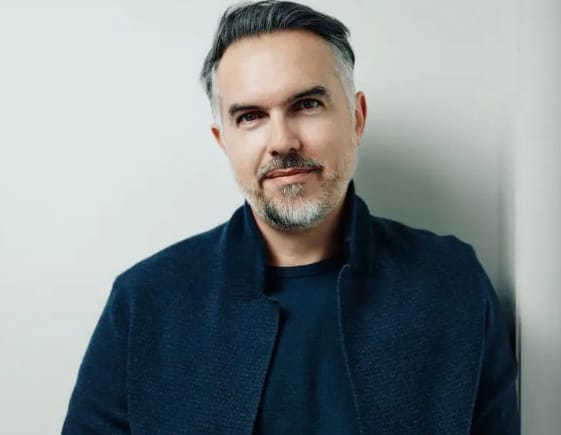
 Yannick Bolloré
Similarly, in the 2010s, his group (through Vivendi) entered the capital of the video game publisher Ubisoft. After accumulating up to 27% of Ubisoft, Bolloré agreed in 2018 to sell these shares to a consortium led by Tencent for approximately 2.5 billion dollars, pocketing a comfortable capital gain in the process. These more occasional operations have contributed to swelling the Bolloré coffers over time.
In summary, Vincent Bolloré managed to diversify his portfolio well beyond his original activity. Whether in advertising (Havas), music (Universal Music), video games, or even electric batteries (with his Blue Solutions subsidiary, creator of the small Bluecar electric cars), he multiplied his industrial and financial bets. Not all were equal successes (the Autolib’ electric car had nowhere near the same impact on his fortune as Canal+…), but each successful initiative added a brick to the edifice of his wealth. This wide-ranging diversification partly explains the resilience of his fortune: when one sector is less promising, another takes over to maintain the overall growth of his assets.
A Family Empire Under Control: Holdings and Governance Tricks
Behind Vincent Bolloré’s financial success lies a formidably effective family holding structure for maintaining control of the empire. Indeed, despite the colossal size of the Bolloré group and the presence of minority shareholders in some listed subsidiaries, the Bolloré family has locked in its power through a game of holding companies and cross-holdings. At the top of the pyramid sits the Compagnie de l’Odet, the main family holding company, held by more than 90% by the Bolloré family. This Compagnie de l’Odet owns approximately 65% of Bolloré SA (listed on the stock exchange). In plain terms, it is Bolloré that owns Bolloré – or more precisely the Bolloré family controls the whole through this financial vehicle.
But that’s not all: cascading below or alongside the Odet, there are other family entities such as Financière V, Sofibol or Omnium Bolloré. Each of these companies is fully (or very predominantly) owned by the family and in turn holds stakes in lower levels. This chain participation mechanism allows the multiplication of control power. For example, with only 1 euro invested at the top, the family can control several euros of assets at lower levels thanks to these capital leverage effects. This is a classic scheme of industrial dynasties, taken here to a high level of sophistication.
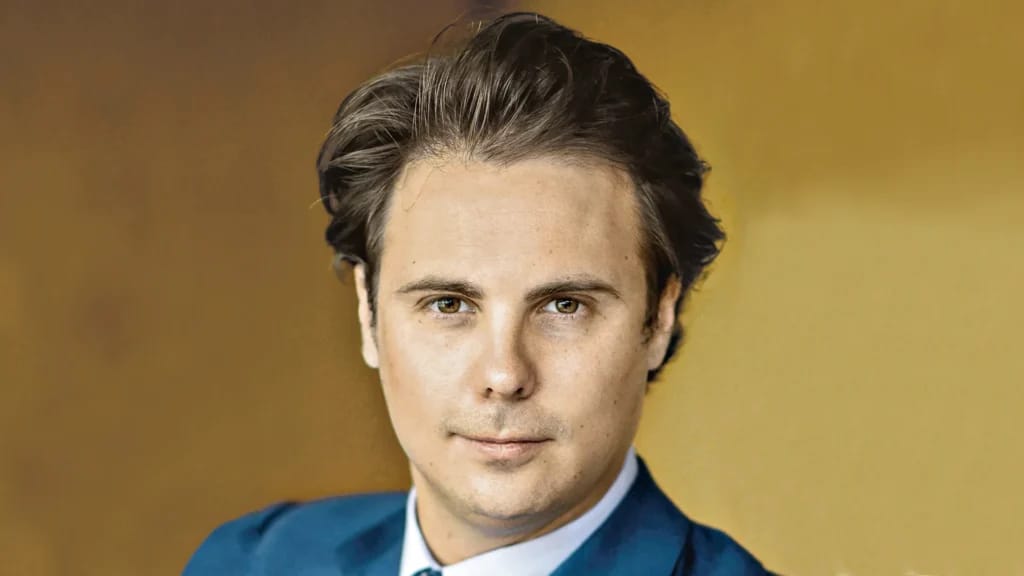 Cyrille Bolloré
In practice, this means that Vincent Bolloré and his children keep the reins: no strategic decision can be made without their agreement, and it is virtually impossible for an outside raider to take control of the Bolloré group. Furthermore, Bolloré took advantage of the double voting rights system (granted to long-term shareholders in France) to further strengthen his influence in companies like Vivendi. All these governance tricks form a veritable financial fortress around the Bolloré empire.
It should be noted that Vincent Bolloré anticipated his family succession. In 2019, on the eve of his 70th birthday, he officially handed over operational control to his sons: Cyrille Bolloré became the CEO of Bolloré SA, while Yannick Bolloré chairs Vivendi’s supervisory board (and Havas). Even though he stepped back from the spotlight in 2022, Vincent Bolloré is never far away: he remains the patriarch and ultimate decision-maker thanks to his position as principal shareholder. The solid family structure he put in place ensures that his fortune and empire remain in Bolloré hands for a long time to come.
Current Fortune in 2025: A Summit Assessment
After more than four decades of growth, bold bets and strokes of genius, where does Vincent Bolloré’s fortune stand in 2025? As mentioned in the introduction, it is at an all-time high. Estimates place it at around 9.9 billion euros. This figure reflects the capitalization of his holdings (Bolloré group, Vivendi and now entities such as Canal+ or Universal Music), as well as the significant liquidity accumulated during recent disposals.
 Vincent Bolloré and his sons
With nearly 10 billion euros to his name, Vincent Bolloré features in the Top 10 of French fortunes. His professional wealth far exceeds the simple value of the paper mill he took over in 1981. He symbolizes the success of a diversified family empire, built patiently then accelerated through strategic operations. In 2025, the man celebrates his 73rd birthday contemplating a flourishing bicentennial group, now steered by the new Bolloré generation. And there is little doubt that this patriarch, who transformed a symbolic franc into billions, still keeps a sharp eye on business… To ensure that the Bolloré family fortune continues to prosper, perhaps into the next chapter of this family saga.
Evolution of Vincent Bolloré’s Fortune (Summary Table)
Here is a summary table of the evolution of Vincent Bolloré’s estimated fortune through the major milestones of his career:
| Period / Event | Estimated fortune (in euros) |
|---|---|
| 1981 – Taking over the family paper mills (OCB) | A few million euros |
| 2000s – Expansion in Africa (logistics, ports, rail) | ~4.3 billion euros (around 2007) |
| 2022 – Sale of logistics activities (Bolloré Africa Logistics to MSC) | ~9.0 billion euros (after 2022) |
| 2024 – Canal+ stock market listing (Vivendi spin-off) | ~9.7 billion euros (2024 estimate) |
Note: The amounts above are rounded and representative of the orders of magnitude at each stage. They illustrate how Vincent Bolloré’s fortune grew from a few million to nearly 10 billion euros between 1981 and 2026.
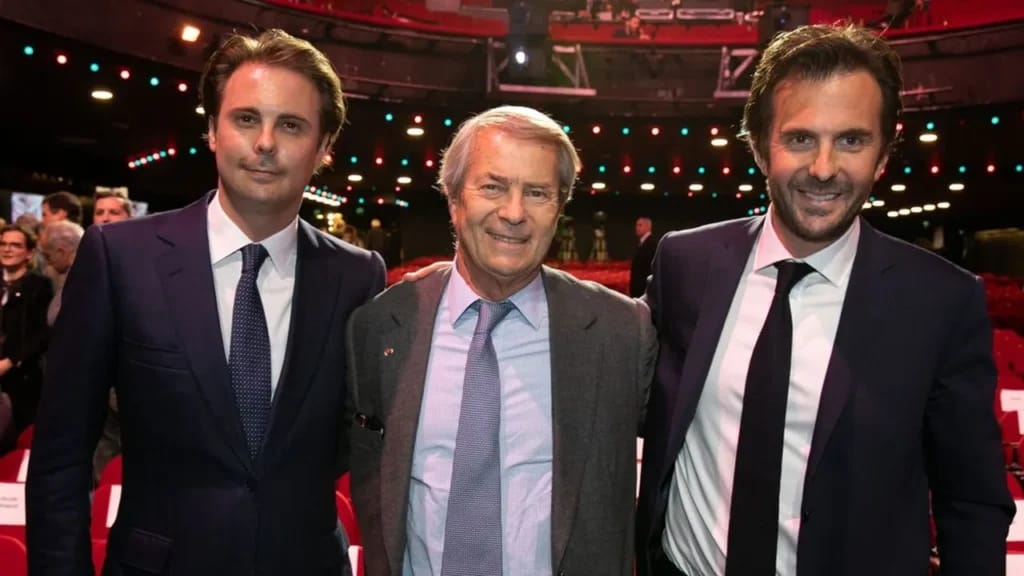 Vincent Bolloré and his sons
Summary
Vincent Bolloré, a Breton industrialist born in 1952, has built one of the largest economic empires in France. His fortune, estimated at 9.9 billion euros in 2025, comes from strategic diversification: paper industry, logistics in Africa, media (Vivendi, Canal+, Universal Music, Lagardère) and smart investments (Ubisoft, Bouygues). From the symbolic takeover of OCB in 1981 to the sale of Bolloré Africa Logistics in 2022, each step reinforced his wealth. Today, through a network of family holding companies, his children have taken over while maintaining control of the group. A saga of power, intuition and entrepreneurial longevity.
FAQ – Frequently Asked Questions
Q: What is Vincent Bolloré’s fortune in 2025?
A: In 2025, Vincent Bolloré’s fortune is estimated at approximately 9.5 to 10 billion euros. This amount places Bolloré among the wealthiest people in France. This is of course an estimate of his professional fortune, primarily linked to the value of his companies and holdings (Bolloré, Vivendi, etc.), excluding personal real estate or other assets.
Q: What are Vincent Bolloré’s main sources of income and wealth?
A: Vincent Bolloré’s wealth comes primarily from his industrial and media empire. His main sources of income and wealth accumulation have been:
- The paper industry (cigarette paper) at the outset, which he turned around in the 1980s.
- Logistics and transport in Africa: for nearly 30 years, Bolloré drew significant income from his African ports, railways and warehouses, which he ultimately sold in 2022 for 5.7 billion euros.
- Media and communications: by becoming the controlling shareholder of Vivendi, he gained control of Canal+ (TV), Havas (advertising), Universal Music (music) and Lagardère (publishing). These media assets generate dividends and have greatly increased in value, boosting his fortune.
- Financial investments: Bolloré also made money by taking stakes in various companies (e.g. Bouygues, Ubisoft) and then reselling them at a profit. These are occasional capital gains that fed into his coffers.
In summary, Vincent Bolloré’s sources of income are multiple, but always stem from his companies and investments. This is not a conventional salary, but rather the appreciation of his stakes in his group and the profits realized from asset sales.
Q: Are his children involved in the Bolloré empire and the management of his fortune?
A: Yes, the succession is secured by the new Bolloré generation. Vincent Bolloré has four children, and several of them already play a key role in the family group:
- Cyrille Bolloré (his youngest son) has been CEO of Bolloré SA since 2019. He oversees the industrial and logistics operational activities.
- Yannick Bolloré (another son) heads Vivendi as chairman of the supervisory board, and also leads Havas, the communications division. Yannick is therefore very involved in the media and advertising side of the family empire.
- Sébastien Bolloré and Marie Bolloré (his other children) are less prominent in the media but also participate in family affairs or sit on boards in certain entities of the group. Marie Bolloré, for example, was involved in electric mobility projects (Blue Solutions).
Vincent Bolloré clearly prepared his succession. In 2022, on the occasion of the group’s bicentenary, he officially “handed over” by withdrawing from operational management. However, thanks to the family holding companies he put in place, control remains in the hands of the family. His children perpetuate the entrepreneurial tradition, each in their area of expertise, ensuring that the Bolloré empire remains a family affair for years to come.
Editorial methodology
The estimates published by Lama Fortune rely on public sources, media references, and sector comparisons. They are provided for informational purposes only and do not constitute financial advice.