What Is Giacomo Angelini’s Net Worth, Owner of Standard de Liège?
Amounts mentioned are estimates based on public sources and can vary depending on methodology (income, assets, debt) and update date.
Giacomo Angelini didn’t come out of nowhere in the corridors of Standard de Liège. He was the club’s chief financial officer, then CEO, before buying back the shares through his holding company.
This Liège businessman genuinely wants to restore stability and credibility to this historic club, which had been badly shaken by years of financial hardship.
His approach shows a fairly methodical, almost down-to-earth style. He trained at HEC Liège and has long worked within the local economic fabric.
Angelini prefers budgetary rigor and hunting for solid investors, rather than flashy promises. He wants to build a sustainable model where prudent management supports sporting ambition.
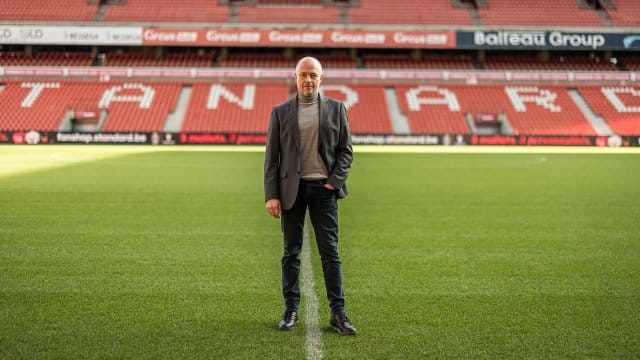 Giacomo Angelini net worth
He is not simply taking over a club. His project aims to restore an institution that is deeply tied to the city and its identity.
He is banking on financial restructuring, a well-thought-out investment strategy and a long-term vision to bring Standard back up to the level of its history.
Presentation of Giacomo Angelini
Giacomo Angelini is a Liège entrepreneur with a solid background in finance and industry.
He studied at HEC Liège, built his career in the region, and eventually took over the management of Standard, of which he is also a devoted supporter.
His profile blends financial rigor with a deep attachment to the club and the city.
Giacomo Angelini’s Professional Career
Born in Oupeye and now living near Visé, Giacomo Angelini studied management at HEC Liège.
He started out as a financial auditor at KPMG, where he spent around twelve years. That period gave him solid expertise in corporate account analysis and management.
He then joined Kinolt (formerly Euro-Diesel), a company specializing in uninterruptible power supply systems.
He played a key role in the company’s growth, up until its acquisition by Rolls-Royce Power Systems in 2020.
There is a clear, steady progression toward positions of major responsibility.
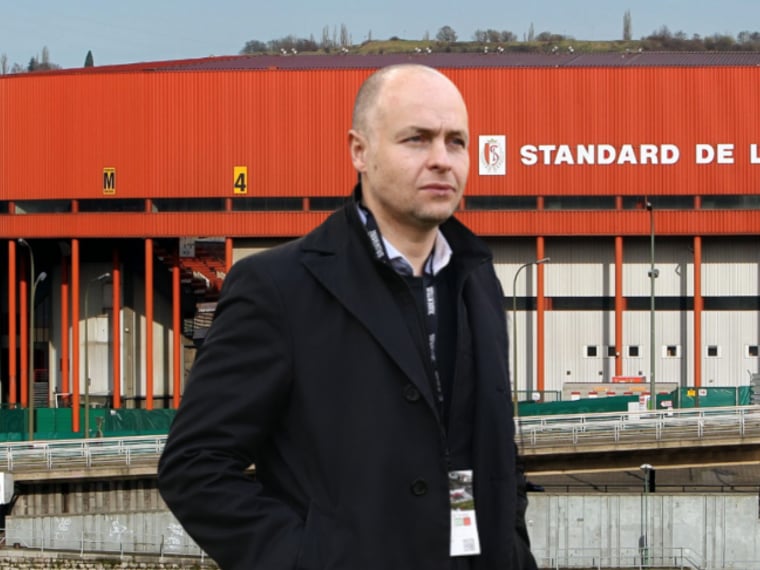
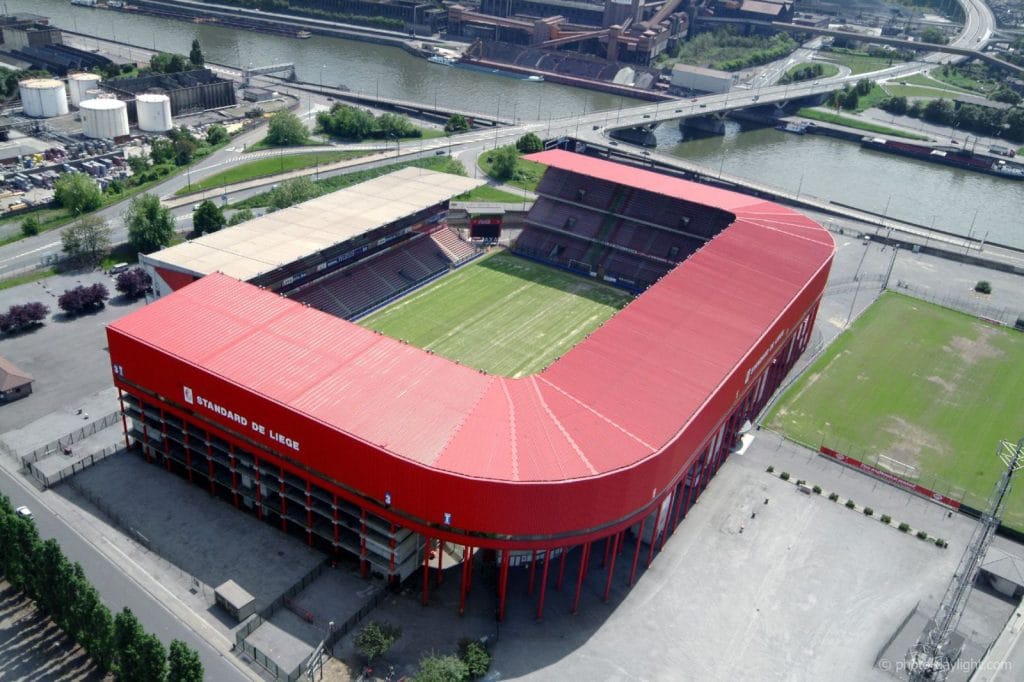 Liège stadium
In 2021, he joined Standard de Liège as Chief Financial Officer.
This position allowed him to get fully involved in the club’s economic restructuring, before becoming its chairman.
Business Profile and Reputation
In business, Angelini has a reputation for being a real numbers man and a decisive leader.
Former colleagues describe him as rigorous, demanding, and capable of making quick decisions when needed.
He combines analysis and adaptability, which has earned him the respect of many.
Some describe him as stubborn and direct, but always results-oriented.
His reputation rests on his ability to turn around complex structures and maintain financial discipline.
His management style, sometimes seen as strict, is built on transparency and individual accountability.
Outside the office, he practices martial arts and holds a black belt.
A detail that often comes up to illustrate his rigor and perseverance.
Giacomo Angelini’s Net Worth
Even though he remains discreet about his personal finances, all signs point to Giacomo Angelini’s net worth being solid. Between his career at KPMG, his key role in Kinolt’s growth up to its sale to Rolls-Royce Power Systems, and his takeover of Standard de Liège through SDL Holding, his overall net worth can be estimated at 18.5 million euros. This capital — combining financial assets, company shareholdings and executive compensation — gives him real room to maneuver in managing the club.
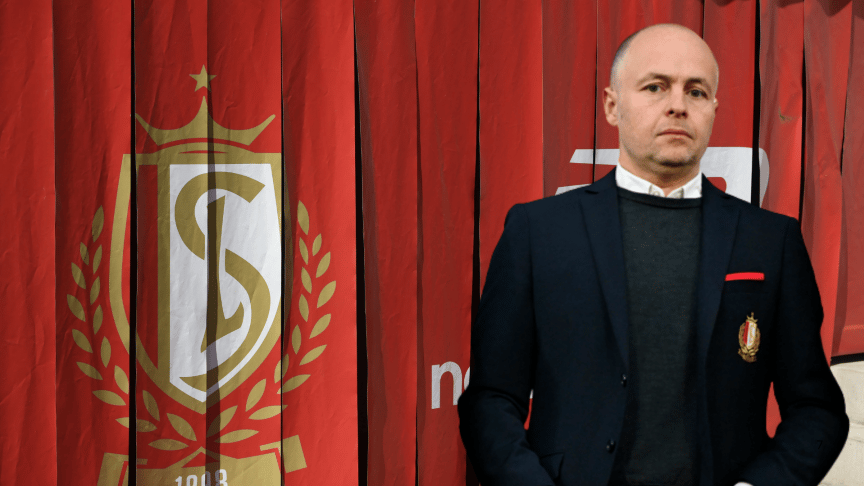 CEO of Standard de Liège Giacomo Angelini
His real estate assets, estimated at 5.3 million euros, include a high-end villa near Visé, two investment properties in Liège and a development plot. On top of that, 3 million euros in diversified financial investments secure his wealth management strategy. Angelini thus combines tangible assets, recurring income streams and long-term investments.
On the income side, Giacomo Angelini’s salary reaches approximately 820,000 euros per year, comprising a base salary, performance bonuses, dividends and director’s fees. His wealth model is built on a simple principle: strengthening his personal capital while increasing Standard’s value — an asset set to become one of the pillars of his fortune.
Arrival at Standard de Liège
Giacomo Angelini’s arrival at Standard marks a genuine turning point in his career.
Appointed CEO in 2025 following the departure of Pierre Locht, he took the helm of the club without hesitation.
His main objective? Stabilize the finances and prepare the transition to a new phase of development.
Under his leadership, the club’s debt shrank from 69 million to around 40 million euros.
He then created SDL Holding, the structure that allowed him to buy back A-CAP’s shares and become Standard’s owner.
Angelini wants to restore the club to a sound financial footing and local governance.
He is banking on phased financing, internal reorganization and capital strengthening.
With all of this, he hopes to guarantee Standard’s long-term viability while respecting its Liège identity.
 Liège logo
The Current Situation at Standard de Liège
Standard is going through a major period of transition.
The club is trying to regain financial and sporting stability after several difficult seasons, while also trying to rebuild trust with its supporters and partners.
Financial and Sporting Challenges
Standard has absorbed heavy losses in recent years.
In June 2024, equity showed a deficit of approximately 39 million euros, but Angelini’s management is starting to reverse the trend.
Forecasts for June 2025 point to a reduced deficit of between –1 and –3 million euros.
Angelini has launched a restructuring process to get the accounts back on track.
The plan includes converting debt into capital, reducing internal costs and tighter wage management.
A capital increase of 28.7 million euros has already strengthened the cash position.
On the sporting side, the club wants a more competitive squad.
The youth academy is becoming strategic, with a genuine emphasis on young talent.
Maintaining their place in the Pro League and returning to Europe remain the near-term major objectives.
The Role of Shareholders and A-CAP’s Influence
A-CAP, the former owner, sold all its shares to Angelini through SDL Holding.
This buyout ends a period of uncertainty and gives Angelini full control of the club.
The financing of the deal is spread over several years to keep enough liquidity to run the club.
A-CAP remains present through a supplementary loan of 20 million euros at a reduced rate, which facilitates the relaunch of investments.
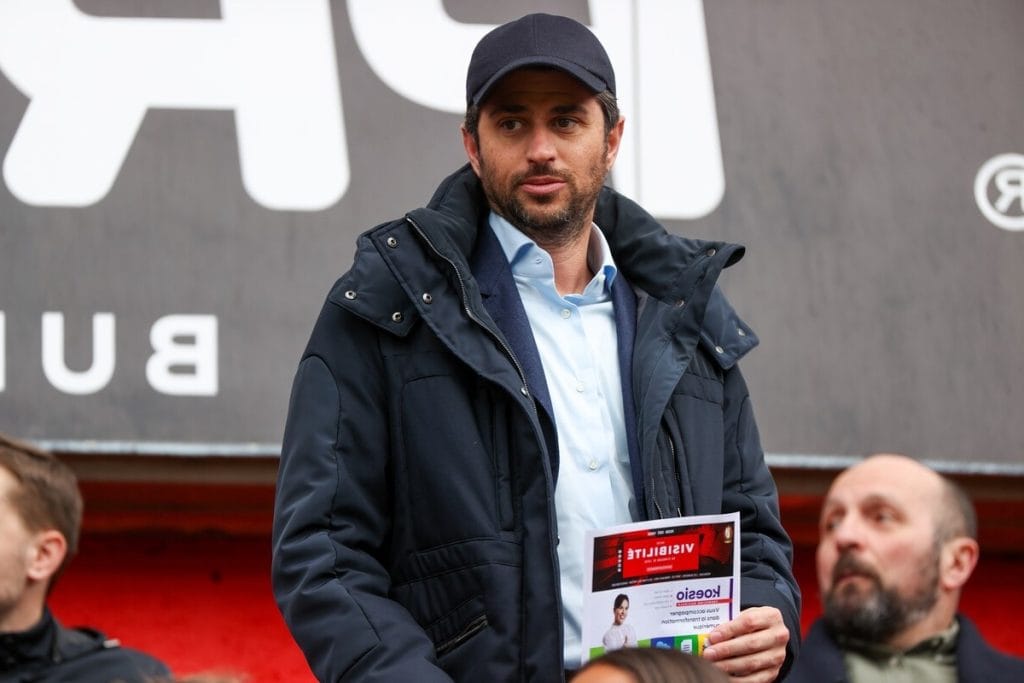 Former chairman of Standard de Liège
The new governance also includes a more open board of directors, with a symbolic seat for the Famille des Rouches.
This structure aims to guarantee better transparency and avoid the mistakes of the past.
Relations with the Rouches Supporters
The Rouches supporters, deeply attached to Sclessin, have absorbed plenty of disappointments in recent years.
Their trust in management had taken a real hit under the previous owners.
Angelini is trying to repair this bond by multiplying direct exchanges with fans and promising clearer communication.
He plans to present his full project to the supporters’ associations.
He is betting on transparency and accountability.
Angelini has stated he will step aside if his vision fails to convince the fan base.
At Sclessin, this cautious and open attitude could genuinely change the dynamic between the club and its faithful supporters.
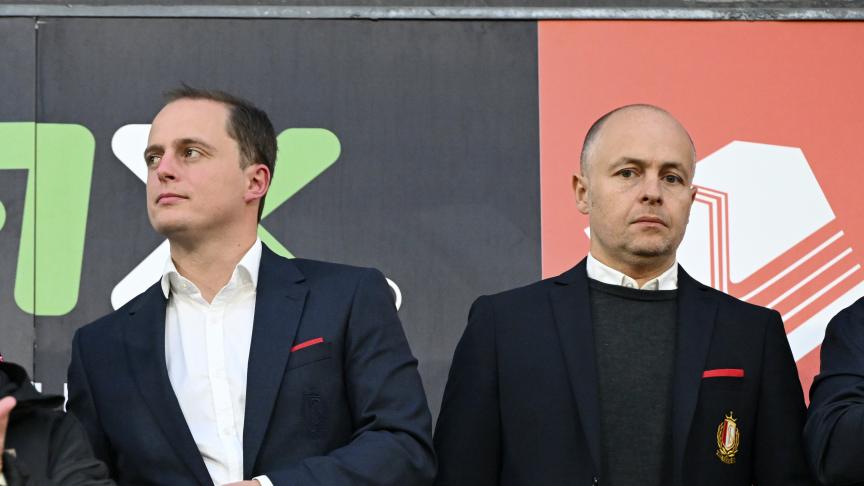 Giacomo Angelini
Giacomo Angelini’s Plan to Take Over Standard
Giacomo Angelini bought Standard through his holding company SDL, after several months of discussions with A-CAP.
His plan aims to stabilize the finances, attract new investors and make the club stronger, both sportingly and economically.
Objectives and Vision for the Club
Angelini wants to build a sustainable model that no longer depends on outside investors to plug the gaps.
He aims to restore Standard to a stable place in the upper reaches of the Belgian table, without abandoning financial rigor.
He is structured around three priorities:
- Clean up the club’s accounts.
- Strengthen sporting competitiveness, but sensibly.
- Boost the Standard brand, particularly through the stadium and the academy.
He says he wants to remain at the head of the club for the long term, while remaining open to the arrival of a majority partner if the opportunity arises.
For him, success will come through gradual growth and clear governance, not through quick promises.
Economic Recovery Strategies
Angelini has already reduced the club’s losses from 25 to 13 million euros between June 2024 and June 2025.
He is targeting 7 or 8 million by 2026.
This improvement comes from several concrete measures:
- Reducing debt from 70 to 28 million euros.
- Lowering the wage bill by approximately 1.5 to 2 million.
- Stopping unprofitable activities, such as futsal.
A capital increase of 28.7 million euros also helped lighten the debts inherited from A-CAP.
Angelini prefers budgetary rigor to massive injections of funds.
He is still in discussions with three foreign investors, seeking a solid partner, but he is not rushing.
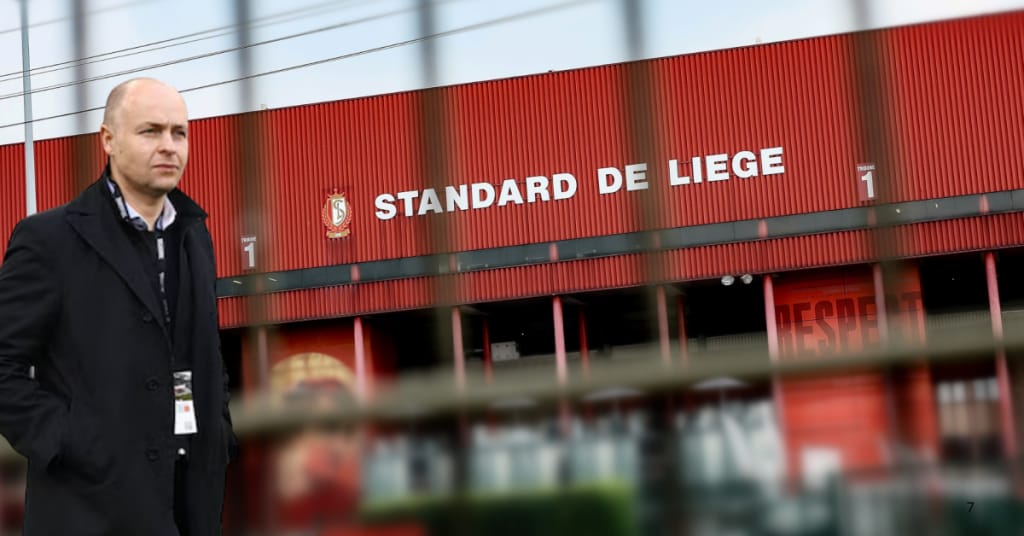 CEO Giacomo Angelini
Professionalization and Internal Organization
The new chairman has restructured the club like a mid-sized company, suited to a turnover of 40 to 50 million euros.
Headcount has gone from around 170 to fewer than 150 employees to match real needs.
Angelini wants a more efficient organization, with empowered departments and clear objectives.
Each department had to cut its spending by 15%, without touching the essentials.
His model is based on internal transparency, financial discipline and team accountability.
He wants Standard to operate with the rigor of a high-performing SME, capable of supporting its sporting ambitions over the long term.
The Search for Investors and Potential Partners
Giacomo Angelini is looking to stabilize Standard de Liège financially while retaining control of the sporting project.
He is targeting partners who can bring in funds, but also a vision that aligns with that of the club and its local fan base.
Investor Selection Process
Angelini is taking a selective and progressive approach. He has taken the club out of the 777 Partners framework and now wants to build something more lasting.
He is consulting Belgian and European investors who are prepared to invest without demanding short-term management. He is looking for partners who truly understand the reality of Belgian football.
The process includes an analysis of financial solidity, the proposed governance and compatibility with Standard’s values.
Often, discussions go through the Belgian holding company he himself manages.
Three criteria guide the selection:
- Financial credibility and transparency of funds.
- Local commitment to preserve the Liège identity.
- Sporting vision aligned with youth development and long-term stability.
Angelini wants to avoid the mistakes of the past, where rushed decisions caused financial imbalances.
Challenges of the Club Takeover
Taking over Standard remains genuinely complex. The club is coming out of a difficult period, with debts and badly damaged trust between management and supporters.
Angelini must therefore restore the credibility of the project to attract capital.
He faces a tense economic climate where investors hesitate to commit to a risky sector with thin margins.
 777 Partners logo
Belgian regulations and Pro League requirements further complicate the task.
To win people over, Angelini highlights rigorous management and cost reduction.
He is trying to strike a balance between profitability and sporting ambition. He relies on recognized figures such as Pierre François and Marc Wilmots to build confidence in the project.
Distinction from 777 Partners
The break with 777 Partners marked a turning point. Under this American fund, the strategy followed a multi-club model with centralized management.
Standard lacked autonomy and financial difficulties persisted. Angelini now prefers a local and independent approach.
He wants Belgian or European stakeholders to fund the club — people who are closer to the game and the supporters.
This direction aims to restore stability and avoid speculative practices.
Unlike 777 Partners, he is not looking for rapid international expansion. He prefers to consolidate the internal structure first, before thinking about new markets.
This positioning moves Standard away from a purely financial logic and strengthens its regional roots.
Sporting Stakes and Standard’s Future
Standard de Liège is entering a decisive phase with Giacomo Angelini at the helm. Now that financial stability seems to have been restored, it needs to show on the pitch too.
The club must make clear choices to strengthen its competitiveness and rethink its sporting and community priorities.
Impact on the First Team and Academy
Angelini wants to consolidate the first team and restore genuine weight to local youth development.
The club is looking to reduce excessive spending and bet on young profiles from the Robert Louis-Dreyfus Academy.
This strategy aims for a more coherent and sustainable squad. Les Rouches are counting on more rigorous technical management.
They also want to improve the transition from youth to the pros.
Recruitment now targets players capable of quickly integrating into the collective project.
Angelini insists on financial discipline and sporting stability. He prefers that to flashy transfers.
| Objective | Planned action |
|---|---|
| Invest in youth development | Integrate more players from the academy |
| Stabilize the squad | Limit changes in coaches and players |
| Optimize the budget | Reduce the wage bill without weakening the sporting level |
Implications for European Ambitions
Standard is not targeting immediate European qualification.
Angelini wants to build a solid foundation first before hoping to return in the medium term.
He believes a lasting return to Europe requires sound management and measured sporting progress.
Modernizing infrastructure and better season planning are among the priorities.
The club wants to avoid the mistakes of the past, when poorly targeted investments put the finances at risk.
The Liège leadership believes that internal stability and continuity of the sporting project are essential to return to Europe.
The idea is to consistently target the top 6 in the league before setting sights higher.
Reactions from the Liège Community
Liège supporters are cautiously welcoming Angelini’s project, but there is also hope in the air.
Many appreciate that a local leader, attached to the club, is taking the reins after years of uncertainty under foreign owners.
The supporters’ groups, very active in the club’s life, are demanding transparency and concrete results.
They want to see a Standard faithful to its popular identity and regional values.
Traders and former players from the region also welcome the takeover.
They hope this new era will allow Standard to once again become a major force in Belgian football, supported by a united local base.
Relations with Local Stakeholders and the City of Liège
Giacomo Angelini wants to strengthen the ties between Standard, the local authorities and the Liège community.
He is betting on transparency, cooperation and the promotion of the club as a major economic and social player.
Collaboration with Liège Authorities
Angelini maintains regular dialogue with the City of Liège and the Province of Liège.
They discuss security around the stadium, mobility on match days, and the development of modern sports infrastructure.
The local authorities see Standard as a key partner for revitalizing the Sclessin neighborhood.
The club is involved in urban projects aimed at improving access to the stadium and regenerating the surrounding area.
Angelini wants the club to be more deeply embedded in the local fabric.
He supports collaborations with schools, sports associations and social initiatives.
This cooperation aims to make Standard a model of local management, firmly rooted in the Liège reality.
The Role of Sclessin Stadium
The Maurice Dufrasne stadium in Sclessin remains at the heart of Angelini’s project.
He considers this site a symbol of Liège identity.
The chairman wants to preserve its historic character, but also seeks to improve comfort and safety.
Discussions are underway with the authorities to modernize certain facilities.
The planned works include better energy management and improvements to host non-sporting events.
Angelini sees Sclessin as an economic asset.
The stadium could become a hub of activity for the region, attracting visitors throughout the year.
This vision is part of a sustainable local development approach, where sport supports the economic and social life of the neighborhood.
Commitment to Supporters
Liège supporters occupy a central place in Angelini’s strategy.
He says he wants to restore a bond of trust after years of tensions linked to the club’s management.
Standard is multiplying meetings with fan groups to listen to their expectations.
The club is putting community initiatives in place, such as programs for young people and events open to everyone.
Angelini insists on financial transparency and direct communication.
He knows that the club’s stability depends on the loyalty of its supporters.
By strengthening this dialogue, he hopes to consolidate Standard’s identity as Liège’s popular pride.
Outlook and Challenges for Standard’s Future Under Angelini
Giacomo Angelini wants to stabilize Standard de Liège after years of financial imbalance and changes in leadership.
His plan is based on rigorous management, the search for reliable investors and a sustainable sporting strategy that limits dependence on outside capital.
Risks and Uncertainties
The main risk concerns the financing of the club buyout.
Angelini acquired the shares through a staged payment, which creates a financial obligation until 2025.
If repayments fall short, the former shareholder could reclaim his shares.
This situation makes finding investors crucial.
The club remains exposed to the volatility of the Belgian football market.
Revenues depend heavily on TV rights, transfers and sporting results.
A failed season could delay financial objectives.
Reducing headcount and costs, even if necessary, carries organizational risk.
A structure that is too lean could limit Standard’s ability to develop.
Angelini must therefore find a balance between budgetary rigor and operational efficiency.
Development Opportunities
Angelini sees this period as a chance to rebuild Standard’s economic model.
He has already reduced debt from 70 to 28 million euros and is targeting a loss limited to 7–8 million by 2026.
He is looking to make the club more self-sufficient.
This financial trajectory lends credibility to the project in the eyes of investors.
Developing the academy and nurturing young talent represent a sustainable path.
The club can also strengthen its revenues with new local sponsors and better use of Sclessin stadium.
More prudent transfer window management, combined with a youth development strategy, could allow Standard to generate regular margins without depending on a wealthy shareholder.
Angelini is betting on stability above all else.
The Club’s Positioning on the Belgian Scene
Under Angelini, Standard wants to reclaim a solid place in the Pro League top 6.
He remains cautious on the financial front.
The budget plan targets a playoff 2 qualification, but the sporting ambition remains to return durably to the top tier.
Standard must also regain the confidence of its public and its partners.
Clear communication and consistent results could strengthen its credibility against rivals such as Anderlecht, Bruges or Genk.
Angelini wants to reposition the club as a major SME of Belgian football, with sound foundations and realistic objectives.
This positioning aims to make Standard a stable player, capable of attracting serious investors without losing its independence.
Frequently Asked Questions
Giacomo Angelini, a Liège-based business leader and new owner of Standard de Liège, brings solid financial experience. He is also deeply attached to the region, which has not gone unnoticed.
His project aims to stabilize the club’s finances. He also wants to improve internal management and relaunch Standard’s sporting competitiveness.
What are Giacomo Angelini’s motivations for investing in Standard de Liège?
Angelini wants to preserve the club’s local identity — that much is clear. He has made it his mission to ensure Standard’s long-term survival.
A supporter for many years, he sees this investment as a chance to give the club a sound and independent foundation. He believes that rigorous management can genuinely coexist with the passion for football, even if it is not always easy.
What is Giacomo Angelini’s professional background before his involvement in football?
Before joining Standard, Angelini spent more than ten years as a financial auditor at KPMG. He then contributed to the development of Kinolt, a Liège company specializing in backup power systems.
Rolls-Royce Power Systems eventually acquired Kinolt. Angelini gained experience in management, finance and corporate restructuring.
How does Giacomo Angelini plan to turn around Standard de Liège’s financial situation?
He has already launched a recapitalization of nearly 29 million euros. Angelini also plans to continue reducing the club’s debt.
He wants to manage spending more strictly. He is looking to optimize commercial revenues and put a solid financial structure in place.
He places great emphasis on transparency and budgetary discipline. There is really no room for improvisation here.
What have been supporters’ reactions to Giacomo Angelini’s arrival at Standard?
Some supporters appreciate his local profile and personal commitment. Others, somewhat more cautious, are waiting to see concrete results on the pitch.
Most hope his leadership will bring clear management. Many also want better communication with the fans.
What is Giacomo Angelini’s plan for the future development of Standard de Liège?
Angelini wants to strengthen youth development. He also plans to modernize the club’s infrastructure.
He wants to build a competitive team around Belgian and European talent. His approach prioritizes sustainability over short-term spending.
His objective is to put Standard back among the strong clubs in the Belgian championship. Ambitious, but who knows?
What are Giacomo Angelini’s previous sporting investments?
Before Standard, Angelini had never directly invested in sport.
He truly discovered the world of football when he became the club’s chief financial officer, at the time when 777 Partners was running things.
His takeover of Standard is therefore his first real adventure as the owner of a professional club.
Giacomo Angelini Origin?
Giacomo Angelini is from Oupeye, in the Liège region. His local roots play a key role in his investment in Standard de Liège and in the image of regional entrepreneur he cultivates.
Giacomo Angelini Donofrio?
Angelini succeeds Luciano D’Onofrio as the influential leader at Sclessin. Unlike D’Onofrio, he is betting on a structured economic model and financial management without excess.
Giacomo Angelini LinkedIn?
His LinkedIn profile highlights his career: HEC Liège, 12 years at KPMG, financial director of Kinolt, then CEO of Standard. A 100% finance career, aligned with his ability to build capital.
Giacomo Angelini Holding?
His company SDL Holding holds more than 70% of Standard de Liège. This structure is now one of the pillars of his fortune, with a potential value exceeding 10 million euros if the club stabilizes sustainably.
Giacomo Angelini Age?
Born in 1982, Giacomo Angelini is 43 years old in 2025, an age at which he combines experience, ambition and the ability to grow his strategic wealth.
Giacomo Angelini — Who Is He?
He is a Liège financier who became the owner of Standard de Liège. He embodies a rare profile: local entrepreneur, strict manager and investor capable of transforming a club into a patrimonial asset.
Giacomo Angelini Biography?
Auditor at KPMG, executive at Kinolt, architect of the sale to Rolls-Royce, CFO of Standard, then CEO and owner through SDL Holding: Angelini’s career is marked by finance, restructuring and the creation of lasting value.
Editorial methodology
The estimates published by Lama Fortune rely on public sources, media references, and sector comparisons. They are provided for informational purposes only and do not constitute financial advice.