The Most Representative Animals of Canada and Their Economic Importance
Nature truly shapes the identity of Canada. The country is known for its varied landscapes: forests, rivers, lakes and coastlines, all of which create incredibly rich habitats for many species.
These natural environments play a central role in the lives of many communities and boost the country’s diversity.
Canada is home to approximately 80,000 animal and plant species. This makes it a unique place for wildlife.
Some animals have become true national symbols and attract attention everywhere, not just here.
Symbolic Animals of Canada: Wealth, Value and National Influence
The Beaver
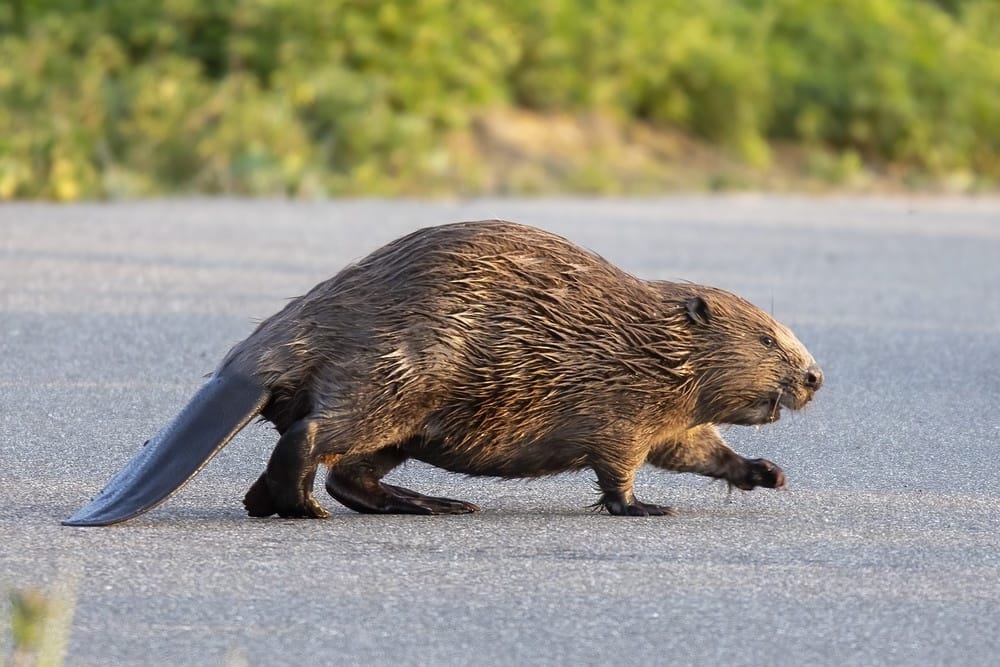
The beaver is the largest rodent in North America. Its flat tail, sharp teeth and powerful jaws allow it to cut branches and tree trunks with relative ease.
Characteristic traits of the beaver:
- Wide, flat tail
- Powerful incisor teeth
- Body adapted for swimming and handling wood
The beaver builds its dams and lodges in rivers and ponds. By creating wetlands and regulating water, it promotes biodiversity.
It is often nicknamed nature’s engineer for its building talents.
Historically, the beaver was at the heart of a billion-dollar industry: the fur trade. Between the 17th and 19th centuries, its trade generated the equivalent of several billion euros in today’s money and helped shape Canada’s economy.
Even today, its role in ecosystems creates immense ecological value: each wetland created by a dam can represent up to €150,000 in ecosystem services (water filtration, biodiversity, fire prevention).
 Beaver Fortune
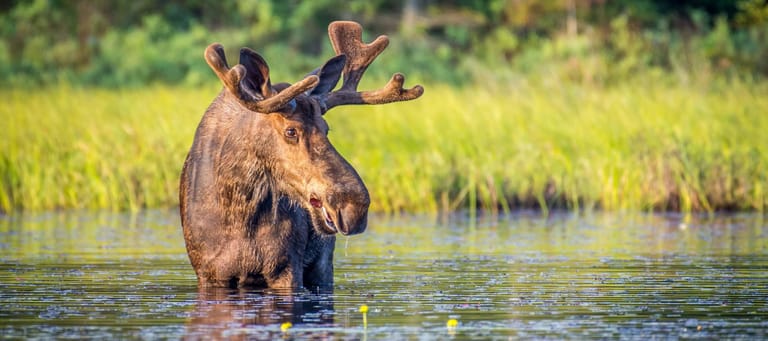
Moose
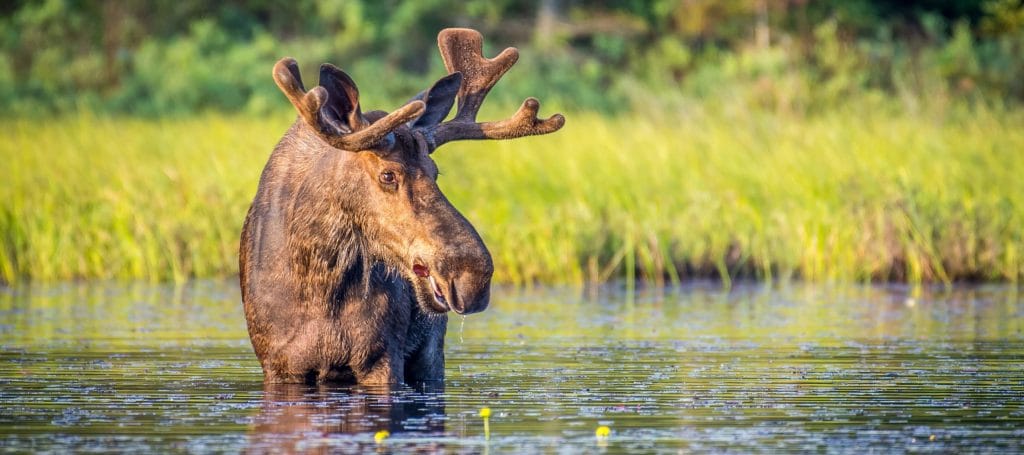
The moose is the giant of Canada’s deer family. It can stand up to 1.8 metres at the shoulder and weigh between 360 and 725 kg.
Males are easily spotted by their enormous antlers, which can span up to 1.5 metres.
| Characteristic | Detail |
|---|---|
| Shoulder height | Up to 1.8 metres |
| Weight | 360 to 725 kg |
| Antlers (males) | Up to 1.5 metres |
They are found mainly in boreal forests and wetlands. They traverse different terrains easily thanks to their strength.
The moose is an excellent swimmer and will dive without hesitation to reach aquatic plants.
The value of the moose: a giant crucial to the local economy
The moose attracts a huge flow of tourists every year, particularly for wildlife watching in parks. Its economic impact is estimated at more than €200 million per year, between tourism, habitat management and scientific research.
Polar Bear
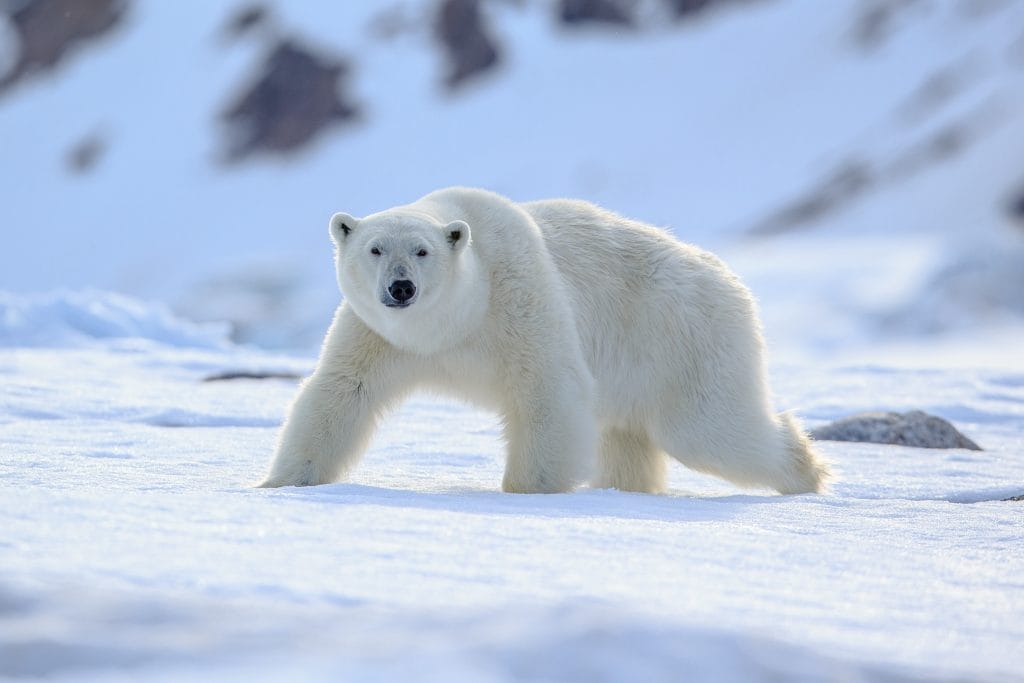
The polar bear, or Ursus maritimus, lives mainly in Canada’s Arctic regions. Nearly two-thirds of the world’s polar bears live here, placing Canada at the center of their protection.
This animal spends much of its time on the sea ice hunting seals, its preferred food. When the ice melts, it must spend more time on land, which increases encounters with humans.
Facts about the polar bear:
| Characteristic | Detail |
|---|---|
| Main habitat | Arctic sea ice |
| Diet | Predator, mainly seals |
| Distribution | Mostly in Canada |
| Threats | Melting ice, human conflicts |
The polar bear depends heavily on the Arctic sea ice to survive.
 Polar bear fortune
Polar bear: one of the most “expensive” animals to protect
The tourism and scientific value of a polar bear easily exceeds €1 million per individual.
Protection and monitoring programs in the Arctic alone cost more than €25 million per year.
Canada is home to 2/3 of the world’s population, giving it a natural heritage of enormous value.
The Bison
The bison impresses with its size and strength. It epitomizes the Canadian Prairies, with its massive head that it uses to push through snow or vegetation.
Main characteristics:
- Weight: up to 900 kg
- Speed: up to 65 km/h
- Habitat: Prairies
In the 19th century, their population declined dramatically. Today, the bison embodies resilience and serves as a reminder of the importance of protecting wild species in Canada.
Value of the Canadian bison: a restored heritage
Nearly wiped out in the 19th century, the bison today represents a natural and tourist asset valued at more than €100 million, thanks to conservation, national parks and Indigenous initiatives.
Southern Resident Killer Whales
The southern resident killer whale lives in the Salish Sea, in British Columbia. It holds a major place in the culture of First Nations peoples and symbolizes Canada’s marine life.
This group is now listed as an endangered species in Canada and the United States.
The main threats are declining food supplies and underwater noise caused by maritime traffic.
Only 72 individuals remain, which is cause for considerable concern among both researchers and local communities.
Value of the southern killer whales: an endangered species that comes at a high cost
With only 72 individuals, each killer whale represents exceptional ecological value.
The economic value linked to killer whale watching reaches €150 million per year in the Canadian Pacific.
Their disappearance would mean an immense ecological and cultural loss.
The Walrus
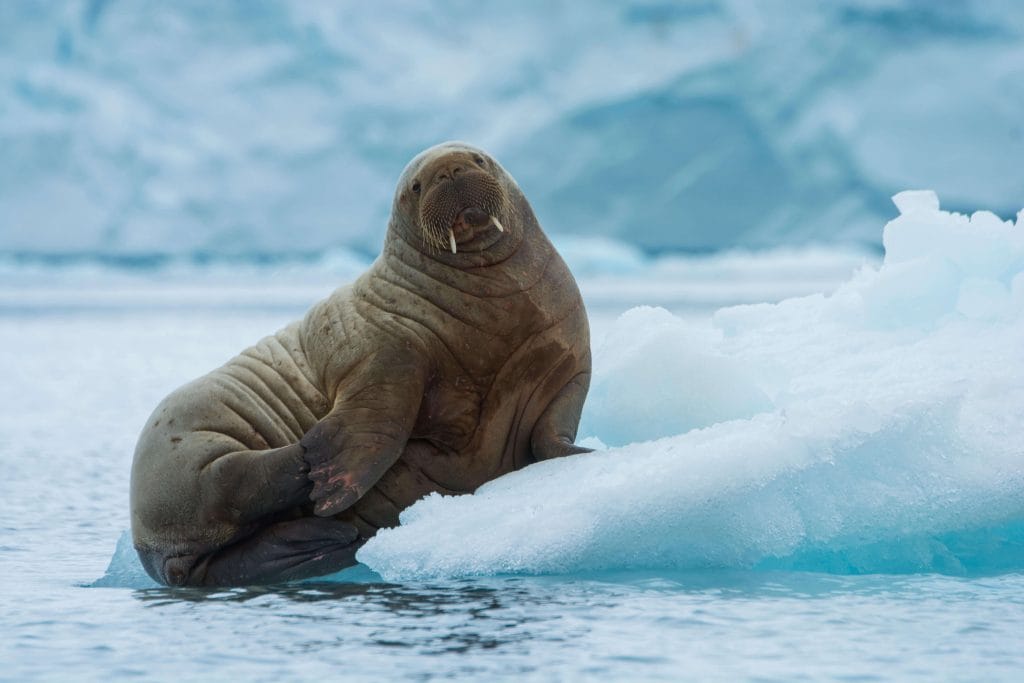
The Atlantic walrus is a large marine mammal, easily recognizable by its long ivory tusks and thick whiskers. Both sexes bear these tusks, which sometimes reach a metre in length.
 Walrus fortune
It uses its tusks to break ice and haul itself out of the water.
In Canada, small populations of walruses are found in several Arctic regions: the High Arctic, the Central Arctic and the Low Arctic.
Key facts:
- Impressive tusks
- Predominantly Arctic presence
- Dependence on sea ice
Climate change is weakening their habitat. They sometimes congregate in large numbers on land.
The Caribou in Canada
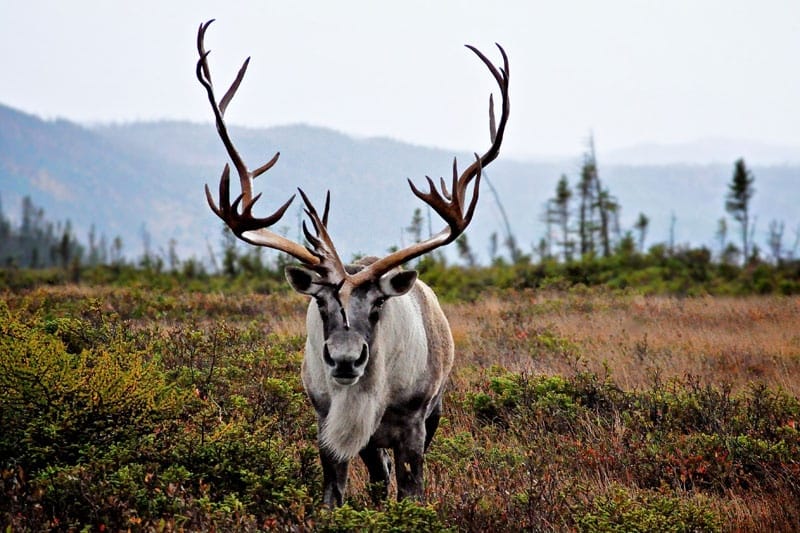
The caribou, very present in Canada, is recognizable by its antlers and thick coat. Three main types live here: the woodland caribou, the barren-ground caribou and the mountain caribou.
The woodland caribou is found mainly in the southern boreal forests and appears on the Canadian 25-cent coin.
Key characteristics:
- Arctic, boreal forests, and mountains
- Barren-ground caribou: smaller, hardy, essential for Indigenous peoples
- Major decline: many herds have lost more than 90% of their members
The caribou holds strong cultural value and has long served as a food and clothing resource for Indigenous communities.
 Caribou Canada Fortune
Value of the caribou: a mythical animal in decline
The caribou is essential to Canada’s cultural and Indigenous economy.
Its value is estimated at more than €500 million (habitats, tourism, traditions, cosmetics, research).
Restoring a single herd can cost up to €10 million.
The Atlantic Puffin
The Atlantic puffin, symbol of Newfoundland, lives mainly in the North Atlantic Ocean. This small seabird forms large colonies to nest in spring and summer.
It is an excellent swimmer and spends most of its life at sea.
Key facts:
- Habitat: North Atlantic coasts and islands
- Diet: Small fish
- Diving: Up to 60 metres deep
It shares fish resources with other marine animals, such as cod and certain whales.
Value of the Atlantic puffin: Newfoundland’s “star” bird
Each colony attracts thousands of visitors.
Puffin watching generates approximately €40 million annually, making it a major tourist asset for Atlantic Canada.
Canada Lynx
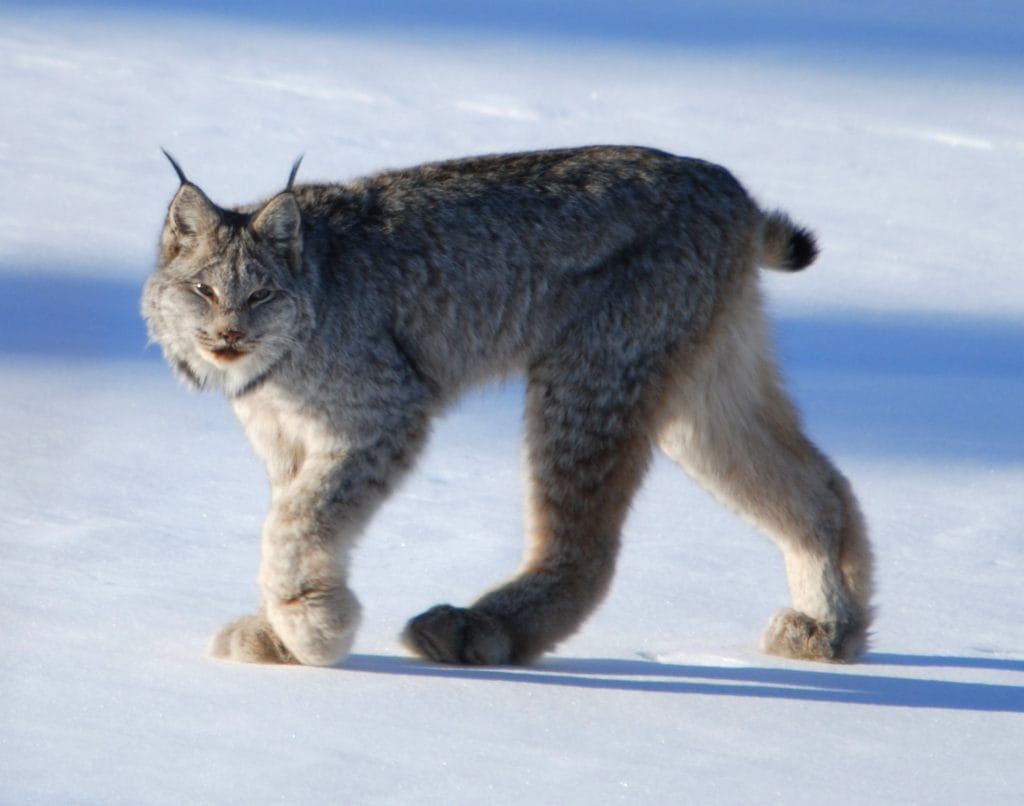
The Canada lynx has large paws that allow it to move easily on snow. This greatly helps it hunt hares, ducks or young deer.
This discreet feline also climbs trees and sometimes swims to catch fish.
| Characteristics | Details |
|---|---|
| Scientific name | Lynx canadensis |
| Size | From the size of a domestic cat to up to six times larger |
| Habitat | Cold regions, forests and tundra |
| Food | Hares, ducks, fish, young deer |
| Features | Large paws, pointed ears, short tail |
The Canada lynx belongs to the same family as the Eurasian lynx and the Iberian lynx. All share a small head, a massive body and ears adorned with black tufts.
 Canadian Lynx Fortune
Value of the Canada lynx: a rare and precious predator
The lynx attracts photographers, researchers and tourists. Managing the boreal forests to ensure its survival represents tens of millions of euros in public investment each year.
Beluga Whale
The beluga, a white cetacean known for its distinctive “smile”, lives mainly in the Arctic. Approximately two-thirds of the world’s beluga population spends summer in Canadian waters.
Smaller populations are also found further south, such as in the St. Lawrence estuary. This particular population is severely threatened.
Belugas live in groups and are highly social.
They are sometimes called the “canaries of the sea” because of all the sounds they produce:
- Sound signals
- Clicks
- Whistles
- Calls
They use these sounds to communicate and navigate. Their presence is a reminder of how crucial it is to preserve Canada’s aquatic habitats.
 The 10 most iconic animal species in Canada: discover the symbols of Canadian wildlife
Value of the beluga: an endangered Arctic treasure
The St. Lawrence population alone represents an estimated ecological value of €300 million, such is its crucial role in marine balance.
Protecting the beluga costs several million per year, but its cultural and scientific influence is immense.
Conclusion: Canada’s wildlife, a natural fortune
Canada’s iconic animals are not just national symbols: they represent a genuine natural fortune, made up of ecological, cultural, tourist and heritage wealth. Beavers, polar bears, bison, caribou and belugas each play an essential role in the country’s identity and contribute to an environmental economy valued at several billion euros.
Protecting these species means preserving a precious capital that makes Canada one of the most biodiversity-rich countries in the world. A wealth that, unlike gold or oil, grows in value over time.
Frequently Asked Questions
Which animal officially represents Canada?
The beaver is Canada’s national animal. It embodies hard work and the country’s history since the era of the fur trade.
Its image also appears on some Canadian coins.
What animals are the main predators in Canada?
Among the dominant carnivores are the polar bear, the grizzly bear, the cougar and the grey wolf. They occupy the top of the food chain in their habitats.
Which species live only in Canada?
The wood bison, the Arctic fox (in certain regions) and the whooping crane are examples of species endemic or near-endemic to Canada.
Others, such as the Peary caribou, live mainly here and nowhere else.
Which large mammals are commonly seen in national parks?
In national parks, visitors frequently encounter moose, elk, bison, caribou and black bears. Many visitors observe them during hikes or photo safaris.
What are the symbolic animals of Canada’s provinces?
| Province or territory | Emblematic animal |
|---|---|
| British Columbia | The Kermode bear |
| Alberta | The great horned owl |
| Quebec | The snowy owl |
| Manitoba | The bison |
| Ontario | The common loon |
| New Brunswick | The black-capped chickadee |
| Nova Scotia | The golden eagle |
| Newfoundland and Labrador | The common merganser |
| Northwest Territories | The peregrine falcon |
| Nunavut | The raven |
| Yukon | The raven |
| Prince Edward Island | The red fox |
| Saskatchewan | The prairie dog |
How do Canada’s animals cope with harsh winters?
Canadian wildlife has developed quite a few strategies to survive extreme cold.
Some animals, such as the polar bear and the black bear, choose to hibernate.
Others prefer to build up fat reserves, migrate to warmer regions, or change their coat to blend in better with the snow.
The Arctic hare, for example, actually changes color to go unnoticed.
As for migratory birds, they leave the country and only return in spring.
Editorial methodology
The estimates published by Lama Fortune rely on public sources, media references, and sector comparisons. They are provided for informational purposes only and do not constitute financial advice.