Succession, Strategy and the Van Gool Family Fortune in 2025: The Noordvlees Group Case
The Van Gool family has long represented success in the Belgian pork industry. In Kalmthout, Noordvlees Van Gool rose to become one of the major players in pork slaughter and processing, with a capacity exceeding three million animals every year.
Yet despite this strong position, the family decided to sell its historic company to its management.
The Van Gool family sold their empire to ensure business continuity in a sector undergoing rapid consolidation. Faced with European competition, pressure on margins, and the need for heavy investment in modernization, the family preferred to hand over the reins rather than commit to this new phase of growth.
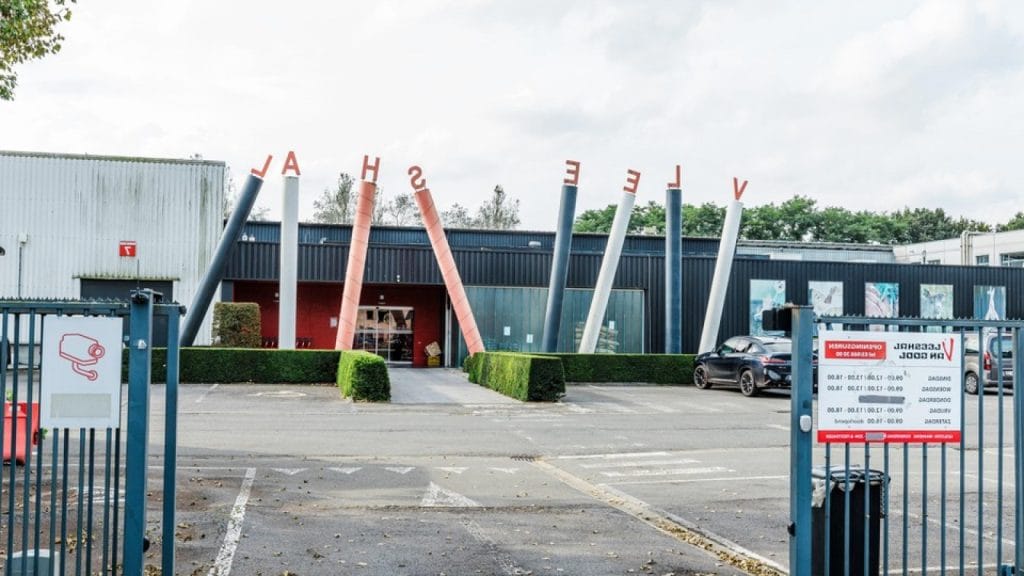 Van Gool Family Factory
This decision marked the beginning of a new era for Noordvlees. Dirk Nelen and Peter Willemen took over management, restructured the group, strengthened partnerships, and pursued international expansion, particularly toward China.
Origins and history of Noordvlees Van Gool
The company Noordvlees Van Gool, based in Kalmthout in Belgium, grew through the family’s expertise in pork slaughter and processing. Over time, it evolved from a local business into an integrated industry within the Noordvlees Group.
Founding of the company in Kalmthout
Noordvlees was founded in 1955 in Kalmthout, north of Antwerp. The Van Gool family launched a slaughterhouse to meet regional demand for pork.
The company chose Bloemstraat, a strategic location close to transport routes and farming areas. This choice facilitated animal collection and rapid distribution of fresh products.
From the outset, Noordvlees distinguished itself through rigorous quality and food safety standards. It established strict control procedures, which earned the trust of local butchers and wholesalers.
Development and family expansion
Over the years, the Van Gool family maintained control and focused on measured growth. They modernized facilities and diversified activities, particularly into cutting and by-product processing.
The company adopted an integrated approach: everything from slaughter to processing was handled in-house. This strategy allowed for better quality control and reduced logistics costs.
Local employment grew, and Noordvlees became a major employer in Kalmthout. Its reputation for reliability attracted new partners, especially in northern Belgium and the Netherlands.
Evolution into Noordvlees Group
From the 2000s onward, Noordvlees Van Gool joined a broader structure: the Noordvlees Group. The goal: to strengthen competitiveness amid consolidation in the European food industry.
The group brought together several specialized entities, each responsible for a link in the chain. Dirk Nelen and Peter Willemen handled strategic management and international representation.
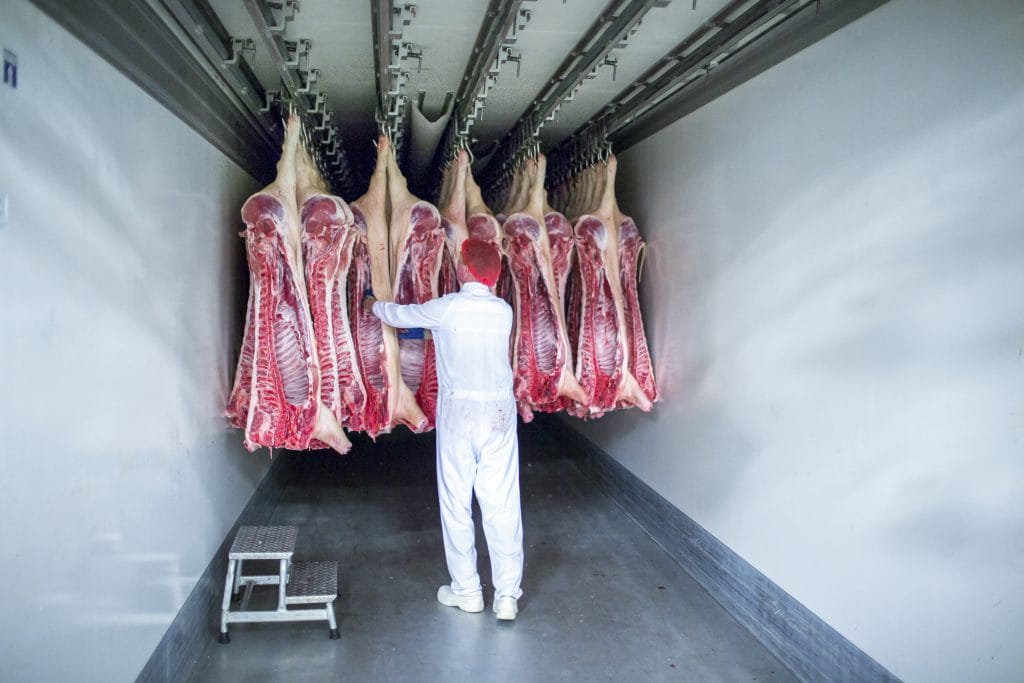 Pork from Noordvlees Group.
Today, Noordvlees exports more than 80% of its production, mainly to Europe and Asia. Despite this, the company maintains its roots in Kalmthout, where it keeps its main production and logistics sites.
Main reasons for the sale by the Van Gool family
The sale of Noordvlees Van Gool, a heavyweight in the Belgian meat industry, resulted from several market, economic, and family factors. These elements pushed the family to hand over the business to its management in order to guarantee the company’s continuity.
Changes in the meat sector
Since the 2010s, the European pork sector has been consolidating rapidly. Medium-sized slaughterhouses, like Noordvlees Van Gool, found themselves facing large groups capable of setting lower prices.
Food safety and environmental standards tightened significantly. Modernizing facilities and complying with new regulations drove up costs.
At the same time, consumers changed their expectations. They want local, traceable, and sustainable products, which forces companies to rethink their processes. For a family structure, these rapid changes made management considerably more complex.
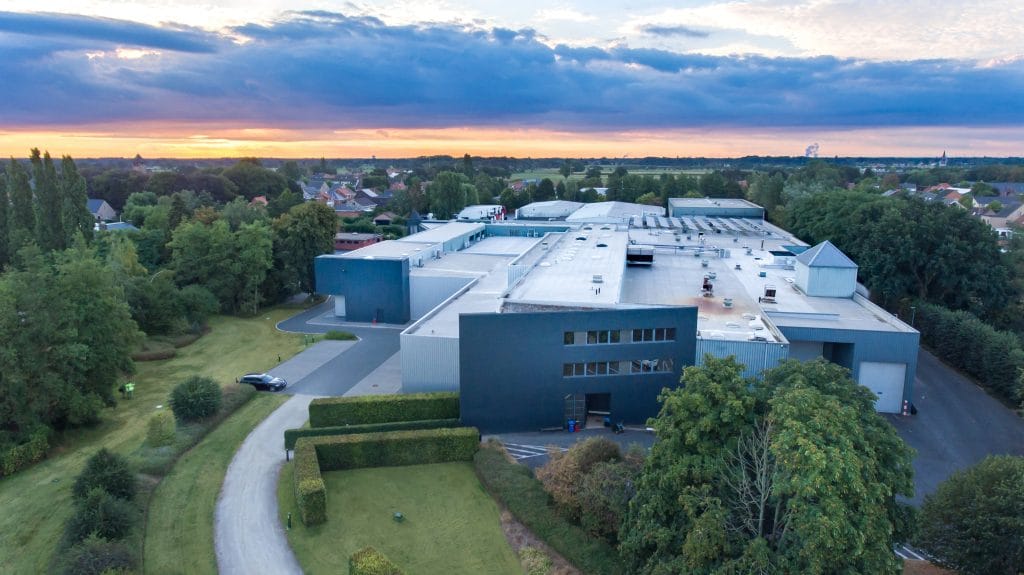 Van Gool Family Factory
Economic and financial pressures
Before the sale, Noordvlees Van Gool employed around 350 people and processed several million pigs each year. Despite this volume, international competition and price volatility kept margins low.
Banks demanded a more solid financial structure to support investments. A management buy-out emerged as a credible solution. This transaction reassured financial partners and clients.
Modernization costs, logistics, and waste management weighed heavily on results. To remain profitable in the long term, new capital and an industrial strategy that the family no longer wanted to bear alone would have been required.
Family succession strategies
The Van Gool family did not find a successor ready to take over in a sector that had become hyper-competitive. The heirs concluded that they could no longer play an active role in an industry undergoing full consolidation.
Handing over to management, with Dirk Nelen and Peter Willemen at the helm, seemed the most pragmatic choice to ensure the company’s long-term survival.
This decision also helped preserve local employment and Noordvlees’s reputation in the Belgian market. The sale was not a break, but rather an adaptation to economic reality and a generation less involved in industrial management.
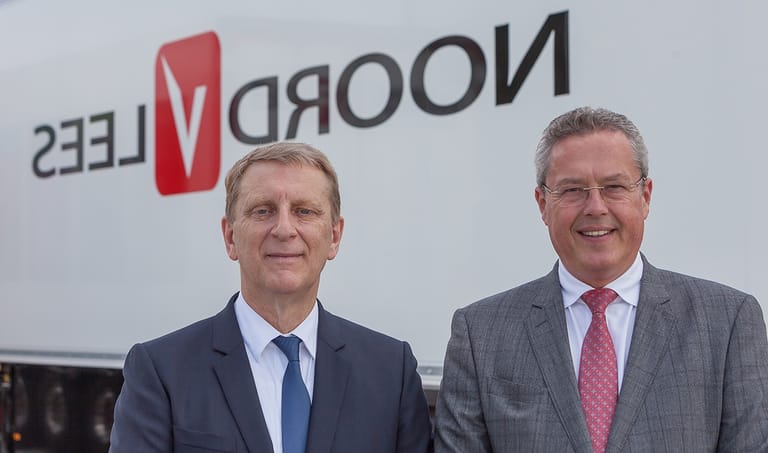
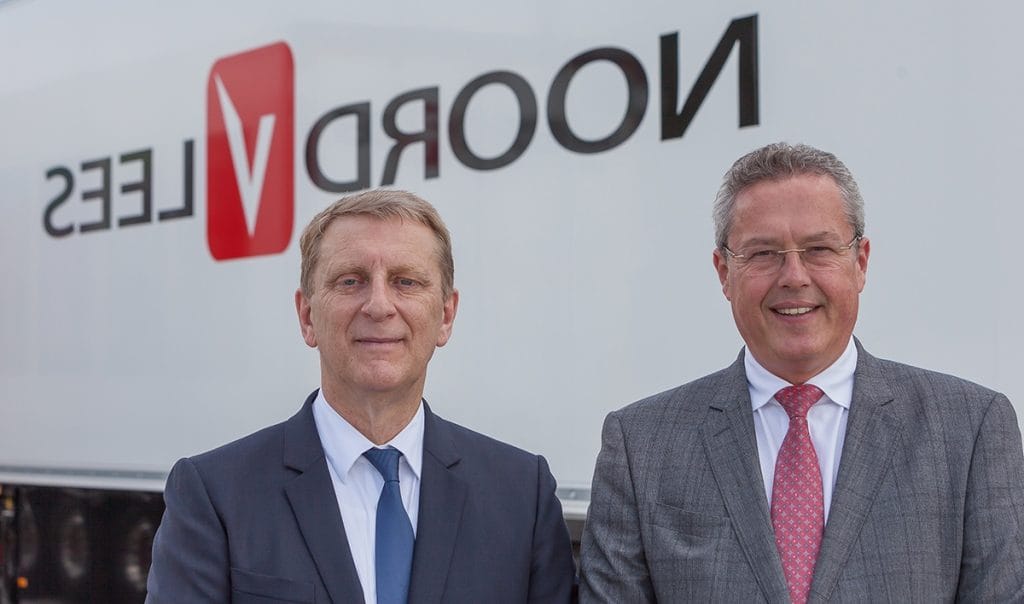 Dirk Nelen and Peter Willemen
Process and key players in the Noordvlees sale
The transfer of Noordvlees Group, historically owned by the Van Gool family, took place in several stages with key players from the Belgian food industry. The process relied on an internal management transition, the arrival of new leaders, and careful communication with economic and institutional partners.
The management’s role in the buy-out
The management of Noordvlees SA took the lead in preparing the sale. Before the transaction, management had already launched a restructuring to make the company more attractive to potential investors.
The leaders clarified the group’s structure, which includes Noordvlees Van Gool, BGMC, and Euforbia Transport. This organization facilitated asset valuation and share negotiations.
The management team also coordinated financial audits and due diligence, in collaboration with external advisors specializing in mergers and acquisitions in the food industry.
| Key step | Those responsible | Primary objective |
|---|---|---|
| Internal reorganization | Operational management | Simplify the group structure |
| Audit and valuation | External firm | Determine market value |
| Final negotiation | CEO and legal counsel | Guarantee group continuity |
Involvement of the new leadership
The new leaders, coming from a European industrial meat group, wanted to maintain the stability of Noordvlees Group while modernizing governance. Their arrival marked a shift toward more centralized, export-focused management.
They retained part of the historic management team to ensure continuity, particularly in Kalmthout and Lochristi. This choice preserved know-how while introducing new management practices.
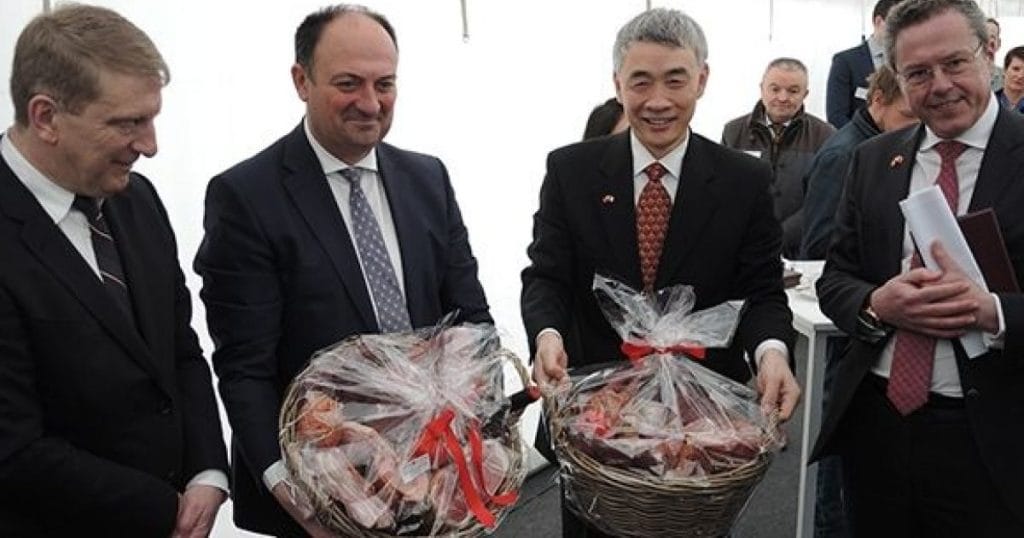 Pork export
The new owners also emphasized regulatory compliance and sustainability. They invested in digital traceability and reducing the environmental footprint, to meet the expectations of the European market.
Stakeholder reactions
Reactions to the sale varied by stakeholder. Employees initially expressed concerns about job security, but management confirmed the continuation of core activities in Belgium.
Agricultural partners and international clients welcomed the arrival of investors capable of supporting the group’s growth. Local authorities in Kalmthout praised the continuity of operations and commitments to modernize facilities.
Market observers see this transaction as an illustration of the consolidation of the European meat sector, where family businesses are gradually giving way to integrated, international groups.
Transformation of activities and relocation
Noordvlees Group reorganized its production to better manage volumes and modernize its facilities. This evolution led to notable changes in Kalmthout and Oevel, with particular attention to the continuity of slaughtering and infrastructure quality.
 Noordvlees logo
Temporary halt and resumption of slaughtering in Kalmthout
The historic site at Kalmthout, on Bloemstraat, experienced a temporary halt in slaughtering to restructure production flows. This pause allowed the assessment of the site’s capacity and the adaptation of equipment to new health and energy standards.
During this time, cutting and processing activities continued partially, notably through BGMC in Lochristi, to avoid any supply disruption. The company ensured staff training throughout this period.
After several months, slaughtering gradually resumed. The site took on a complementary role, focused on better-controlled volumes and enhanced quality controls.
Transfer to Sus Campiniae in Oevel
Part of operations moved to Sus Campiniae, in Oevel. The goal: increase slaughtering capacity and centralize production. This modern site, born of a joint venture between Noordvlees Van Gool and the Vanden Avenne group, processes around 40,000 pigs per week.
This transfer unified the production chain, from transport to cutting, under a single control. Teams from Kalmthout focused on higher value-added tasks, while some jobs relocated.
The two groups invested around 20 million euros in this project. Commissioning began gradually from 2015.
Modernization and adaptation of sites
The sites at Kalmthout and Oevel evolved to meet stricter requirements in traceability, energy efficiency, and animal welfare.
New facilities include automated weighing, ventilation, and heat recovery systems. These improvements reduce operating costs and make operations more sustainable.
A summary table outlines the main changes:
| Site | Main function | Estimated capacity | Investment |
|---|---|---|---|
| Kalmthout (Bloemstraat) | Partial slaughter and processing | ~1.25 million/year | Internal modernization |
| Oevel (Sus Campiniae) | Centralized slaughter | 40,000/week | 20 M€ |
The group managed to maintain its local roots while adapting to European competition.
Economic performance and key figures
Noordvlees-Van Gool experienced highly variable financial results in recent years. Pork market cycles, margin pressure, and European demand explain these fluctuations.
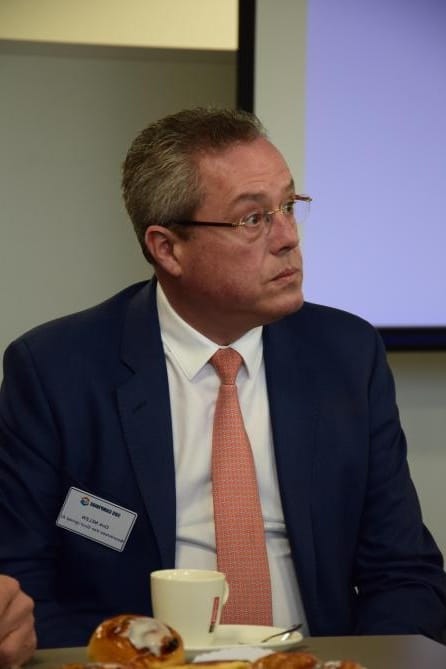 Noordvlees-Van Gool crisis
Revenue evolution
Between 2019 and 2023, Noordvlees-Van Gool’s revenue fell from approximately €283 million to €145 million. That represents a decline of around 49%. This was driven mainly by falling pork prices, competition, and volume rationalization.
Activity remained sustained despite uneven profitability. Net profit stayed positive in some years (around €2 million in 2020 and 2022), but turned negative in 2021 and 2023.
| Year | Revenue (€) | Net profit (€) | Year-on-year change |
|---|---|---|---|
| 2019 | 283 M | 0.9 M | — |
| 2020 | 258 M | 2 M | -9% |
| 2021 | 197 M | -3 M | -24% |
| 2022 | 186 M | 2 M | -6% |
| 2023 | 145 M | -3 M | -22% |
This clearly reflects a genuine phase of restructuring and adjustment before the company’s sale.
Carcass production and processing
Noordvlees is a pork slaughterhouse based in Kalmthout, operating since 1955. The company processes and adds value to carcasses for the Belgian and international markets.
Each year, the company handles several hundred thousand pork carcasses. It increasingly prioritizes high value-added products, such as cuts and prepared meats. This strategy aims to offset declining volumes through better unit margins.
Processing relies on food safety quality, traceability, and certification. Recent investments have modernized slaughter lines and reduced the environmental footprint.
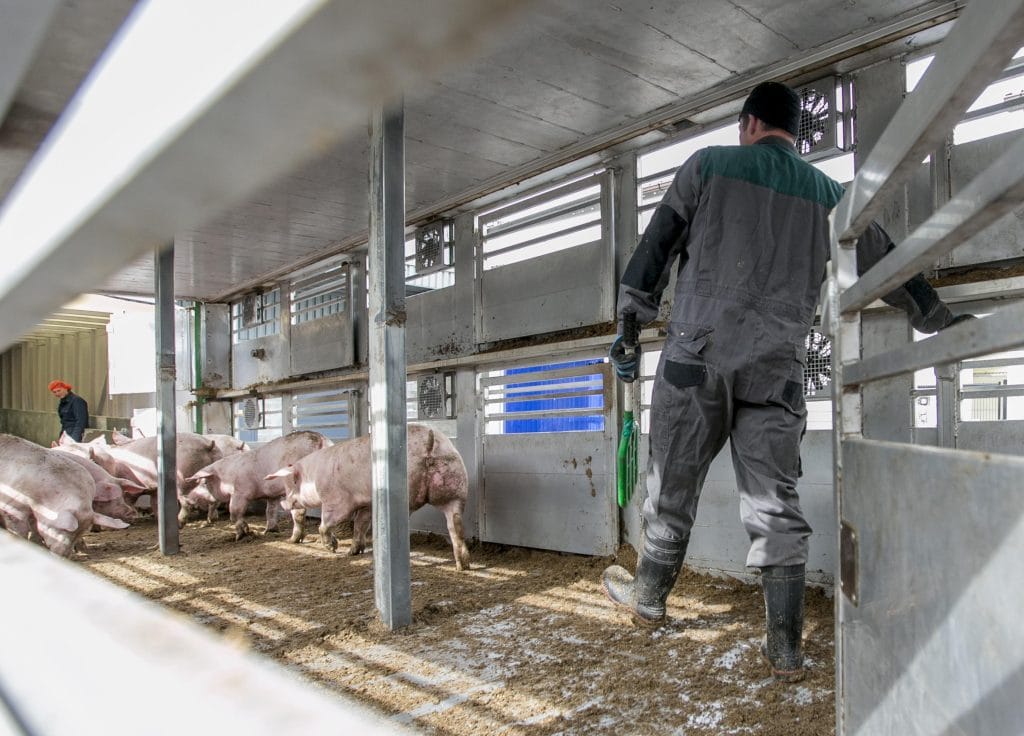 Kalmthout
Yields and workforce
The company’s economic yield tracked the ups and downs of the market. In 2023, the net profit margin hovered around –2%, compared to 0.8% in 2020.
The sales/assets ratio declined, from 463% to 348%, indicating falling operational efficiency.
The number of employees fluctuated between 110 and 151 from 2019 to 2023. In 2023, Noordvlees employed 114 people, with an average salary of around €69,000 per year.
Even as revenue fell, employee productivity remained stable at around €1 million in sales per person. That is still remarkable in a context of cost pressure.
Impact on employees and the local community
The management buy-out of Noordvlees Van Gool had a direct impact on employees, Kalmthout residents, and economic partners. The changes affected job stability, regional dynamics, and supplier relationships.
Job retention after the sale
After the sale, around 350 employees kept their positions within Noordvlees Group. Dirk Nelen and Peter Willemen, leading management, prioritized work continuity and staff confidence.
Employees experienced no major changes in their working conditions. The internal structure remained stable, which reassured teams following a period of uncertainty.
The Kalmthout site remained active and the new Sus Campiniae plant in Oevel allowed activities to be redistributed. This arrangement limited layoff risks and supported regional production.
| Element | Situation after the sale |
|---|---|
| Total workforce | Approximately 350 employees |
| Main sites | Kalmthout, Oevel |
| Type of change | Operational continuity, new internal management |
Consequences for Kalmthout and the region
Kalmthout, home to the group’s historic headquarters, is heavily dependent on the food industry. The sale did not cause a major break in local activity.
Residents did notice an evolution in the Van Gool family’s role, long considered an economic and social pillar.
The company continues to support the regional economy through direct employment and related services. Local businesses, transport companies, and service providers benefit from maintained production volumes.
Some, however, fear a centralization of decision-making in Oevel, where the new plant is located. This trend could, over time, reduce the industrial presence in Kalmthout if profitability takes priority.
Adaptation of partners and suppliers
Partners and suppliers had to adapt to the new organization of Noordvlees Group. Administrative and logistics procedures were reviewed to align with the post-buy-out structure.
Transporters, partner slaughterhouses, and regional processors kept their contracts, but some had to renegotiate deadlines and volumes. This adaptation required better coordination between the Kalmthout, Oevel, and Lochristi sites.
Despite these adjustments, the relationship between the group and its partners remains solid. Management emphasizes reliability and continuity of supply, which are essential to local network stability.
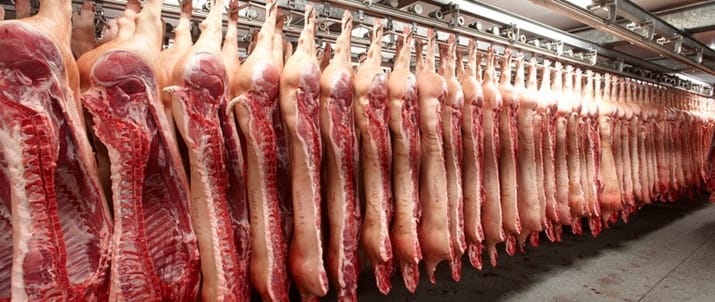 Van Gool family pig farm
Perspectives and future of Noordvlees Group
Noordvlees Group aims to consolidate its position in the European meat industry while adapting its activities to new economic and environmental requirements. The company is betting on a more integrated organization, greater international presence, and modernization of its processes.
Post-sale development strategy
Since the sale of the Van Gool family’s shares, management has taken a more industrial and structured direction. Dirk Nelen and Peter Willemen have strengthened financial stability and ensured operational continuity.
The company now focuses its efforts on two hubs: Kalmthout and Oevel, where the Sus Campiniae site plays a central role. Already profitable, this site supports the group’s growth thanks to high slaughter capacity and optimized logistics.
Noordvlees Group is also betting on specialization: purchasing live pigs, processing carcasses, and adding value to by-products. This strategy aims to stay ahead in a European meat sector undergoing full consolidation.
Positioning on international markets
With a consolidated revenue estimated between €300 and €400 million, Noordvlees Group is establishing itself as a major player in the European pork market.
Its model relies on the sale of carcasses, cuts, and red offal, primarily destined for Belgium, France, Germany, and other European markets.
The company benefits from strong logistics partnerships, notably with Euforbia for transport. This organization allows for fast and controlled distribution. Vertical integration strengthens traceability and quality, two key considerations for international clients.
Noordvlees is working to consolidate its European presence and exploring new export markets, particularly in Asia where demand for pork remains strong.
Innovation and sustainability
The group is investing in technologies to reduce its environmental impact. The modern facilities in Oevel incorporate energy recovery and water treatment systems.
These efforts meet European sustainability standards and the growing expectations of consumers.
Noordvlees Group is also developing more efficient processing methods to minimize waste and extract full value from the product, including offal and co-products.
The company is committed to animal welfare and food safety. It is strengthening controls at every stage of the chain. This orientation toward quality and transparency supports its reputation in an ever-evolving meat market.
Van Gool Family Factory
Van Gool Family Fortune
In 2025, the Van Gool family fortune perfectly symbolizes the trajectory of a great industrial family that managed to transform a regional slaughterhouse into a major player in European pork. For decades, Noordvlees Van Gool generated hundreds of millions of euros in revenue, with enormous slaughter capacity and full integration of the chain, from slaughter to processing. The sale of Noordvlees to management crystallized this success as financial wealth, pushing the Van Gool family fortune to 120 million euros.
By choosing to sell their group to Dirk Nelen and Peter Willemen, the family secured both the continuity of Noordvlees Group and the valorization of their industrial capital. In a context of compressed margins, increasingly strict standards, and heavy investments to be made, this strategy allowed them to convert decades of work in the pork industry into a solid family fortune, without bearing alone the risk of the new growth phase.
The Van Gool family fortune in 2025 is therefore not limited to a simple figure on paper: it represents the culmination of a typically European entrepreneurial story, where a family company that started in Kalmthout becomes a structured group, relocates part of its production to Sus Campiniae in Oevel, and opens up to international markets. By handing their empire to a new generation of leaders while consolidating their wealth, the Van Gools perfectly illustrate how a family can transition from “full industrial” to a genuine wealth management mindset — while leaving behind an actor that remains central to the Belgian pork industry.
Frequently Asked Questions (FAQ)
The sale of Noordvlees Van Gool truly marked the end of a long family adventure in the Belgian pork industry.
Changes in market structure, economic pressure, and certain management decisions led the company and its employees toward a new chapter.
What were the main reasons for the sale of the Van Gool family business?
The Van Gool family decided to sell due to consolidation in the meat sector and the pressing need for capital to remain competitive.
They no longer saw themselves playing an active role in a market now dominated by large groups.
Dirk Nelen and Peter Willemen took over management to guarantee continuity and preserve jobs.
How did the acquisition of Noordvlees influence the meat market?
This acquisition clearly strengthened Noordvlees’s position in the Belgian pork sector.
By integrating new structures and modernizing its sites, Noordvlees increased its slaughter capacity and boosted efficiency.
This move also pushed other players to invest in modernizing their own facilities.
What were the impacts on Noordvlees employees following the sale?
Employees kept their jobs after the takeover.
Management focused on stability and continuity of work.
Some departments were reorganized to improve productivity, but there were no mass layoffs to report.
What role did economic conditions play in the decision to sell Noordvlees?
Margin pressure, rising energy costs, and the demands of international trade weighed heavily on profitability.
These factors genuinely complicated life for a family business that had to compete against large groups with far greater resources.
Which companies expressed interest in buying Noordvlees and why?
Several players in the Belgian and Flemish pork sector showed interest, especially groups seeking to strengthen their slaughter capacity and export network.
For example, the partnership with Patrick Vanden Avenne’s group led to the creation of a new structure in Oevel, focused on regional pork production.
How did Noordvlees’s strategy evolve after the sale by the Van Gool family?
After the sale, Noordvlees truly focused on expansion and modernization. The company invested in higher-performing facilities.
It also expanded its export markets, targeting China in particular. The company clearly aims to establish itself internationally.
Noordvlees focused more on pork processing. It sought to better leverage by-products, which strengthened its position in the Belgian industry.
Editorial methodology
The estimates published by Lama Fortune rely on public sources, media references, and sector comparisons. They are provided for informational purposes only and do not constitute financial advice.