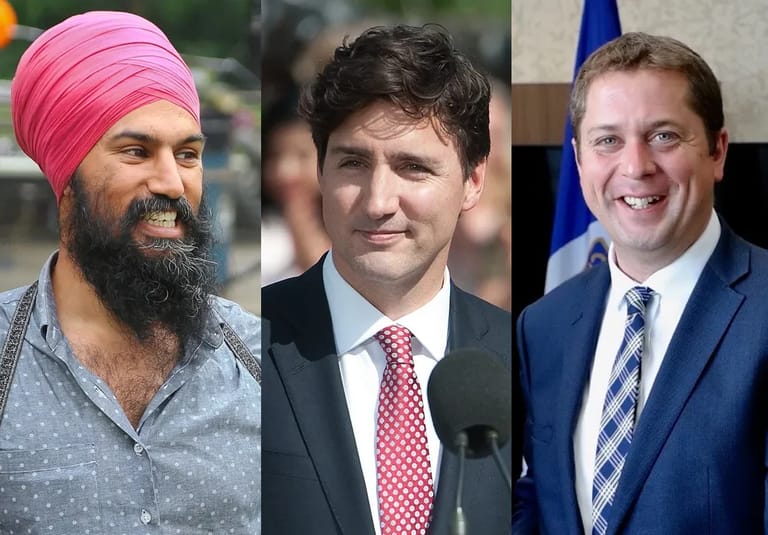
An insurance dynasty worth billions, a horse-racing empire and a software entrepreneur turned television star: the richest politicians in Canada built their biggest fortunes far beyond Parliament Hill. Hal Jackman and his family lead this selection with an estimated C$3.7 billion, followed by Belinda Stronach at C$800 million and Kevin O’Leary at C$550 million.
Further down the list, familiar names tell very different money stories. Doug Ford’s wealth grew from a family printing business. Justin Trudeau combined an inheritance with teaching, speaking and public life. Jagmeet Singh moved from criminal law into provincial and federal politics. The distance between their fortunes is as striking as the difference between their careers.
This 2026 ranking brings together ten Canadian political and public figures, including former office-holders and O’Leary’s national leadership candidacy. Jackman and Paul Martin appear with their family wealth; Brian Mulroney’s entry covers his estimated wealth at his death in 2024. All ranking figures are in Canadian dollars.
Canada’s richest political figures: the net worth ranking
| Rank | Name | Estimated net worth | Main source of wealth |
|---|---|---|---|
| 1 | Hal Jackman and family | C$3.7 billion | Insurance and family investments |
| 2 | Belinda Stronach | C$800 million | Stronach Group interests and business career |
| 3 | Kevin O’Leary | C$550 million | Software, investments and television |
| 4 | Paul Martin and family | C$300 million | Shipping and family investments |
| 5 | Brian Mulroney, at death in 2024 | C$100 million | Legal work, advisory roles and shares |
| 6 | Bill Morneau | C$60 million | Morneau Shepell and invested capital |
| 7 equal | John Tory | C$50 million | Law, executive roles and investments |
| 7 equal | Doug Ford | C$50 million | Printing, packaging and business capital |
| 9 | Justin Trudeau | C$10 million | Inheritance, career earnings and speaking |
| 10 | Jagmeet Singh | C$2 million | Law, political career and savings |
1. Hal Jackman and family: C$3.7 billion
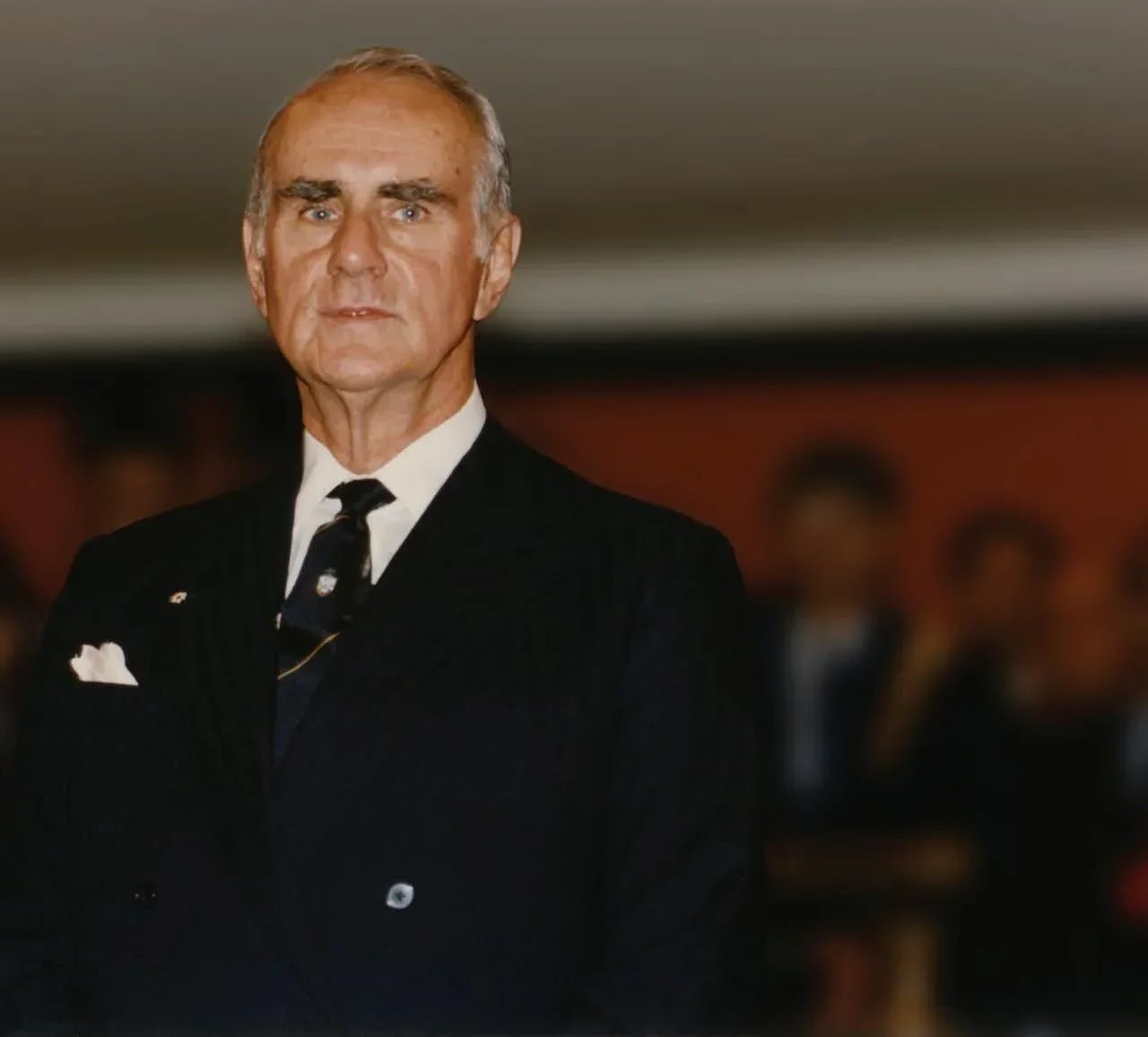
Hal Jackman and his family have an estimated net worth of C$3.7 billion. Their wealth is rooted in insurance and investing, with Toronto-based E-L Financial at the centre of the story. This is a multigenerational business fortune, built through ownership and the patient accumulation of financial capital.
 Hal Jackman
Henry Newton Rowell “Hal” Jackman followed his father Harry into a world where business, philanthropy and public service frequently overlapped. Harry was both a businessman and a federal MP. Hal developed the family’s financial interests over several decades, helping to establish a name that became familiar in corporate Toronto as well as Ontario’s institutions.
The family’s position in E-L Financial connects it to an insurance business and a portfolio of investments. Insurance can generate recurring business over long periods, while invested capital provides another engine of growth. The combination is particularly powerful for owners who remain involved through successive market cycles and generations.
Jackman served as Ontario’s lieutenant-governor from 1991 to 1997. The position represents the Crown in the province and has a constitutional and ceremonial role. His wealth had a very different foundation from the remuneration attached to that public appointment.
The C$80 million gift that put his name on a law school
In September 2025, the University of Toronto announced a new C$80 million gift from Jackman, bringing his support for its law faculty to C$100 million. The faculty took the name Henry N.R. Jackman Faculty of Law. Of the new gift, C$35 million was allocated to student financial support and programmes.
Jackman also served as the university’s chancellor from 1997 to 2003. His support has extended across education, the humanities and campus institutions. These are tangible expressions of a fortune whose public impact reaches well beyond company shareholdings.
Within the business, his son Duncan Jackman took on E-L Financial’s senior leadership roles. The succession gives this entry its family dimension: the name remains closely connected to the enterprise as operational responsibility moves to the next generation. Similar links between ownership and succession appear among the richest Quebecers.
2. Belinda Stronach: C$800 million
Belinda Stronach’s estimated net worth is C$800 million. Her career links two very different industries: the automotive supply chain and North American horse racing. She first rose to prominence at Magna International, the automotive parts company founded by her father, Frank Stronach.
 Belinda Stronach
Belinda held senior executive responsibilities at Magna, including the chief executive role in the early 2000s. That placed her inside a business serving major car manufacturers, where production contracts, engineering and international operations drive value. Executive compensation and economic interests in the family’s businesses were already central to her financial story before she reached Ottawa.
Her political career moved quickly. She ran for the Conservative leadership in 2004, became MP for Newmarket—Aurora and crossed to the Liberals in 2005. Paul Martin appointed her to cabinet, and she remained an MP until 2008. Her years in Parliament were a highly visible chapter within a much longer business career.
Racing, technology and the Stronach family settlement
Today, The Stronach Group and its 1/ST brand form the centre of her business identity. Belinda is the group’s chair and chief executive, with a majority economic interest in the enterprise. Its activities cover racing, wagering technology, media, hospitality and entertainment, with Santa Anita Park in California and Gulfstream Park in Florida among its best-known venues.
The group’s current description reports more than US$3.2 billion in annual wagers processed. Its commercial activities include operating races, distributing content, supplying wagering technology and developing hospitality around major events. Familiar brands include Xpressbet, AmTote and 1/ST BET.
The 2020 family settlement separated important parts of the Stronach empire. Belinda retained control of the racing, gaming and associated real-estate businesses, while her parents’ separate structure received breeding, agricultural and other assets. The arrangement gave the family’s different branches distinct business paths.
For Belinda, the result was a sharper focus on racing as an entertainment business. A major race meeting brings together spectators, broadcast audiences, betting customers and sponsors. Her interests sit across several parts of that chain, which explains why her wealth story extends well beyond the horses themselves.
3. Kevin O’Leary: C$550 million
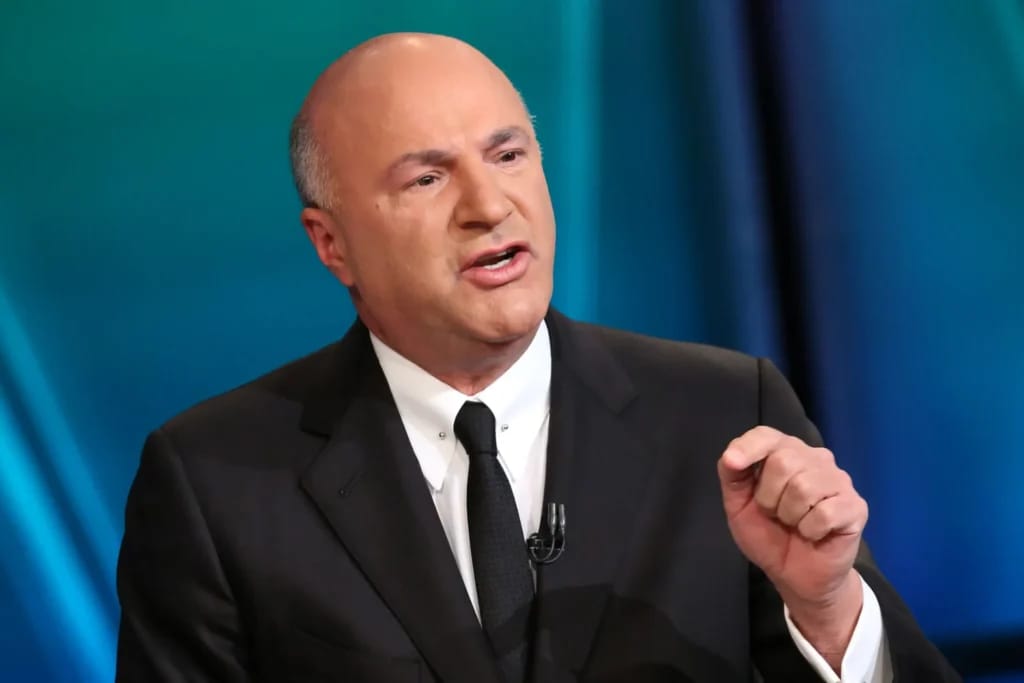
Kevin O’Leary’s net worth is estimated at C$550 million. The television investor known as “Mr. Wonderful” built his public persona around blunt financial advice, but his entrepreneurial career began long before the Shark Tank cameras arrived.
 Kevin O’Leary
Born in Montreal, O’Leary studied at the University of Waterloo before completing an MBA at Western’s Ivey business school. Marketing experience at Nabisco preceded his move into software. In the 1980s, he co-founded SoftKey, a consumer software business that grew through acquisitions and eventually adopted the name The Learning Company.
The 1999 sale of The Learning Company to Mattel became the defining transaction of his early career. O’Leary had helped build and consolidate a business selling educational and family software into a market undergoing rapid change. His own entrepreneurial stake, subsequent investment activity and later media career form the financial story behind the name.
Other ventures followed. He invested in Storage Now, a self-storage business, and developed O’Leary Funds, which was sold in 2015. The sequence illustrates his recurring approach: enter a business, develop its commercial reach and eventually pursue a transaction or a different investment opportunity.
How “Mr. Wonderful” became a business asset
CBC’s Dragons’ Den made O’Leary a familiar figure to Canadian viewers. Shark Tank then brought him a much larger American audience. On screen, his questions focus on sales, margins, licensing and whether an investor can get their money back.
That recognisable personality became valuable in its own right. Television exposure supports speaking, publishing and commercial partnerships, while also drawing attention to businesses in his investment portfolio. Like the stars in our ranking of the richest Canadian singers, O’Leary has a public name that travels across several revenue streams.
His political connection comes from the 2017 Conservative leadership race. He entered the contest with national name recognition, then withdrew before the final vote. He never served as an MP or minister. His appearance in this selection reflects that leadership candidacy and the unusually close overlap between his business celebrity and political ambitions.
4. Paul Martin and family: C$300 million
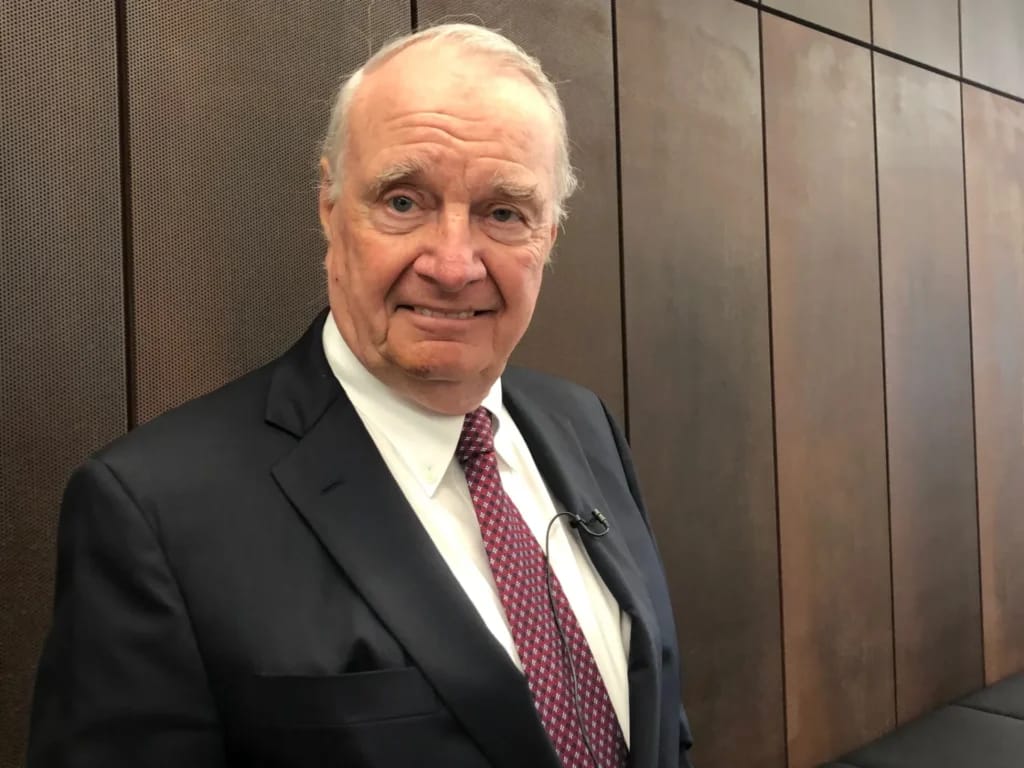
Paul Martin and his family have an estimated fortune of C$300 million. The former prime minister’s route to wealth runs through commercial shipping: large vessels, international customers and the development of Canada Steamship Lines into a broader maritime business.
 Paul Martin
Martin and Laurence Pathy bought CSL in 1981. The company already had deep roots in the Great Lakes and St. Lawrence trade. Martin’s ambition was to expand further into ocean shipping, taking an established Canadian operator into new markets.
By 1988, Martin was CSL’s sole owner. The business’s older bus, shipyard and real-estate interests were organised separately between the Martin and Pathy families. CSL’s shipping activities then required continuing investment in vessels, operating capabilities and overseas expansion.
The company’s self-unloading ships were a major competitive tool. Their onboard equipment allowed cargo to be discharged with less dependence on conventional shore infrastructure. That capability opened commercial opportunities where a customer needed efficient bulk transport without building a traditional unloading terminal.
Why the fortune belongs to a family story
In 2003, Martin transferred his CSL interests to his three sons: Paul Jr., David and James. The next generation became the owners, while the father’s public career reached its highest office. He served as prime minister from 2003 to 2006, following his years as finance minister.
This succession is central to the C$300 million family estimate. The shipping business continued within the family after its founder’s political career moved forward. Ownership had crossed generations, bringing the Martin name into a new chapter of the company’s history.
The commercial vessel Rt. Hon. Paul J. Martin carries the former leader’s name within CSL’s operations. It is a working ship in a fleet built around cargo transportation, a particularly fitting connection to the business that shaped his pre-political career.
Martin later turned substantial attention to Indigenous education. In 2008, he and his family established the Martin Family Initiative, supporting work with Indigenous communities and young people. His trajectory moves from building an international company to national government and then long-term educational engagement. It gives this fortune an unusually clear sequence of business creation, family succession and philanthropy.
5. Brian Mulroney: C$100 million at his death in 2024
Brian Mulroney’s net worth at his death on February 29, 2024, is estimated at C$100 million. The former prime minister spent three decades after leaving office working in corporate law, advisory positions and boardrooms. That lengthy second career is essential to understanding his wealth.
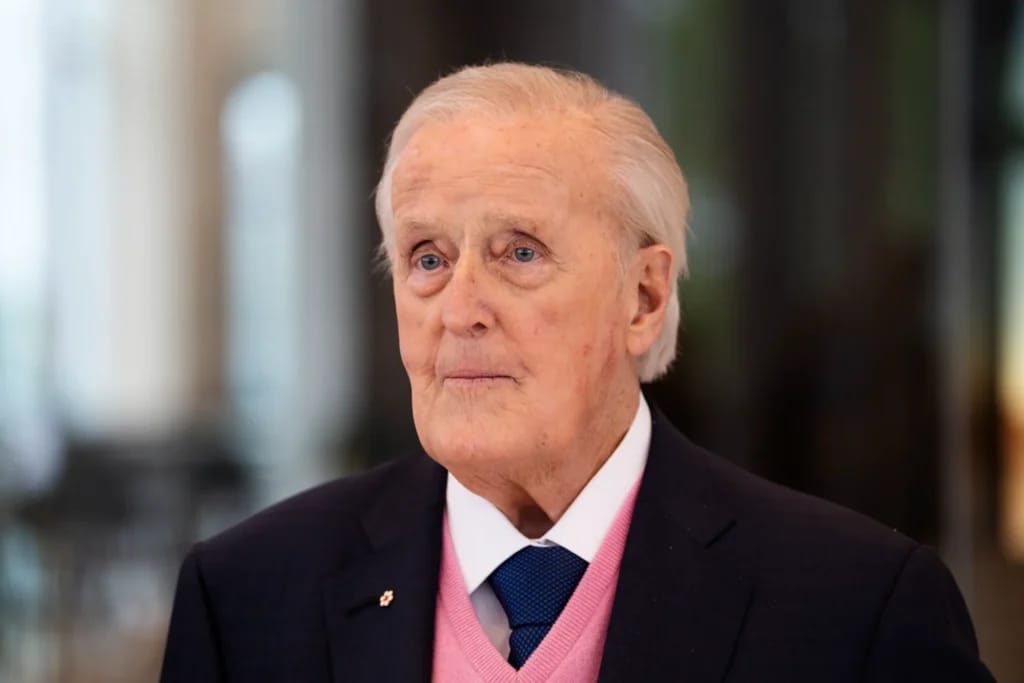 Brian Mulroney
Mulroney was born in Baie-Comeau, Quebec, and became a lawyer and business executive before entering national leadership. His early work exposed him to industrial relations, negotiations and large companies. He then served as Canada’s prime minister from 1984 to 1993, developing an international network that remained relevant to his later professional life.
After government, he returned to the private sector. Companies associated with his board and advisory career included Quebecor, Barrick Gold and Blackstone. Such roles could combine cash remuneration with share ownership, giving him both current income and interests in businesses whose value changed over time.
His fortune therefore developed through more than one professional phase. The legal and executive career came first, followed by high public office and a long period of corporate work. Time mattered: post-political responsibilities continued for roughly thirty years.
Quebecor’s payments reveal the mechanics of a boardroom career
Mulroney served on Quebecor’s board for more than twenty years and became its chair in 2014. His connection with the company stretched further back, to labour negotiations involving the Journal de Montréal in the 1970s. The relationship spanned major changes in the media and telecommunications industries.
Quebecor’s remuneration disclosure for 2023 records C$295,000 in board fees and C$476,251 in deferred share units. The cash and equity components show how senior corporate work can produce both spendable income and an investment position. The company also reported a substantial accumulated deferred-share holding at the end of that year.
Mulroney’s public legacy includes political agreements and national debates, while his financial history includes law-firm work, corporate relationships and investments. His estate marks the endpoint of that personal accumulation in 2024. It is one of the clearest examples here of a substantial fortune developing during a long career after the prime minister’s office.
6. Bill Morneau: C$60 million
Bill Morneau’s personal net worth is estimated at C$60 million. He arrived in federal politics after establishing himself in the business of employee benefits, pensions and human-resources services. His corporate wealth was already a major part of his life when he became finance minister in 2015.
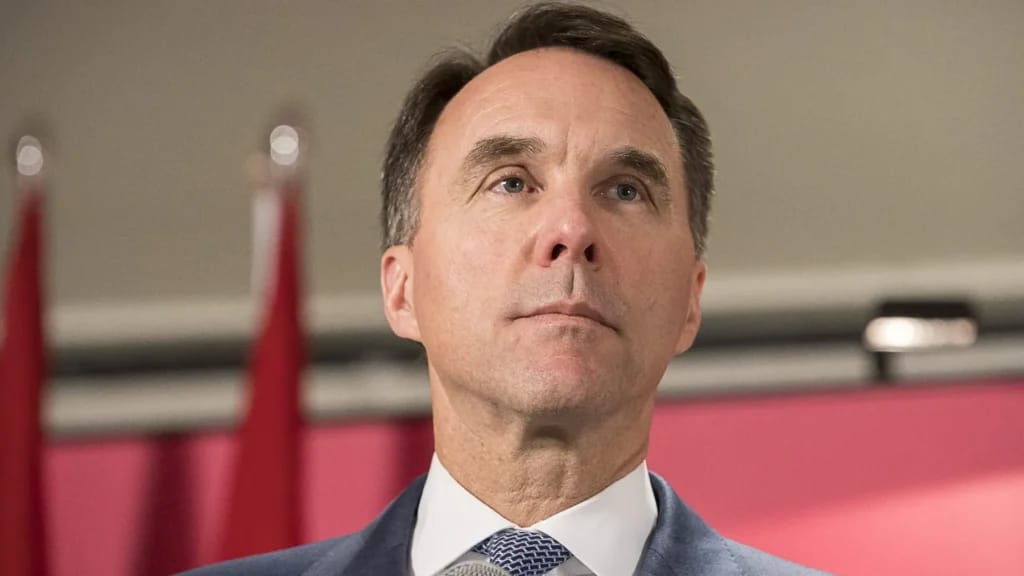 Bill Morneau
Morneau Shepell, developed from the company founded by his father, sits at the heart of that story. The business served employers dealing with retirement plans, benefits and workforce needs. These services helped build lasting corporate relationships and a company with an economic life extending well beyond any single executive’s political term.
Morneau’s shares brought his business background into sharp public focus. In October 2017, approximately one million shares were reported to be worth C$21 million, with a dividend stream of about C$65,000 a month at that time. He subsequently announced the sale of the remaining shares and arrangements for his other assets.
Those holdings show why the ministerial salary was only one part of his financial position. Morneau had spent years building a career, receiving compensation and holding a stake in an expanding business. His own investment capital had a history that preceded his first federal election.
From employee benefits to the federal finance portfolio
As finance minister from 2015 to 2020, Morneau moved from managing a company to helping shape national fiscal policy. The contrast was striking: his earlier work dealt with the financial and employment needs of organisations, while his cabinet role involved the federal budget and Canada’s wider economy.
His marriage to Nancy McCain also connected him to one of the country’s best-known business families. Her family’s association with McCain Foods is part of the couple’s biography. Morneau’s personal fortune here follows his own shares, executive career and accumulated capital.
His story resembles that of other company leaders who enter public life after achieving financial independence. Years of corporate ownership can establish a larger pool of wealth than several years of political pay. Among this group, Morneau’s former company shareholding is one of the most concrete examples of that transition from private business to a senior government office.
7 equal. John Tory: C$50 million
John Tory’s estimated net worth is C$50 million. Toronto’s former mayor built a long career across law, media and telecommunications before becoming the city’s most recognisable political figure. The boardroom and the broadcasting studio are both important to his financial biography.
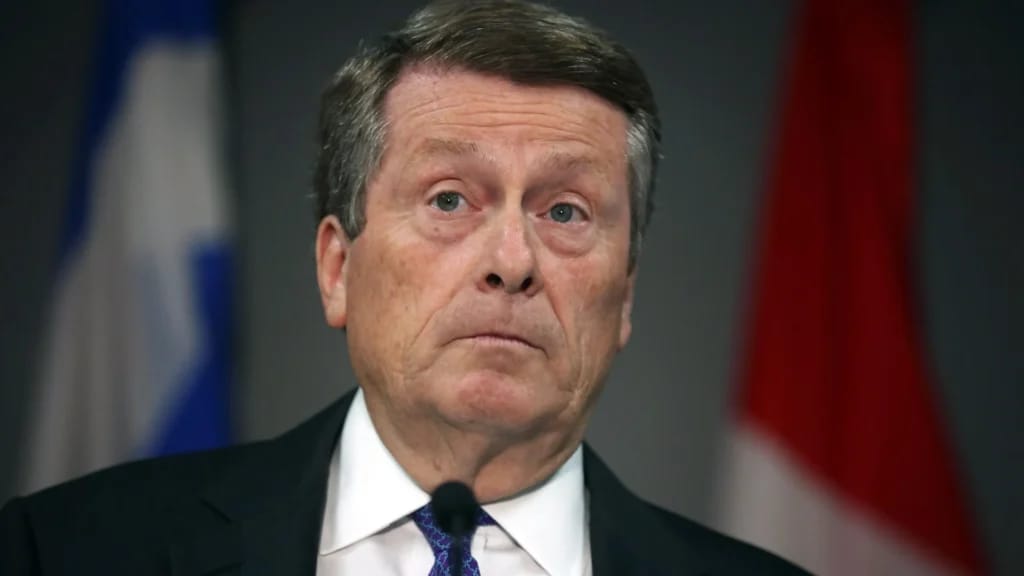 John Tory
Tory comes from the family associated with the law firm Torys, where he worked as a lawyer and managing partner. He later held senior positions at Rogers, leading Rogers Media from 1995 to 1999 and Rogers Cable from 1999 to 2003. The roles placed him at the centre of businesses distributing news, entertainment and communications services.
His experience extended beyond one industry. Legal practice supplied a professional foundation, corporate leadership added executive remuneration and share interests, and later media work kept him in the public eye. Those different periods helped build his financial position over decades.
Tory also led Ontario’s Progressive Conservatives and served as leader of the provincial opposition. He returned to broadcasting before winning Toronto’s mayoral election in 2014. He remained mayor until 2023, bringing a corporate management background into municipal government.
The Rogers connection continued beyond city hall
Tory’s relationship with Rogers included the advisory committee of the Rogers Control Trust. In 2022, that role was reported to pay him C$100,000 a year. His history with the company also included personal shareholdings and board responsibilities.
He returned to Rogers’ board in 2024 and appears in the company’s 2026 governance documentation. The return ties his post-mayoral career back to the business where he had already spent significant years as a senior executive.
Tory shares seventh place with Doug Ford because both have an estimated C$50 million fortune. The two also share a piece of Toronto political history: they faced each other in the 2014 mayoral race won by Tory. Their money came through different professional routes, with Tory’s career concentrated in law and communications and Ford’s in a family industrial business.
7 equal. Doug Ford: C$50 million
Doug Ford’s net worth is estimated at C$50 million. Ontario’s premier built his business career in labels and packaging, an industry less glamorous than entertainment but deeply connected to everyday consumer products. Deco supplied the commercial foundation for his wealth before he reached Queen’s Park.
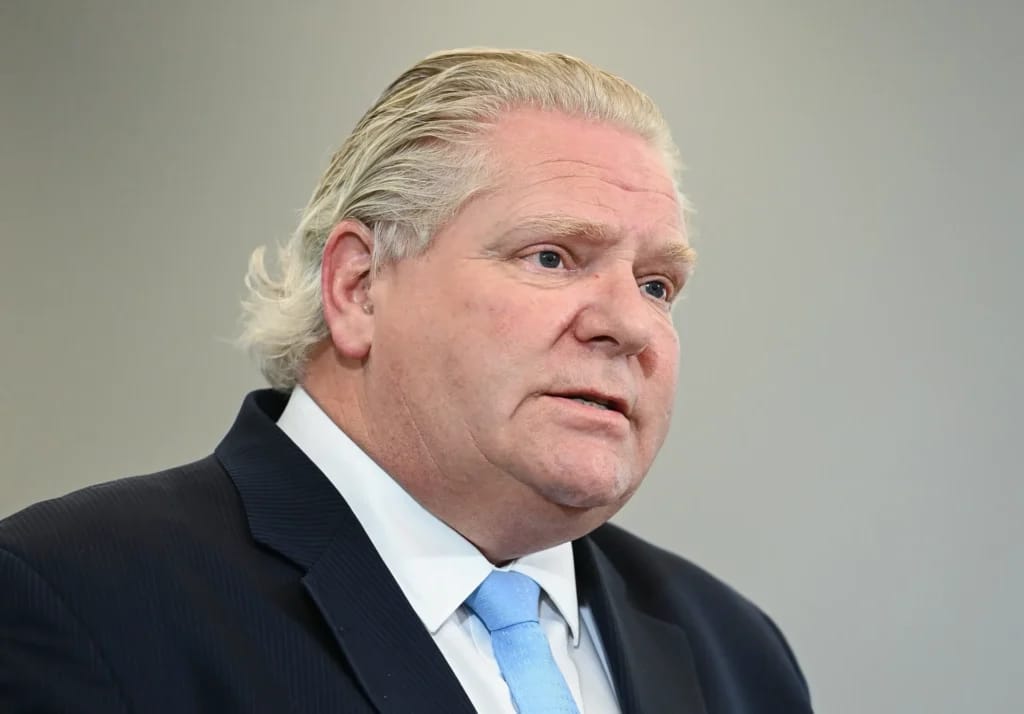 Doug Ford
His father, Doug Ford Sr., helped establish the family business in 1962. Over time, it developed operations on both sides of the Canada–United States border. Label printing involves repeat orders, customer relationships and production capabilities: small pieces of packaging can support a substantial industrial business when produced at scale.
Doug became closely involved in the American operation. Public financial disclosure reported in 2018 identified him as the owner of Deco Chicago, while the Toronto business belonged to his brother Randy. That division gives the family’s industrial history two distinct ownership paths.
Before becoming premier, Ford served as a Toronto city councillor from 2010 to 2014, during his brother Rob’s mayoralty. In 2018, he became MPP for Etobicoke North and Ontario’s premier. His business experience remained a prominent part of his political identity.
The Chicago sale changed his business story
In October 2022, Resource Label Group announced its acquisition of Deco Flexible Packaging in Chicago. The American site had opened in 1999. The transaction concerned that Chicago operation, following years of development in labels and flexible packaging.
The sale added an important milestone to Ford’s financial history. Owning and developing a company can generate business income over time; selling it changes the form in which an owner holds the value built through that work. In Ford’s case, the printing career and the later transaction are central to his estimated fortune.
His public career also continues a family pattern. His father served in Ontario’s legislature, while his brother became Toronto’s mayor. For Doug, politics followed an already established involvement in the family enterprise. His current prominence as premier sits on top of a much older story of manufacturing, sales and cross-border expansion.
9. Justin Trudeau: C$10 million
Justin Trudeau’s net worth is estimated at C$10 million. The former prime minister’s money story combines inherited capital with teaching, public speaking, publishing and seventeen years in Parliament. He left the prime minister’s office on March 14, 2025.
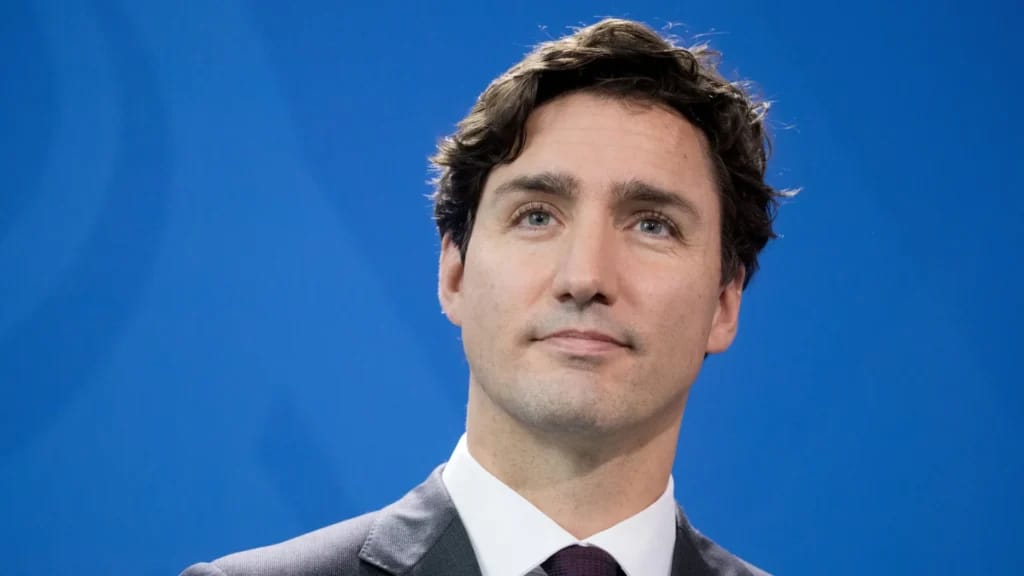 Justin Trudeau
In 2013, Trudeau publicly discussed an inheritance valued at about C$1.2 million. That family capital was one starting point for his wealth. His later career added earned income through several distinct stages, including work before he became a full-time national political figure.
Trudeau worked as a teacher before his parliamentary career. He also developed a paid speaking business, with more than C$1.3 million in cumulative speaking receipts since 2006 reported in 2013. Those engagements became a public controversy when fees paid by charities and other organisations attracted scrutiny.
The speaking work also illustrates an early commercial advantage of his recognisable name. Long before becoming prime minister, he could attract an audience interested in his family, his experiences and his views on Canada. Public visibility created an income stream separate from his teaching salary and, later, his parliamentary pay.
Papineau, a memoir and a decade as prime minister
Trudeau won the Montreal riding of Papineau in 2008, became Liberal leader in 2013 and took office as prime minister in 2015. He remained an MP until 2025. His elected career therefore covered several years as a backbencher and party leader before the decade at the head of government.
His memoir Common Ground, published in 2014, arrived between winning the Liberal leadership and winning the federal election. It presented his family history and political outlook to a national audience. Books and speaking also feature in the careers of some of the richest Canadian journalists, where public recognition creates opportunities beyond a primary salary.
Trudeau’s financial trajectory differs from the industrial fortunes higher in this ranking. His wealth grew from an initial inheritance and a career centred on education, communication and public life. Since March 2025, the prime-ministerial salary has belonged to his successor’s office; Trudeau’s own story has moved into the years after government.
10. Jagmeet Singh: C$2 million
Jagmeet Singh’s estimated net worth is C$2 million. His route to financial security began in law and continued through Ontario’s legislature and the House of Commons. He led the federal NDP from 2017 to 2025 and is now a former MP.
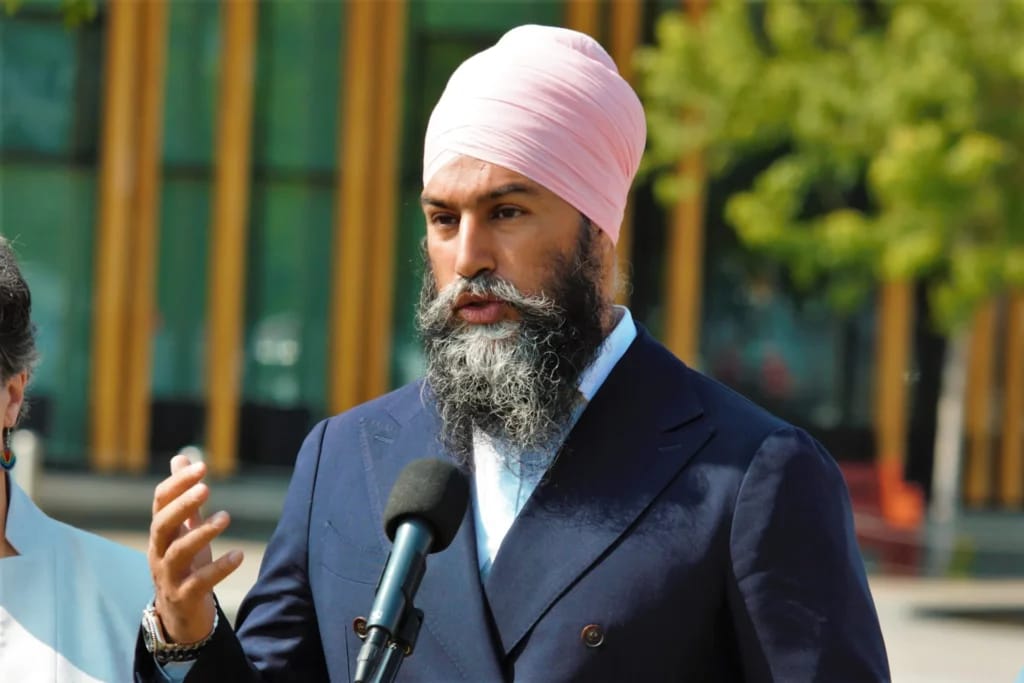 Jagmeet Singh
After studying biology, Singh graduated from Osgoode Hall Law School in 2005. He worked in criminal defence and later developed a practice with his brother, Gurratan. Legal work provided the first substantial professional chapter in a career that would eventually carry him from the Toronto area to British Columbia.
He won the Ontario riding of Bramalea—Gore—Malton in 2011 and served at Queen’s Park until 2017. His move to the federal NDP leadership did not immediately bring a seat in the House of Commons. He entered Parliament for Burnaby South in 2019, adding a federal salary to a career already built through years of legal and provincial work.
That sequence matters to his income story: lawyer, provincial representative, federal party leader and then federal MP were successive roles, with different working arrangements and periods of service. His wealth reflects professional earnings and accumulated savings over that career.
Love & Courage and the end of his parliamentary chapter
Singh published Love & Courage in April 2019, bringing his family experiences and personal development into the public conversation. The memoir added publishing to his legal and political background at a moment when his national profile was growing.
His tailored clothes, colourful turbans and confident media presence made him instantly recognisable. The personal style helped distinguish him in Canadian politics, while the book gave readers a longer account of the experiences behind the public figure.
The April 28, 2025 election brought a major change. Singh lost in Burnaby Central and subsequently left the party leadership. His parliamentary service had ended, closing the chapter of income tied to serving as an MP and recognised party leader in the House.
Within this ranking, Singh represents a fortune built around a skilled profession and public service. His profile is nationally famous, while the financial path behind it is a gradual accumulation through work, savings and a published book.
What is the Canadian prime minister’s salary in 2026?
The Canadian prime minister’s annual gross parliamentary pay is C$435,400 from April 1, 2026. It combines the C$217,700 MP’s sessional allowance with an additional C$217,700 for serving as prime minister.
A cabinet minister receives an additional C$103,600, bringing the combined annual amount to C$321,300. These figures describe remuneration for the public role. An individual’s accumulated wealth develops over a longer period through earnings, spending, savings and investment returns.
The fortunes in this list reveal several different relationships with those salaries. Morneau entered cabinet with a substantial company shareholding. Ford came from a packaging business. Mulroney spent three decades earning in the private sector after leaving office. Trudeau and Singh accumulated income across different professional and political stages.
The businesses behind Canada’s political fortunes
Insurance, shipping, employee benefits and printed packaging provide much of the economic substance behind this ranking. They are businesses that serve recurring needs, with contracts, operating assets and ownership passed through families or sold to new investors.
Media adds another route. O’Leary made the act of investing into television entertainment, while Tory moved between broadcasting management, radio and elected office. Business reputations can travel into politics; political reputations can also support a later professional career.
The same variety appears in Canadian business success stories such as Luc Poirier’s, where the important milestones are the companies built, the transactions completed and the capital retained over time. For Canada’s wealthiest political figures, the most revealing chapter often begins years before their first election—or continues long after their last.
Key takeaways
- Hal Jackman and his family lead this selection with an estimated C$3.7 billion, followed by Belinda Stronach at C$800 million and Kevin O’Leary at C$550 million.
- Doug Ford and John Tory share seventh place with estimated net worths of C$50 million each, built through very different business careers.
- Justin Trudeau’s estimated net worth is C$10 million; Jagmeet Singh’s is C$2 million. Both completed their parliamentary careers in 2025.
- Paul Martin’s C$300 million entry covers family wealth after CSL passed to his sons; Brian Mulroney’s C$100 million concerns his wealth at death in 2024.
Editorial methodology
The estimates published by Lama Fortune rely on public sources, media references, and sector comparisons. They are provided for informational purposes only and do not constitute financial advice.
Sources reviewed
Frequently asked questions
Who leads this ranking of Canada’s richest politicians?
Hal Jackman and his family lead with an estimated C$3.7 billion. Jackman served as Ontario’s lieutenant-governor from 1991 to 1997, while the family’s wealth is rooted in E-L Financial, insurance and investments.
What is Justin Trudeau’s net worth in 2026?
Justin Trudeau’s net worth is estimated at C$10 million, combining inherited capital with career earnings, speaking and publishing. He served as prime minister from 2015 until March 14, 2025.
What is Jagmeet Singh’s net worth?
Jagmeet Singh’s net worth is estimated at C$2 million. He worked as a criminal defence lawyer, served in Ontario’s legislature and Parliament, and published Love & Courage. He is a former MP and former NDP leader.
How much is Doug Ford worth?
Doug Ford’s net worth is estimated at C$50 million. His wealth developed through the Deco printing and packaging business, including the Chicago operation acquired by Resource Label Group in 2022.
How much does the prime minister of Canada earn in 2026?
From April 1, 2026, the prime minister’s annual gross parliamentary pay totals C$435,400: a C$217,700 MP’s sessional allowance plus C$217,700 for the prime-ministerial role.
Does Paul Martin still own Canada Steamship Lines?
Paul Martin transferred his CSL interests to his three sons, Paul Jr., David and James, in 2003. The C$300 million estimate covers Paul Martin and his family, including the next generation’s business ownership.
Was Kevin O’Leary elected to Parliament?
Kevin O’Leary ran for the Conservative leadership in 2017 and withdrew before the final vote. He never served as an MP or minister. His estimated C$550 million fortune comes from business, investments and television.