Doug Ford’s Fortune
Amounts mentioned are estimates based on public sources and can vary depending on methodology (income, assets, debt) and update date.
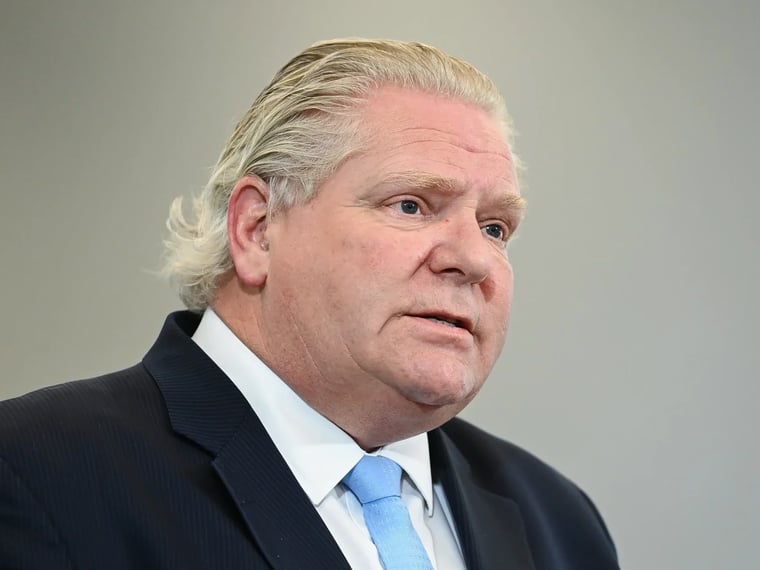
Doug Ford, the 26th and current Premier of Ontario, is a Canadian political figure who often sparks debate. Born on November 20, 1964, this politician and businessman has been leading Canada’s most populous province since his election.
His tenure has been marked by several controversial decisions. He threatened to cancel a $68 million contract and has had tensions with the United States over trade tariffs. In response to actions by the American administration, Ford even raised the possibility of cutting off electricity exports to the United States, demonstrating his firm stance in international negotiations.
Some critics accuse Ford of favouring his wealthy allies, citing in particular a $1.9 billion expenditure that, in their view, could have been invested in essential public services. These policy choices continue to define his legacy in Ontario politics.
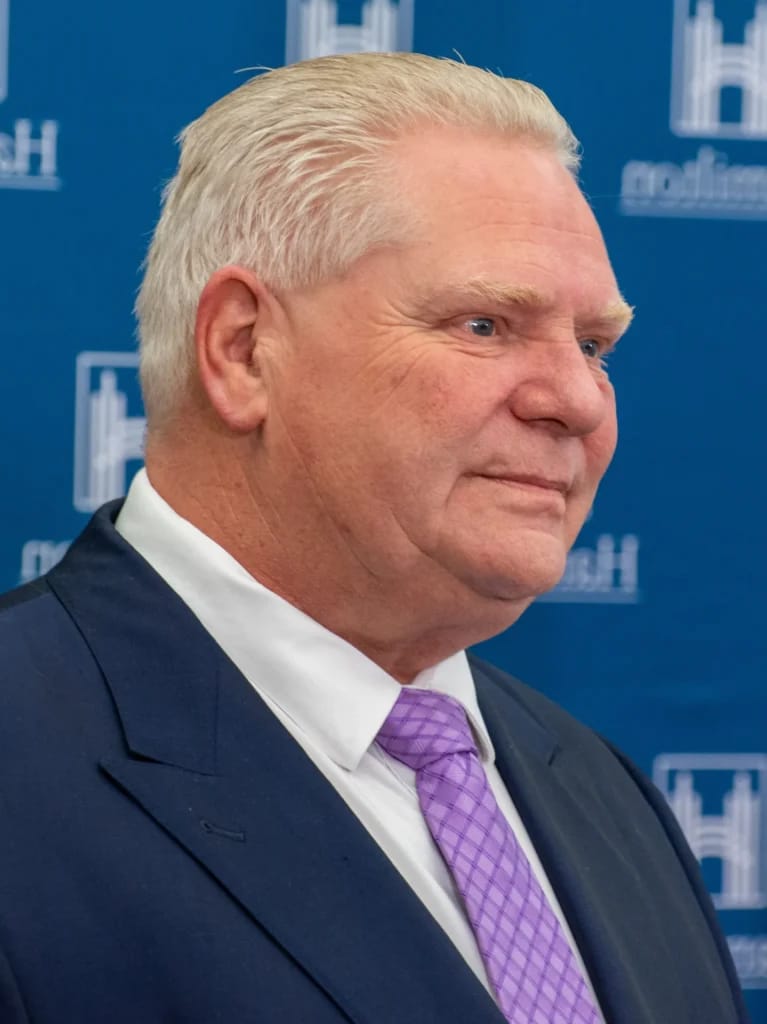 Doug Ford
Doug Ford’s Biography
Douglas Robert Ford Jr. is an important Canadian political figure who currently holds the position of Premier of Ontario. Born on November 20, 1964 in Etobicoke, he built his career on entrepreneurial foundations before entering politics.
Early Life and Education
Doug Ford was born and raised in Etobicoke, a suburb in western Toronto. The son of Doug Ford Sr., a businessman and local politician, he was exposed early on to the workings of entrepreneurship and politics.
His formal education remains relatively undocumented in public sources. He attended local schools before quickly moving toward the business world.
The young Ford developed an early sharp business sense and a pragmatic perspective that would later characterize his political approach.
Professional Career and Business
Before entering politics, Doug Ford primarily built his career in the family business, Deco Labels & Tags, a label printing company founded by his father.
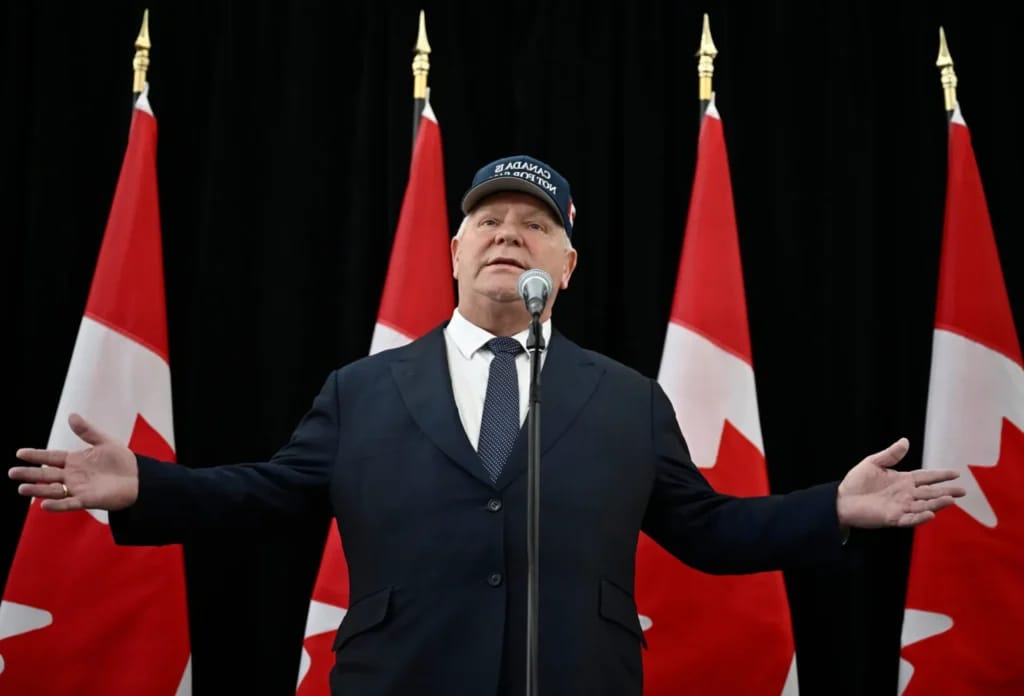
As president of the company, he contributed to its expansion, particularly in the United States. This experience in the private sector deeply influenced his economic and political vision.
Ford has often highlighted his entrepreneurial experience as an asset in his political career, presenting himself as someone who understands the challenges facing small and medium-sized businesses. This businessman identity remains central to his public image.
The Ford Family’s Influence
The Ford family has exercised considerable influence on the Toronto and Ontario political scene. Doug’s father, Doug Ford Sr., served as a provincial Member of Parliament, laying the groundwork for a local political dynasty.
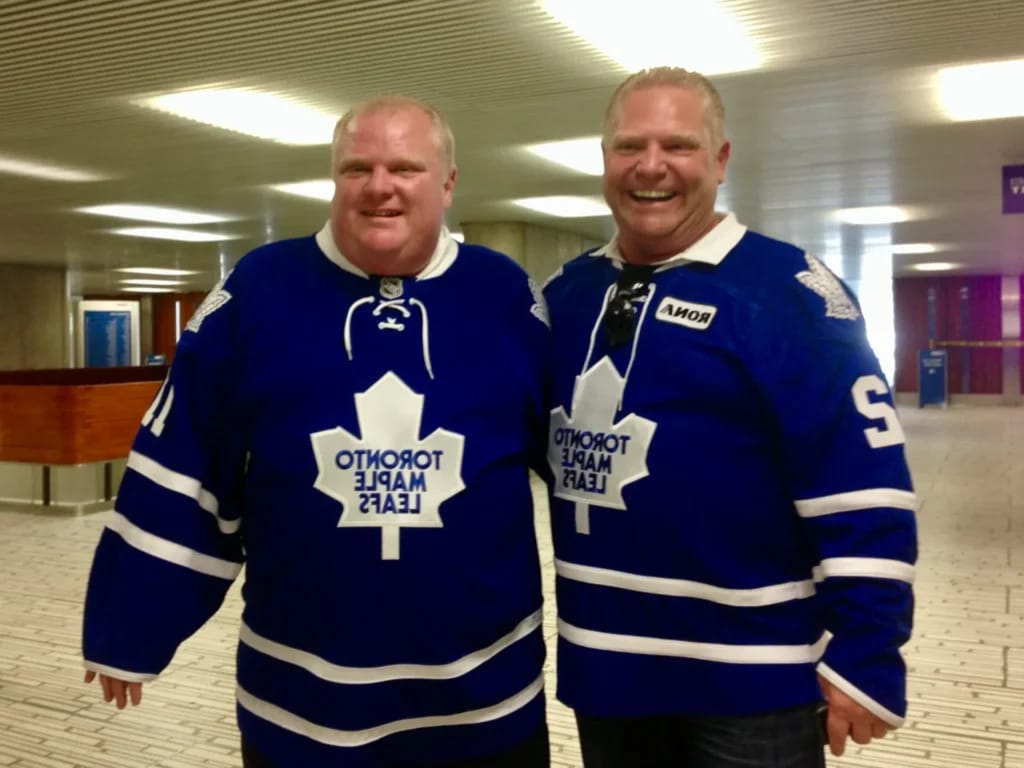 Rob and Doug Ford
Doug’s brother, Rob Ford, made history in Toronto politics as the controversial mayor between 2010 and 2014. After Rob’s death in 2016, Doug in some ways carried on the family’s political legacy.
In 2018, Doug Ford became the 26th Premier of Ontario, consolidating the Ford family’s influence in Canadian politics. His political career, first as a city councillor in Toronto and then as provincial Premier, reflects the importance of family ties in his journey.
Doug Ford’s Political Career
Doug Ford has followed a political trajectory marked by his direct style and conservative positions. His path includes experience at the municipal level before rising to the position of Premier of Ontario.
Political Rise
Doug Ford entered politics in 2010 as a Toronto city councillor, representing the riding of Etobicoke North (Ward 2). He held this position while his brother Rob Ford was Mayor of Toronto.
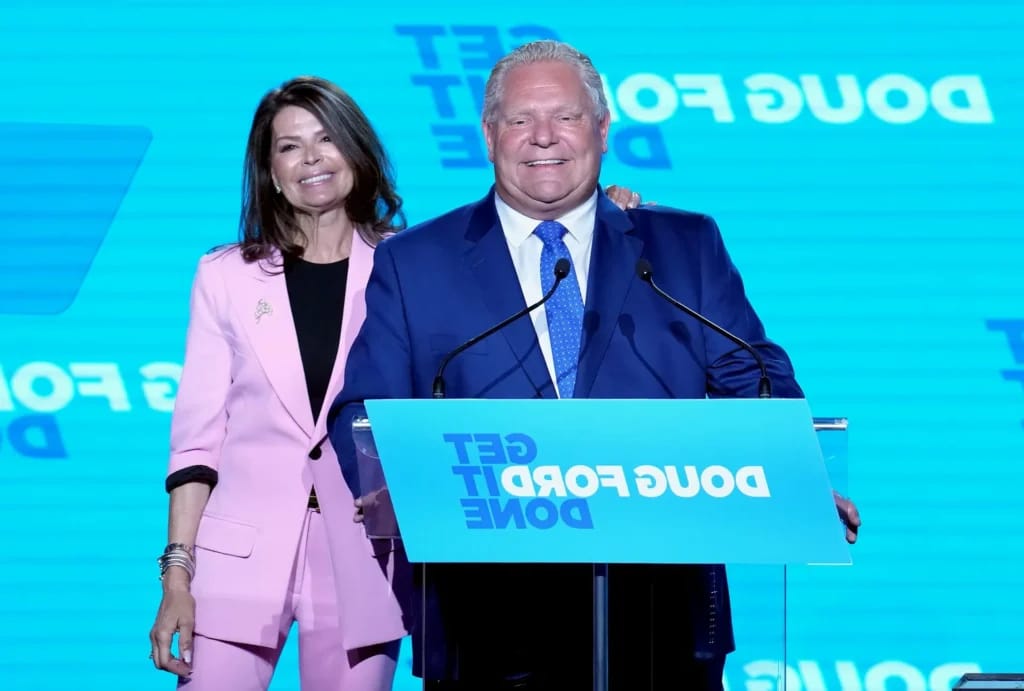
After his brother’s illness in 2014, Doug ran for Mayor of Toronto, finishing second behind John Tory. That defeat did not discourage him.
In 2018, he returned to the political scene by winning the leadership race for the Ontario Progressive Conservative Party, following the unexpected resignation of Patrick Brown.
Premier of Ontario
In June 2018, Ford led the Progressive Conservatives to a decisive victory in the provincial election against Kathleen Wynne’s Liberal government, becoming the 26th Premier of Ontario.
His leadership style, often described as populist, was characterized by promises to reduce government spending and improve Ontario’s economy.
In 2022, he was re-elected to a second term, strengthening his position at Queen’s Park. This re-election confirmed his popularity among a significant portion of the Ontario electorate.
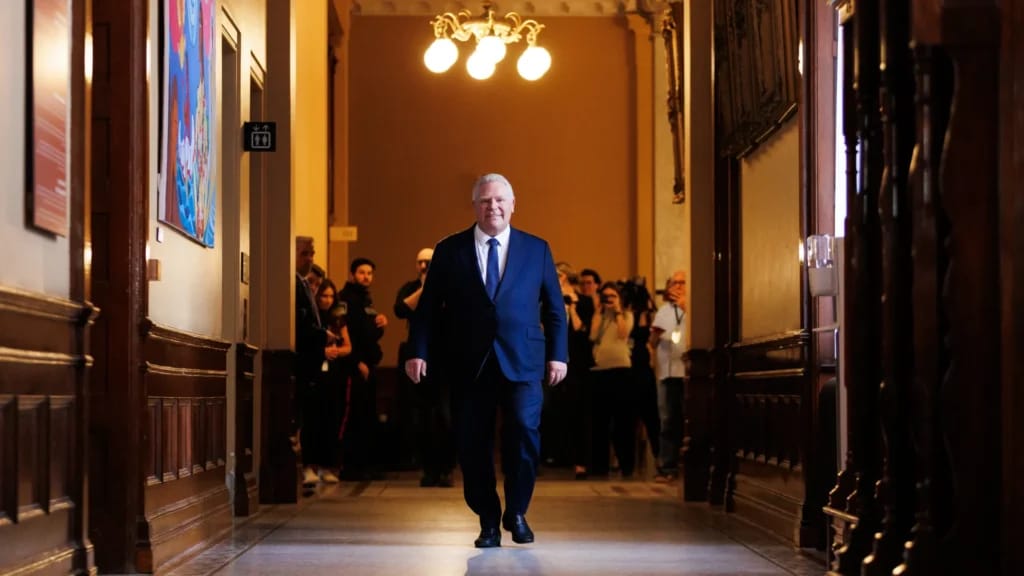
Major Policies and Initiatives
The Ford government implemented several controversial reforms, including reducing the number of Toronto city councillors and changes to the education system.
He adopted a pro-business approach with initiatives aimed at reducing bureaucracy and stimulating Ontario’s economy. His management of the COVID-19 pandemic was marked by lockdown measures and gradual reopening strategies.
In terms of federal-provincial relations, Ford has at times displayed a position defending Ontario’s interests against the federal government, while collaborating on certain important files such as infrastructure and health.
Doug Ford and Ontario’s Economy
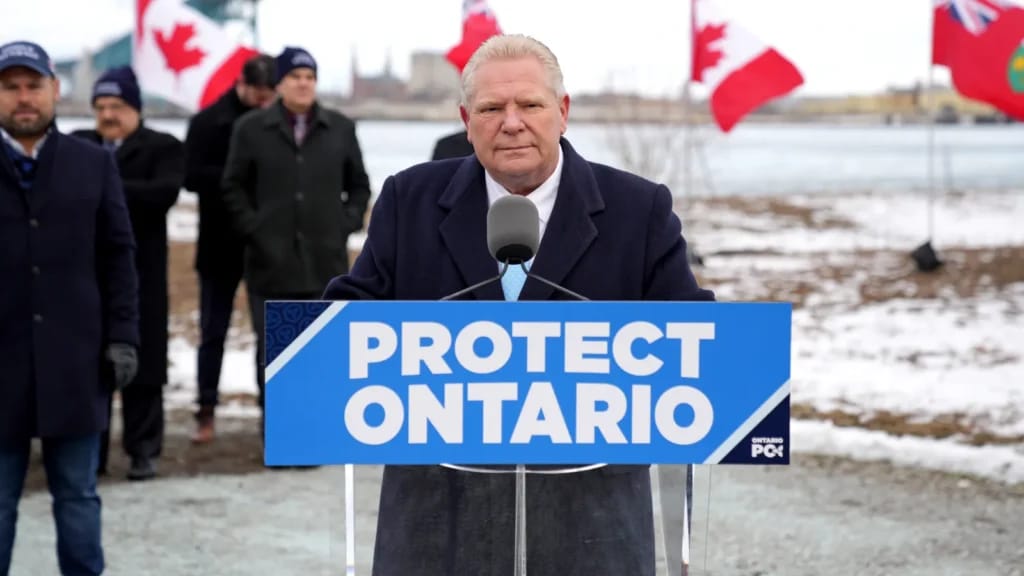
Doug Ford, Premier of Ontario, has taken several important economic measures since taking office. His economic management is characterized by responses to trade tensions and initiatives aimed at protecting the province’s economic interests.
Impact on Trade and Industry
Doug Ford’s economic record is described by some economists as “not extraordinary.” David-Alexandre Brassard, an economist for Chartered Professional Accountants, has notably expressed this opinion on the province’s economic performance under his leadership.
Ford implemented a 25% surcharge on certain exports, a measure that reportedly generates approximately $400,000 per day for Ontario’s coffers. These additional funds are intended to support provincial initiatives.
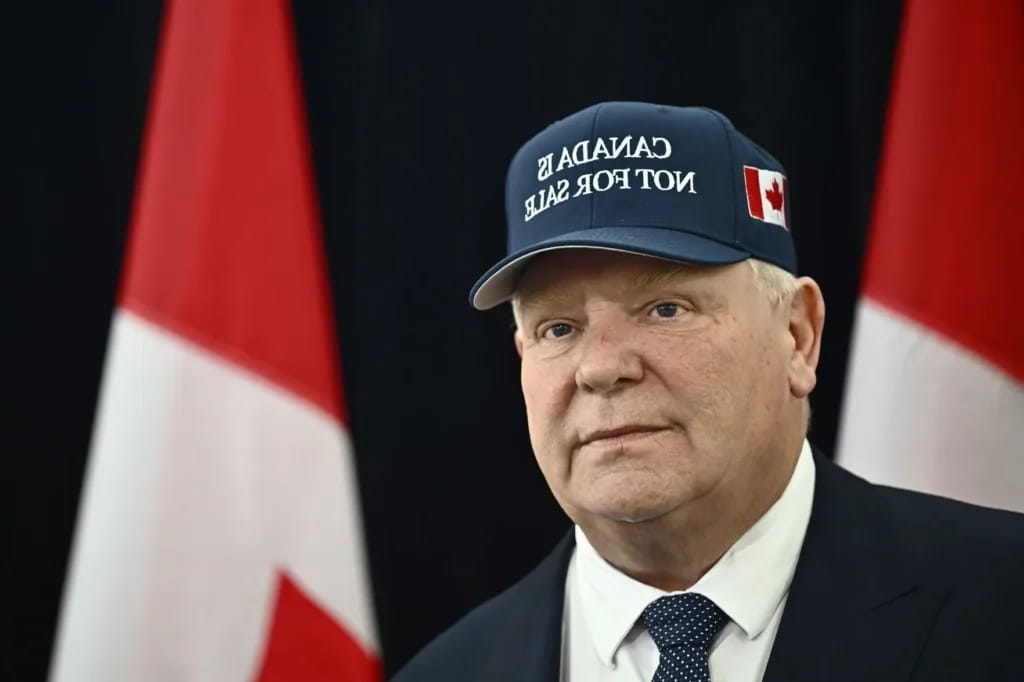
The Premier has also presented himself as “Captain Canada” in certain contexts, seeking to project an image as a defender of Canadian economic interests against external pressures.
Responses to Tariff Threats
Faced with trade tensions with the United States, Doug Ford adopted a defensive position to protect Ontario’s economy. The trade war triggered by the United States prompted the Ford government to take retaliatory measures.
In this tense context, Ford threatened to terminate certain contracts with American partners. This approach reflects his determination to defend Ontario’s interests in a climate of growing protectionism.
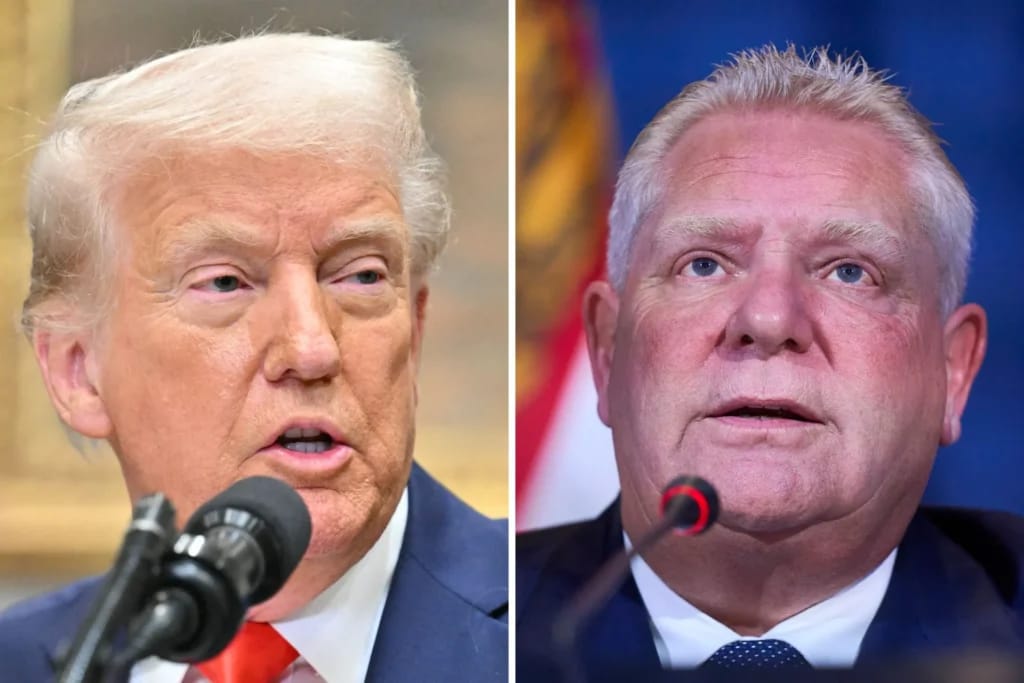 Donald Trump – Doug Ford
On the eve of Donald Trump’s inauguration, Ford declared he was ready to protect Ontario workers, signalling his preparedness for possible changes in American trade policy.
Strategies in Education and the Economy
Ford’s economic policy also includes measures targeting different socio-economic categories. His economic statement for Ontario contains several important initiatives that reflect his vision for provincial development.
Some critics suggest that his economic policies favour the wealthy. Ford has, however, defended his position by asserting that millionaires are also important contributors to Ontario’s economy.
In the area of education, his approach aims to create closer ties with the business world and industry. He seeks to develop a skilled workforce to meet the needs of Ontario’s labour market and stimulate the province’s economic growth.
Relations with the United States
Doug Ford has played an important role in relations between Ontario and the United States, particularly in matters of trade and cooperation with border states. His initiatives aim to strengthen economic ties while defending Canadian interests.
Trade and Border Security
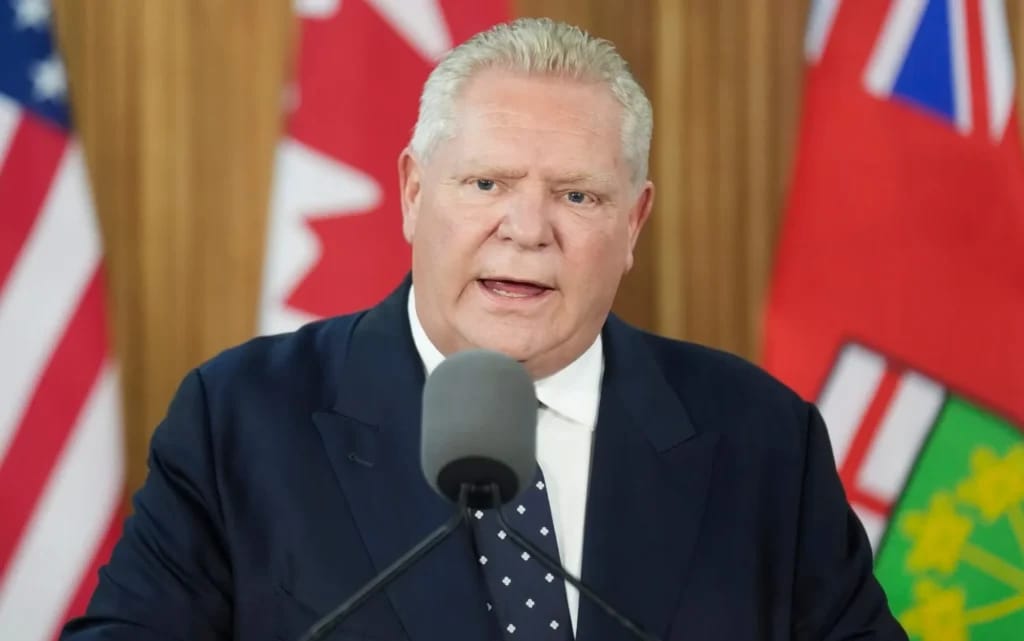
Doug Ford has maintained a firm position in the face of American trade policies, particularly under the Trump administration. In March 2025, he declared that he now knew “what the United States wants” regarding trade tariffs affecting Canada.
Faced with tariffs imposed by Donald Trump, Ford took significant retaliatory measures. Ontario notably introduced a 25% surcharge on certain American products, including electricity and alcohol.
Ford publicly argued against a trade war, stating that it would harm the economies of both countries. He proposed an “Ontario America-Canada Growth Plan” to usher in a new era of cooperation.
Collaboration with Border States
Doug Ford developed close relationships with several American border states, notably Michigan, Minnesota, and New York. These partnerships focus on shared infrastructure and trade.
As chair of the Council of the Federation, Ford represented provincial interests in discussions with the American Secretary of Commerce. He encouraged a “working together” approach to resolve trade disputes.
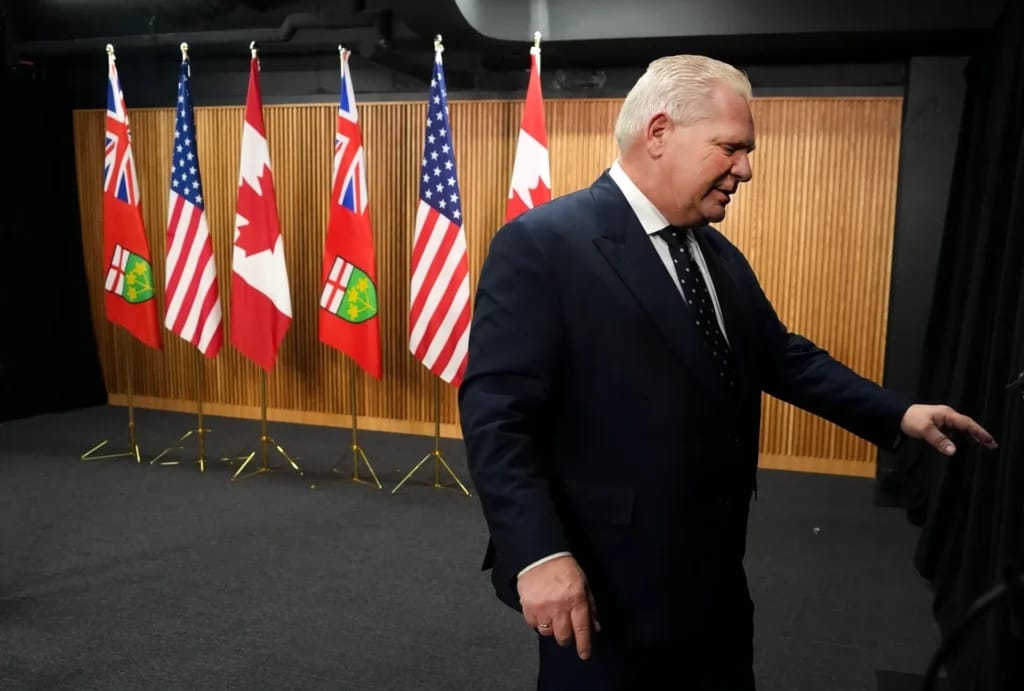
Ford also promoted cross-border initiatives in the automotive and energy sectors. These collaborations aim to strengthen the integrated supply chains that exist between Ontario and its American neighbours.
Charitable Engagement and the Elites
Doug Ford maintains a presence in charitable circles while navigating complex relationships with Ontario’s economic elites. His approach to philanthropy reflects his political and personal vision of community service.
Charitable Work and Community Support
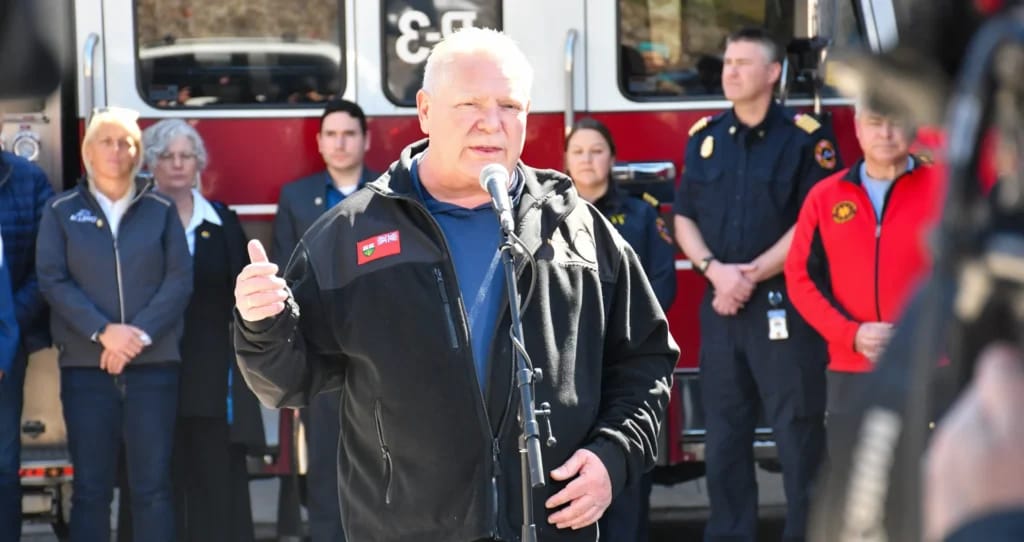
Doug Ford actively participates in several charitable initiatives in Ontario. He regularly supports local organizations, particularly those that help underprivileged families and children. During the pandemic, he championed Ontario Corps, a government emergency response initiative.
His charitable engagement also extends to youth sports programs in low-income Toronto neighbourhoods. The Ford Family Foundation has contributed to various community projects over the years.
Ford’s philanthropy is most often expressed through public appearances at fundraising events rather than significant personal donations. This approach allows him to reinforce his image as a politician close to local communities.
Relations with Elites and Business
Doug Ford’s relationships with Ontario’s elites are marked by a certain ambivalence. On one hand, he cultivates an image as a politician close to the people, sometimes criticizing the “Toronto elites.” On the other, he maintains close ties with the business community.
His government has worked with various industries, notably the electric vehicle sector, as mentioned in recent articles. His economic policies often favour business interests.
Ford congratulated Donald Trump after his election, indicating an affinity with certain American political and economic circles. This relationship illustrates his complex position between populism and connections with the elites.
His critics argue that his policies of dismantling public services benefit the economic elites at the expense of ordinary Ontarians. This tension largely defines his relationship with the province’s various spheres of influence.
Media and Communication
Doug Ford has established a distinctive media presence since coming to power in Ontario in June 2018. His communication strategy combines traditional and modern approaches to reach Ontarians.
Media Strategy and Public Presence
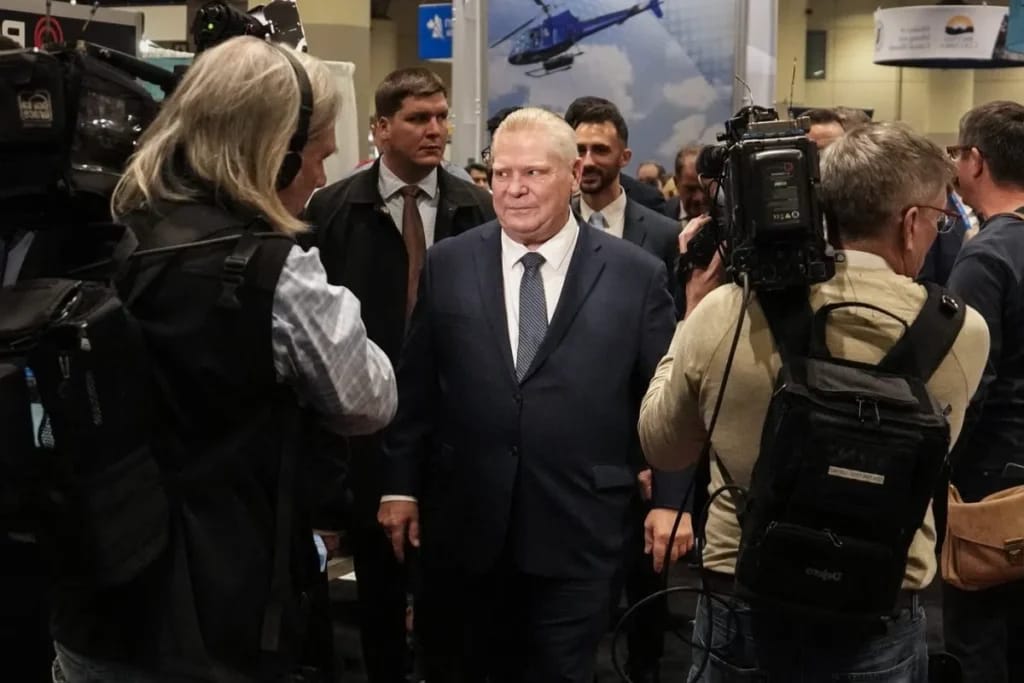
Doug Ford quickly developed a strong presence in Ontario’s media. According to research, since taking office in 2018, he has positioned himself as a dominant media figure, comparable to François Legault in Quebec.
Ford frequently uses press conferences to communicate directly with the public. For example, in April 2024, he made important announcements regarding $200 cheques destined for Ontarians, drawing significant media attention.
The Ford government has also made significant commitments regarding advertising spending. His administration promised to dedicate a quarter of the provincial advertising budget to local publishers, recognizing their importance.
Interaction with News Coverage
Ford often reacts to articles that concern him, sometimes with strong statements. He does not hesitate to announce that he will “tear up” contracts, such as the $68 million contract mentioned in search results.
His interactions with the media show a direct approach. During election periods, such as the one mentioned in search results a week before Ontario elections, his media presence intensifies considerably in Toronto and Brampton.
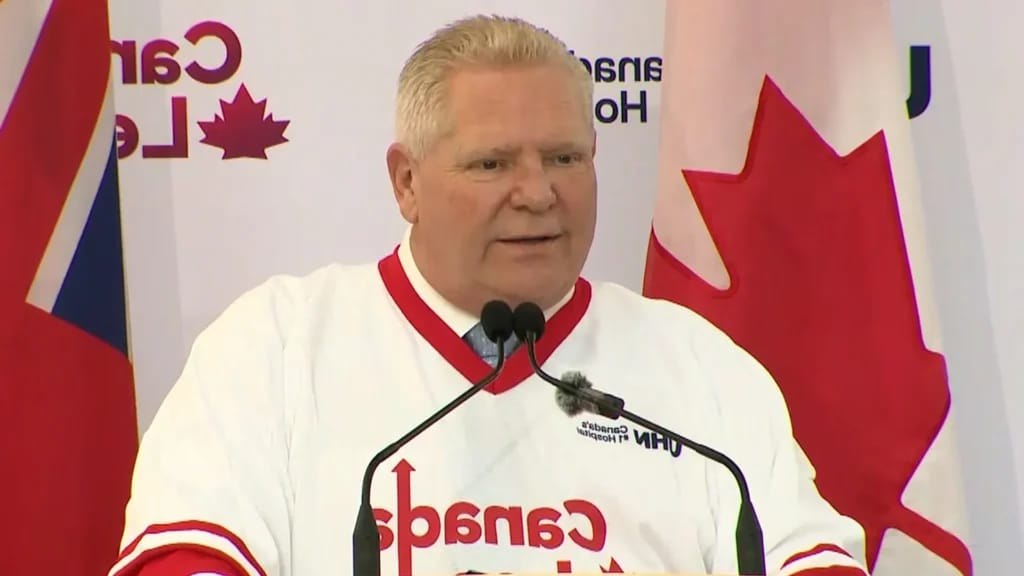
Faced with challenges such as interprovincial trade, Ford uses the media as a platform to communicate his political positions. Ontario’s four largest Crown corporations, including the LCBO and Metrolinx, spend more than $100 million on marketing each year, reinforcing his media visibility.
The Future of Ontario Politics
Ontario politics could undergo significant changes in the months and years ahead. Doug Ford and his Conservative party face economic and social challenges that will influence their political future.
Upcoming Elections and Prospects
The next Ontario provincial elections are scheduled for 2026. Doug Ford and his Progressive Conservative Party will seek to win a third consecutive term.
Recent polls show a population divided on the Ford government’s record. Economic management remains his main argument, particularly in the face of uncertainty caused by American policies.
Opposition parties are working to strengthen their positions on issues such as the housing crisis, inflation, and environmental protection. The Greenbelt question remains particularly sensitive.
The Liberals and New Democrats will need to present credible alternatives to convince voters who are dissatisfied with the current government.
Political Legacy and Impact on the Future
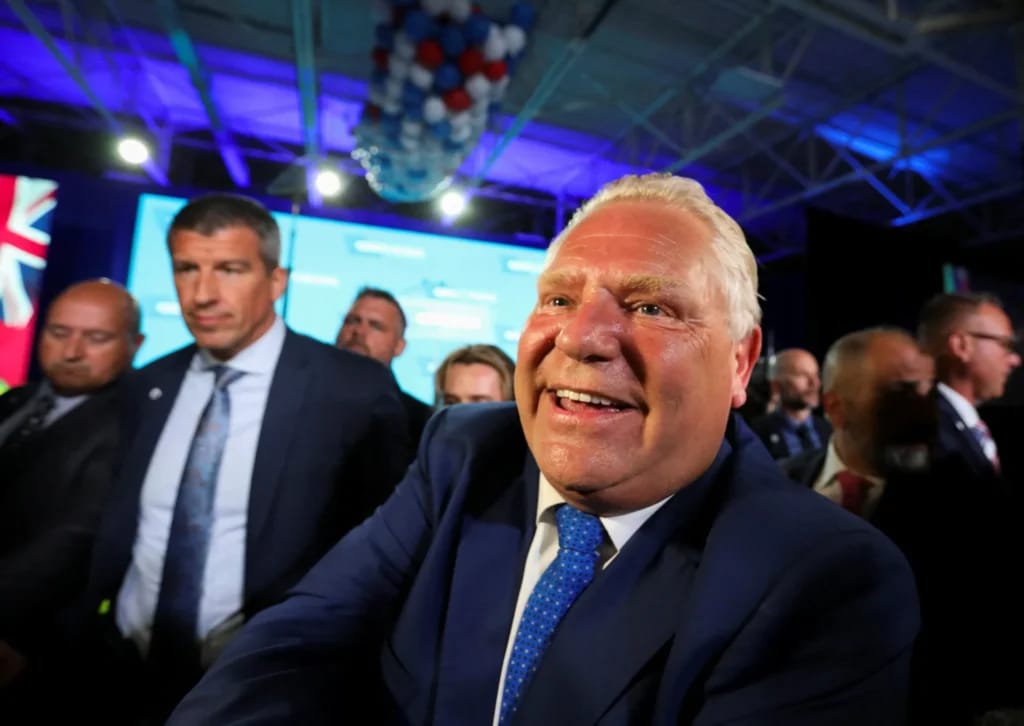
Doug Ford’s legacy at Queen’s Park will be marked by his economic management and development policies. His “Ontario open for business” approach has shaped the province.
His decisions regarding the Greenbelt and the liberalization of the alcohol market will continue to influence Ontario’s political landscape for years to come.
Future leaders will need to position themselves in relation to this legacy. Conservatives could maintain this pro-development direction or adjust it based on public reaction.
Ford’s repositioning vis-à-vis federalism, presenting himself as “Captain Canada,” also represents a significant shift in federal-provincial relations that could persist.
The impact of his policies on public services and affordability will also determine how Ontarians judge this political era.
Summary
Doug Ford, the current Premier of Ontario, is a prominent political and entrepreneurial figure in Canada. Born in 1964, he ran the family business Deco Labels before entering politics. Elected in 2018, he is known for his populist style, controversial economic decisions, and firm stance toward the United States. He implemented pro-business policies while being criticized for his treatment of public services. His career has been influenced by his family, particularly his brother Rob Ford, the former Mayor of Toronto. His fortune is tied to his business ventures and his influential political career in Ontario.
Frequently Asked Questions
Doug Ford, the Premier of Ontario, generates a great deal of curiosity. Here are answers to common questions about his personal life, career, and recent political actions.
What is the family connection between Michael Ford and Doug Ford?
Michael Ford is Doug Ford’s nephew. He is the son of Kathy Ford, Doug’s sister. Michael followed in his uncle’s footsteps by entering politics.
He served as a Toronto city councillor before being elected as a provincial Member of Parliament in 2022. The Ford family has a long political tradition in Ontario.
What are the latest news stories about Doug Ford?
Recently, Doug Ford has faced criticism over a $68 million contract that his government reportedly signed. He declared that he was going to “tear up” that contract.
Ontario’s Auditor General also criticized his government’s financial management in her annual report. Ford is nonetheless continuing his infrastructure projects, including the construction of Highway 413.
Text messages from the “PC Ontario Fund” are circulating, suggesting that an election may be approaching.
How tall is Doug Ford?
Doug Ford stands approximately 1.88 metres (6 feet 2 inches) tall. His imposing stature has always been a notable physical characteristic in his public presence.
This height contributes to his image as a politician with a strong presence at public events and debates.
Who is Doug Ford’s wife?
Karla Ford is Doug Ford’s wife. They have been married for several decades and have built a stable family together.
Together, they have four daughters: Krista, Kayla, Kara, and Kyla. Karla generally maintains a discreet public profile, but supports her husband in his political career.
How has Doug Ford’s family influenced his political career?
The most significant influence comes from his father, Doug Ford Sr., who was himself a politician and businessman. His brother, Rob Ford, was the well-known Mayor of Toronto from 2010 to 2014.
This political dynasty provided Doug with important connections and a loyal electoral base. The family business, Deco Labels, also gave him business world experience that he highlights in his political rhetoric.
His brother Rob’s controversial reputation has sometimes been a challenge, but it also raised the Ford name’s profile.
What is Doug Ford’s professional background?
Before politics, Doug Ford ran the family business Deco Labels. This label printing company was founded by his father. This experience in the private sector forms an important part of his political identity.
He entered municipal politics in 2010. He became a Toronto councillor, representing the riding formerly held by his brother Rob. In 2018, he became leader of the Ontario Progressive Conservative Party.
He won the provincial election in June 2018. He became the 26th Premier of Ontario, a position he continues to hold in 2025.